Secrets of Top Students (and Other) Updates

Many thanks to Nancy Ruhling for writing an article about me that appeared in the Huffington Post!  I am now officially an “Astoria Character.”  Check out the article here.

In other news, I’m super excited to be giving a talk about academic success at Stern College/ Yeshiva University next week.  I’ll be introducing the SMARTER system (SMARTER is an acronym for some of my top studying strategies).

I also recently went on a trip to Turkey.  Did you know that the city of Istanbul is full of beautiful, friendly cats?  It was like I had died and gone to heaven!

IMG_4818

Can a Learning Disability Make You a Better Student?

In his new book David and Goliath, Malcolm Gladwell argues that having a learning disability can actually be beneficial.  I couldn’t agree more!  I wanted to share an article I wrote a while back about how my struggles with learning helped me become a top student. 

I was never officially diagnosed with a learning disability, but I often suspect I have one.  I struggled with listening comprehension throughout my academic career.  More often than not, I walked out of class having no idea what the teacher was talking about.  In science labs, I would stare blankly at the equipment in front of me because I couldn’t process verbal instructions.  In Spanish class, my ability to read the language far exceeded my listening skills.  Sometimes I hated going to school because I felt like I learned nothing there.  And yet, I managed to become valedictorian of Stuyvesant High School, one of the most competitive public schools in the country, and graduate first in my class from Columbia University.

How did I do this?  By using techniques familiar to many learning disabled students: hard work, perseverance, and playing to my strengths.  Ironically, my learning weakness may have contributed to my academic success.

I learned at an early age that my reading ability was far better than my listening comprehension.  Since I didn’t absorb much during class, I took extremely detailed notes so I could review them at my own pace.  I became a speed-writer by using my own brand of shorthand to record every tidbit of information, while most of my classmates were satisfied with a skimpy outline.  I think this really worked to my advantage.  According to a 1968 study by John McLeish, students remember only 42% of the information in a lecture by the time it ends, and only 20% a week later.  My classmates may have understood the lesson while it was being given, but when test-time rolled around, most of that understanding had evaporated.  I, on the other hand, knew the lecture better than ever because I had reviewed it several times.

I also relied on textbooks and other written material to explain what I had failed to grasp in class.  Books were my primary teachers, especially in high school.  I read complex passages over and over again until they were permanently etched in my brain.  I also took extensive notes on reading assignments to reinforce what I read.  These notes became invaluable for things like participating in class discussions and writing papers.  Whenever I wanted to support an argument, I could quickly look at my notes instead of desperately flipping through books to find some half-remembered fact or quotation.  All of this reading and note-taking was time-consuming, of course, but it forced me to develop a strong work ethic.

I also turned down offers to join study groups, since I knew I wouldn’t absorb information in such an environment.  I believe that this made me a more independent learner.  While many of my classmates asked one another for explanations and clarifications (and were often given faulty information), I would examine my books and go to the teacher’s office hours for help.  In college, I often took courses that complemented my learning ability.  For example, I took Latin classes to fulfill my language requirement because they focused on reading instead of oral comprehension; and I majored in history in part because it emphasized the analysis of written texts.

I believe that by compensating for a weakness, I became a stronger student overall.  I sincerely doubt I would have been at the top of my class if my listening comprehension had been better.  There are two things I hope you take away from this: (1) everyone’s needs are different, and you must find the method of learning that works best for you; and (2) learning disability comes in all shapes and sizes, and may be found in those you least expect.

Stefanie Weisman is the author of The Secrets of Top Students: Tips, Tools, and Techniques for Acing High School and College.

Six Reasons Why Art is Essential to Education (Guest Post)

Vera Marie Reed is a writer who has written several articles for education and career sites. When she is not spending her day reading a new book or writing, she loves getting her creative juices flowing by trying new artistic hobbies such as photography or painting.

Recently, education has been subjected to government budget cuts.  A smaller budget leads to huge cuts within the schools, including teacher’s supplies, extra curricular activities, and classes not deemed essential. Unfortunately that means that many schools often opt to cut art education, including music, dance, and art classes. Although many school officials may not see art classes as an important part of a well-rounded education, students get significant benefits from all forms of art.

education 1

1. Students Develop New Skills

When a student wants to learn photography, painting, sculpting, or other types of art, they aren’t just learning the skills of that particular talent. Students also learn to think creatively, which is a skill that can transfer to other subjects. They become more descriptive and imaginative when writing essays. Art students also develop critical thinking skills which are important while learning math and science.

2. Motivation for Students

Getting kids to stay in school has always been an issue. They don’t feel motivated to go to class and learn things they don’t enjoy or think will be applicable to the real world. That’s why it’s important to allow them to explore subjects that are not only fun, but inclusive to all types of personalities. Students who are involved in art classes and extra curricular activities often find more drive for going to school every day.

3. Students Get An Outlet for Self-Expression

To say that young people, from elementary to high school students, have a lot of emotion would be an understatement. So many students feel the stress of needing to be successful at school, along with the pressures of fitting in with their peers. Without a proper outlet to express these feelings, they can end up feeling negatively about themselves and their school experience. However, art classes and extracurricular activities are the perfect outlet for self-expression.

4. Students Improve Test Scores

Those who are involved in art classes and extracurricular activities have been known to have higher test scores, better school attendance, and more recognition for academic achievement. According to a 2010 study, students who took art and music classes were much more likely to score high on the math, writing, and reading sections of the SAT. The better performances on the various subjects also correlated with these students attending highly rated universities.

5. Preschoolers Develop Important Skills

Preschool-aged students are essentially still learning their most basic functions. Students who take part in art and music activities from a very young age can develop spatial perception, critical thinking skills, and better communication. These are all skills that are vital for the growth of any young person. Just by allowing them time and materials for art every few days, you can ensure that these young students are gaining the skills they need in school and life.

6. Promotes Independence in Students

Art is one of the subjects that require the most independence. Through the self-expression and creativity involved in artistic endeavors, people learn to be more independent minded. There’s no homework to copy or test answers to memorize. Therefore, every piece of art they create is completely original and part of their individual growth.

Art in education is floundering due to budget cuts. However, the skills and emotional growth acquired through art is irreplaceable. For many students, the lack of art in school may mean cutting their path to success.


Give yourself the gift of great grades.  Order your copy of The Secrets of Top Students today!


4 Ways to Survive School Even If You Don’t Have a Time Machine (Guest Post)

Alexandra Harmening is a recently graduated writer who loves avocados and is currently living 365 Days of Pride and Prejudice.

While trying to squeeze my undergraduate degree into three years, things often seemed more than a little bit hectic. I frequently informed professors that I was working on discovering how to be in two places at once. But that one never really panned out.

Sometimes it is hard to keep your sanity as a student. From homework to internships to some semblance of a social life squeezed in between, the undergrad years brim with busyness. Fortunately, there are four healthy habits that can help students survive school and still succeed, even without a time machine.

The author giving her valedictory speech.

The author giving her graduation speech.

1. Jumpstart Projects

One of the only ways that I made it through school with my grades intact was starting papers and projects as soon as they were assigned. For my senior these this meant breaking ground on research six months early. For end of the semester papers, this typically meant checking out resources from the library during the first or second week of school.

Working ahead is probably the inverse of a common collegiate plague called procrastination. Where procrastinating leaves you sleepless and stressed for the last month of school, completing projects ahead provides time for editing, sleeping every night, meeting to consult your professor, time to print out the paper and freedom from stress during finals week. (In fact, finals week used to be my favorite because by then everything was almost wrapped up—well, except for exams. Sound crazy? I dare you to try it.)

2. Sleep  

“There’ll be time to sleep when we graduate,” friends and I would tease as we typed furiously. Unfortunately, sleep is easily overlooked in the long list of assignments to check off during the day. But most of the time, it is easier to pause in the middle of a project, go to sleep and wake up with a fresh brain and new ideas in the morning.

Complex brain functions such as updating working memory, planning, attention, sense of time, dealing with novel situations and verbal fluency are dramatically affected by sleep-deprivation because the brain is forced to overwork, notes Jim Horne, PhD, who directed a sleep research laboratory at England’s Loughborough University.

“Sleep deprivation is bad for your brain when you are trying to do high-level [thinking] tasks” confirms University of California, San Diego researcher and author Dr. J. Christian Gillin. And sleep deprivation “may have serious consequences both on performance and on the way your brain functions.”

The lesson here: sleep is probably more valuable than we give it credit for being as college students. And in some cases, the key to success on that test tomorrow morning might actually be crashing on your pillow rather than enduring a caffeine induced all-nighter.

3. Know When to Say No

The trickiest thing about college for me was all of the amazing opportunities that sprang up each and every week. I wanted to grab them all in case it was the last time anyone ever asked me to be on the library committee or go on a hike or play in the pit orchestra for the spring musical or work as a part-time tutor or join student government or go out for coffee or—you get the picture. But one of the greatest life lessons that you can start learning while still in school is when and how to say, “No.”

Not to sound like a homework Nazi because it really is important to work towards a balanced life with fun activities and breaks, but there are too many possibilities to answer yes to them all. Unless, of course, you have a time machine.

Identifying your goals for coming to college is a realistic way to begin checking your list of commitments and deciding what are valuable priorities and what can actually be cut. This might be painful, and it doesn’t mean that you can’t ever be involved in amazing and enriching extracurriculars. It just means that you can’t be a member of every single school club or work three and a half jobs while taking 18 units. 


4. After a Hard Day of Writing, It’s Good to Write Some More

When you’ve spent the last seven hours writing, memorizing, reading and then writing some more, it is great to relax with a little more writing. Yes, that does sound crazy, but if you are a writer, then you probably know what I mean.

The idea here is to make time for your passion because sometimes, in the midst of pursuing a degree in the subject you love, it becomes easy to forget why it matters and what there is to like about it.

For me, this manifested itself in scribbling out thoughts for my own blog once a week called My Year with Elizabeth Bennet. It was a great way for me to unwind and process while remembering why I was majoring in English.

Now, an engineering major might feel that sitting down to write is one of the most stressful activities I could suggest. But taking an afternoon to pull apart a VW Bug and then reassemble it on the roof of the dorm building might sound amazing. Finding a creative outlet, one that won’t be graded by your professor at the end, is a positive way to unwind and rest. It’s any kind of practical return to your first love that you can invent.

There is probably no one formula for success that any student at any school can download to automatically work. But remembering the basics or sleep, planning ahead, setting priorities and returning to your interests will hopefully help you to find an efficient balance for your college years. And maybe after graduation, you will have developed the skills to start building that time machine.


Give yourself the gift of great grades.  Order your copy of The Secrets of Top Students today!

Eight Rules for Writing a Great Paper (Guest Post)

Lois Weldon is a professional writer at the dissertation writing service Uk.bestdissertation.com.  She is an ESL teacher.  Her hobbies are decoupage and writing poetry.  She loves Marvel comics and homeschooling her 7-year-old son.

If you’re a college student, you’ve probably completed hundreds of writing assignments and become intimately familiar with the writing process.  But writing does not stop with graduation – you’ll have plenty of opportunities to write even after you finish school. No matter how much writing you’ve done, it never hurts to learn a few tips and tricks to facilitate the writing process.

Read these tips before writing that paper.  Photo by gudmd.haralds via Flickr.

Does this look familiar to you? Read these tips before writing that paper! Photo by gudmd.haralds via Flickr.

  1. Make an outline. The importance of having an outline can never be overstated. An outline is a blueprint for your assignment. Developing an outline will help you organize your ideas, conduct better research, and estimate the word count for every section.
  2. Take note of the structure. When doing your writing assignment, make sure it has an introduction, a body and a conclusion. An introduction should introduce your topic and provide background information, while the body of the paper should contain the supporting evidence for your paper. Lastly, provide a conclusion by summarizing your argument and putting it in context. Remember: the conclusion is your last chance to impress your readers, so make it memorable!
  3. Ensure continuity of ideas. Imagine if your paper is all over the place – that is, you discuss a certain topic in one paragraph, then introduce an entirely unrelated topic in the next paragraph. Your reader will not be pleased. It’s important to maintain continuity so your readers will be able to follow your train of thought.
  4. Keep it objective. When it comes to academic writing, what really count are facts and relevant information. While your opinion does matter, refrain from incorporating it on your writing assignment. It is imperative that you present a clear and unbiased picture based on evidence and expert studies. Unless your opinion is being asked, don’t include it in the paper.
  5. Use bullets and numbering. In some academic writing, bullet points are preferable to long-winded paragraphs. This will allow you to discuss each point in an efficient and organized manner. Plus, it’s easier on the eyes.
  6. Take note of the word count. When writing your assignment, keep in mind that too few words means you won’t be able to express your ideas effectively, while too many words can lead to superfluity or duplication of ideas. If you are given a required word count, stick to it! In your outline, indicate how many words you should allot per section.
  7. Use examples. In a writing assignment, you must show that you understand the resources and materials you gathered from research. Use concrete examples to apply what you’ve learned and support your arguments.  You should also make use of tables, statistics and figures in your paper.
  8. Cite your sources. When it comes to academic writing, citing your sources, especially when you’re borrowing an idea or theory, is a must. Plagiarism is a form of stealing and you don’t want to compromise your future just because you did not acknowledge someone else’s work.

For more tips on how to write a paper and much more, order your copy of The Secrets of Top Students today!

Book Signing, NACAC 2013, and Congrats to Ted Fiske!

What a busy week it’s been!  I had my first official book talk and signing for The Secrets of Top Students at the Columbia University bookstore, which was a lot of fun.  Thank you to everyone who attended!

Stefanie Weisman Book Signing

My first book signing!

The next day I flew up to Toronto to join my publisher, Sourcebooks, for the 69th national conference for NACAC (National Association for College Admission Counseling).  I met a lot of great people there.  I must say, college admission counselors are an amazing group.  They really care about helping students and giving them the best education possible.

Metro Toronto Convention Centre, where the NACAC conference took place.  Love the woodpeckers!

Metro Toronto Convention Centre, where the NACAC conference took place. Love the woodpeckers!

I was also extremely fortunate to take part in the 30th anniversary of The Fiske Guide to Colleges, where I got to meet the man himself – Edward (Ted) Fiske.  It’s really an amazing accomplishment.  Sourcebooks honored him with a champagne toast and gave away several stacks of his books, which were gone in two minutes flat!

The champagne toast - Congrats to Ted Fiske for an amazing 30 years!

The champagne toast – Congrats to Ted Fiske for an amazing 30 years!

Tomorrow I’m giving a talk at the Stuyvesant Parents’ Association.  Back-to-School is a busy but exciting time!

How to Succeed in School and Still Have Time for Fun (Guest Post)

By Jessica Socheski

After the pressure of SATs, advanced placement classes and university applications, many students are excited to start a new life in college and experience living in a dorm. But for college freshmen who want to do well in school, maintaining an active social life on campus might seem next to impossible.

How to Succeed in School and Still Have a Little Fun

Maintain your grades and your social life!

Fortunately, there are a few steps to college success that might just allow you to hang out with friends on Friday night instead of holing up in your room with your chemistry text.  For students who care about their grades but are still hoping to enjoy the typical college experience, here’s how to succeed in college academically without giving up on your social life.

Plan Ahead

One of the most common failings of college students is neglecting to set up a plan. In what is often dismissed as harmless procrastination, a surprising number of students tend to do readings at the last minute or wait until the night before to complete an assignment.

But if you want to be free to go out with your friends, it is imperative that you do your work ahead of time! For example, if you have a break after class, pull out the textbook and finish the reading for the next class, right there and then. Being efficient is key to freeing up time to socialize.

Actively review deadlines and make certain you know when your assignments are due. When a project is on the syllabus, break the large tasks down into smaller pieces. Don’t be afraid to start work on your final assignment after the very first class session!

You can also look for ways to streamline and multitask whenever possible. For example, bring your laptop to the laundry room and keep typing that paper between loads.

Be Present in Class

A letter to future college students which appeared in the NY Times blog warns, “when you realize that there’s no detention or punishment for missing classes, when you discover that the professor’s lecture notes are online,” it will become much easier to habitually skip class.

Many students choose to cut classes on a regular basis because they need to study for an exam, want to hang out with friends or simply can’t hear the alarm telling them that their 8 a.m. starts in 15 minutes.

But class time is really some of the most important hours you will spend during college. Professors are experts in their fields, and the time you have to learn from them is valuable. Studying for the test later is much easier if you’re already familiar with the subject from lectures. Finally, you are probably paying thousands of dollars to be in this class – so you might as well get your money’s worth!

Engage in Homework Time

In addition to using the classroom to succeed and planning ahead rather than studying later, find an optimal place to work – and then get cracking! If you are studying at a school with a tempting campus, such as South University Palm Beach, you should probably do your reading at the library instead of a sandy beach. Your studying will be much quicker and more effective without a distracting environment. And when you’re finished, you can hop over to the oceanfront to enjoy a well-deserved break.

With these strategies for effective and more efficient study time, you can get the most out of your college experience both academically and socially!

Image from www.womansday.com


For more tips on how to rule in school, order your copy of The Secrets of Top Students today!
The Secrets of Top Students Book Signing

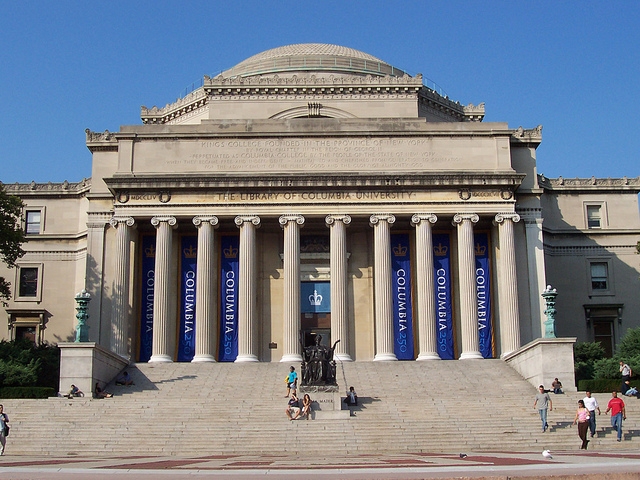
Photo of Columbia University, courtesy of InSapphoWeTrust via Flickr

Photo of Columbia University, courtesy of InSapphoWeTrust via Flickr

I’m excited to announce that I’m doing a book signing for The Secrets of Top Students at the Columbia University Bookstore on Thursday, September 19, at 6 pm. I’ll also be sharing some of my top study tips for high school and college students!  This is a great event for parents and students in the NYC area.

The Columbia University Bookstore is located at 2922 Broadway, Lerner Hall (114th St.), New York, NY 10027. Hope to see you there!

SAT vs. ACT – Which One Should You Take?

Navigating the maze of requirements needed just to apply to college can be overwhelming and daunting. Between keeping your GPA up, writing the perfect college essay, acing the interview, and finding time for all your extracurricular activities, you barely have time to figure out and prepare for the standardized tests most colleges and universities require. Prospective college students are faced with two options: the ACT and the SAT. Standardized testing is painful enough once through—why take two unless it’s necessary? Especially when each test costs between $30 and $50—and most people take the test more than once. All you have to do is figure out which one is right for you.

This infographic by BenchPrep gives you a great overview of the major differences between the two standardized tests. If you’re applying to schools along the East or West coast, the SAT might be a better option. Does science comes naturally to you, but you struggle with writing under pressure? Better stick with the ACT. Regardless of which test you pick, make the most of each test by ensuring that you are mentally and physically prepared. Be sure to get plenty of rest the night before (no cramming!) and eat a protein packed breakfast to provide fuel for the marathon of a test. And relax—no matter how important the test seems, it is only one component of a complete picture that the college sees.
By Marcela De Vivo

BenchPrepSAT


No matter which test you take, The Secrets of Top Students can help you succeed in college.  Order your copy today!