4 Ways to Survive School Even If You Don’t Have a Time Machine (Guest Post)

Alexandra Harmening is a recently graduated writer who loves avocados and is currently living 365 Days of Pride and Prejudice.

While trying to squeeze my undergraduate degree into three years, things often seemed more than a little bit hectic. I frequently informed professors that I was working on discovering how to be in two places at once. But that one never really panned out.

Sometimes it is hard to keep your sanity as a student. From homework to internships to some semblance of a social life squeezed in between, the undergrad years brim with busyness. Fortunately, there are four healthy habits that can help students survive school and still succeed, even without a time machine.
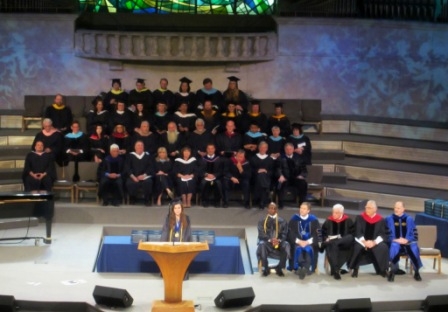
The author giving her valedictory speech.

The author giving her graduation speech.

1. Jumpstart Projects

One of the only ways that I made it through school with my grades intact was starting papers and projects as soon as they were assigned. For my senior these this meant breaking ground on research six months early. For end of the semester papers, this typically meant checking out resources from the library during the first or second week of school.

Working ahead is probably the inverse of a common collegiate plague called procrastination. Where procrastinating leaves you sleepless and stressed for the last month of school, completing projects ahead provides time for editing, sleeping every night, meeting to consult your professor, time to print out the paper and freedom from stress during finals week. (In fact, finals week used to be my favorite because by then everything was almost wrapped up—well, except for exams. Sound crazy? I dare you to try it.)

2. Sleep  

“There’ll be time to sleep when we graduate,” friends and I would tease as we typed furiously. Unfortunately, sleep is easily overlooked in the long list of assignments to check off during the day. But most of the time, it is easier to pause in the middle of a project, go to sleep and wake up with a fresh brain and new ideas in the morning.

Complex brain functions such as updating working memory, planning, attention, sense of time, dealing with novel situations and verbal fluency are dramatically affected by sleep-deprivation because the brain is forced to overwork, notes Jim Horne, PhD, who directed a sleep research laboratory at England’s Loughborough University.

“Sleep deprivation is bad for your brain when you are trying to do high-level [thinking] tasks” confirms University of California, San Diego researcher and author Dr. J. Christian Gillin. And sleep deprivation “may have serious consequences both on performance and on the way your brain functions.”

The lesson here: sleep is probably more valuable than we give it credit for being as college students. And in some cases, the key to success on that test tomorrow morning might actually be crashing on your pillow rather than enduring a caffeine induced all-nighter.

3. Know When to Say No

The trickiest thing about college for me was all of the amazing opportunities that sprang up each and every week. I wanted to grab them all in case it was the last time anyone ever asked me to be on the library committee or go on a hike or play in the pit orchestra for the spring musical or work as a part-time tutor or join student government or go out for coffee or—you get the picture. But one of the greatest life lessons that you can start learning while still in school is when and how to say, “No.”

Not to sound like a homework Nazi because it really is important to work towards a balanced life with fun activities and breaks, but there are too many possibilities to answer yes to them all. Unless, of course, you have a time machine.

Identifying your goals for coming to college is a realistic way to begin checking your list of commitments and deciding what are valuable priorities and what can actually be cut. This might be painful, and it doesn’t mean that you can’t ever be involved in amazing and enriching extracurriculars. It just means that you can’t be a member of every single school club or work three and a half jobs while taking 18 units. 


4. After a Hard Day of Writing, It’s Good to Write Some More

When you’ve spent the last seven hours writing, memorizing, reading and then writing some more, it is great to relax with a little more writing. Yes, that does sound crazy, but if you are a writer, then you probably know what I mean.

The idea here is to make time for your passion because sometimes, in the midst of pursuing a degree in the subject you love, it becomes easy to forget why it matters and what there is to like about it.

For me, this manifested itself in scribbling out thoughts for my own blog once a week called My Year with Elizabeth Bennet. It was a great way for me to unwind and process while remembering why I was majoring in English.

Now, an engineering major might feel that sitting down to write is one of the most stressful activities I could suggest. But taking an afternoon to pull apart a VW Bug and then reassemble it on the roof of the dorm building might sound amazing. Finding a creative outlet, one that won’t be graded by your professor at the end, is a positive way to unwind and rest. It’s any kind of practical return to your first love that you can invent.

There is probably no one formula for success that any student at any school can download to automatically work. But remembering the basics or sleep, planning ahead, setting priorities and returning to your interests will hopefully help you to find an efficient balance for your college years. And maybe after graduation, you will have developed the skills to start building that time machine.


Give yourself the gift of great grades.  Order your copy of The Secrets of Top Students today!
Eight Rules for Writing a Great Paper (Guest Post)

Lois Weldon is a professional writer at the dissertation writing service Uk.bestdissertation.com.  She is an ESL teacher.  Her hobbies are decoupage and writing poetry.  She loves Marvel comics and homeschooling her 7-year-old son.

If you’re a college student, you’ve probably completed hundreds of writing assignments and become intimately familiar with the writing process.  But writing does not stop with graduation – you’ll have plenty of opportunities to write even after you finish school. No matter how much writing you’ve done, it never hurts to learn a few tips and tricks to facilitate the writing process.

Read these tips before writing that paper.  Photo by gudmd.haralds via Flickr.

Does this look familiar to you? Read these tips before writing that paper! Photo by gudmd.haralds via Flickr.

  1. Make an outline. The importance of having an outline can never be overstated. An outline is a blueprint for your assignment. Developing an outline will help you organize your ideas, conduct better research, and estimate the word count for every section.
  2. Take note of the structure. When doing your writing assignment, make sure it has an introduction, a body and a conclusion. An introduction should introduce your topic and provide background information, while the body of the paper should contain the supporting evidence for your paper. Lastly, provide a conclusion by summarizing your argument and putting it in context. Remember: the conclusion is your last chance to impress your readers, so make it memorable!
  3. Ensure continuity of ideas. Imagine if your paper is all over the place – that is, you discuss a certain topic in one paragraph, then introduce an entirely unrelated topic in the next paragraph. Your reader will not be pleased. It’s important to maintain continuity so your readers will be able to follow your train of thought.
  4. Keep it objective. When it comes to academic writing, what really count are facts and relevant information. While your opinion does matter, refrain from incorporating it on your writing assignment. It is imperative that you present a clear and unbiased picture based on evidence and expert studies. Unless your opinion is being asked, don’t include it in the paper.
  5. Use bullets and numbering. In some academic writing, bullet points are preferable to long-winded paragraphs. This will allow you to discuss each point in an efficient and organized manner. Plus, it’s easier on the eyes.
  6. Take note of the word count. When writing your assignment, keep in mind that too few words means you won’t be able to express your ideas effectively, while too many words can lead to superfluity or duplication of ideas. If you are given a required word count, stick to it! In your outline, indicate how many words you should allot per section.
  7. Use examples. In a writing assignment, you must show that you understand the resources and materials you gathered from research. Use concrete examples to apply what you’ve learned and support your arguments.  You should also make use of tables, statistics and figures in your paper.
  8. Cite your sources. When it comes to academic writing, citing your sources, especially when you’re borrowing an idea or theory, is a must. Plagiarism is a form of stealing and you don’t want to compromise your future just because you did not acknowledge someone else’s work.

For more tips on how to write a paper and much more, order your copy of The Secrets of Top Students today!

Book Signing, NACAC 2013, and Congrats to Ted Fiske!

What a busy week it’s been!  I had my first official book talk and signing for The Secrets of Top Students at the Columbia University bookstore, which was a lot of fun.  Thank you to everyone who attended!

Stefanie Weisman Book Signing

My first book signing!

The next day I flew up to Toronto to join my publisher, Sourcebooks, for the 69th national conference for NACAC (National Association for College Admission Counseling).  I met a lot of great people there.  I must say, college admission counselors are an amazing group.  They really care about helping students and giving them the best education possible.

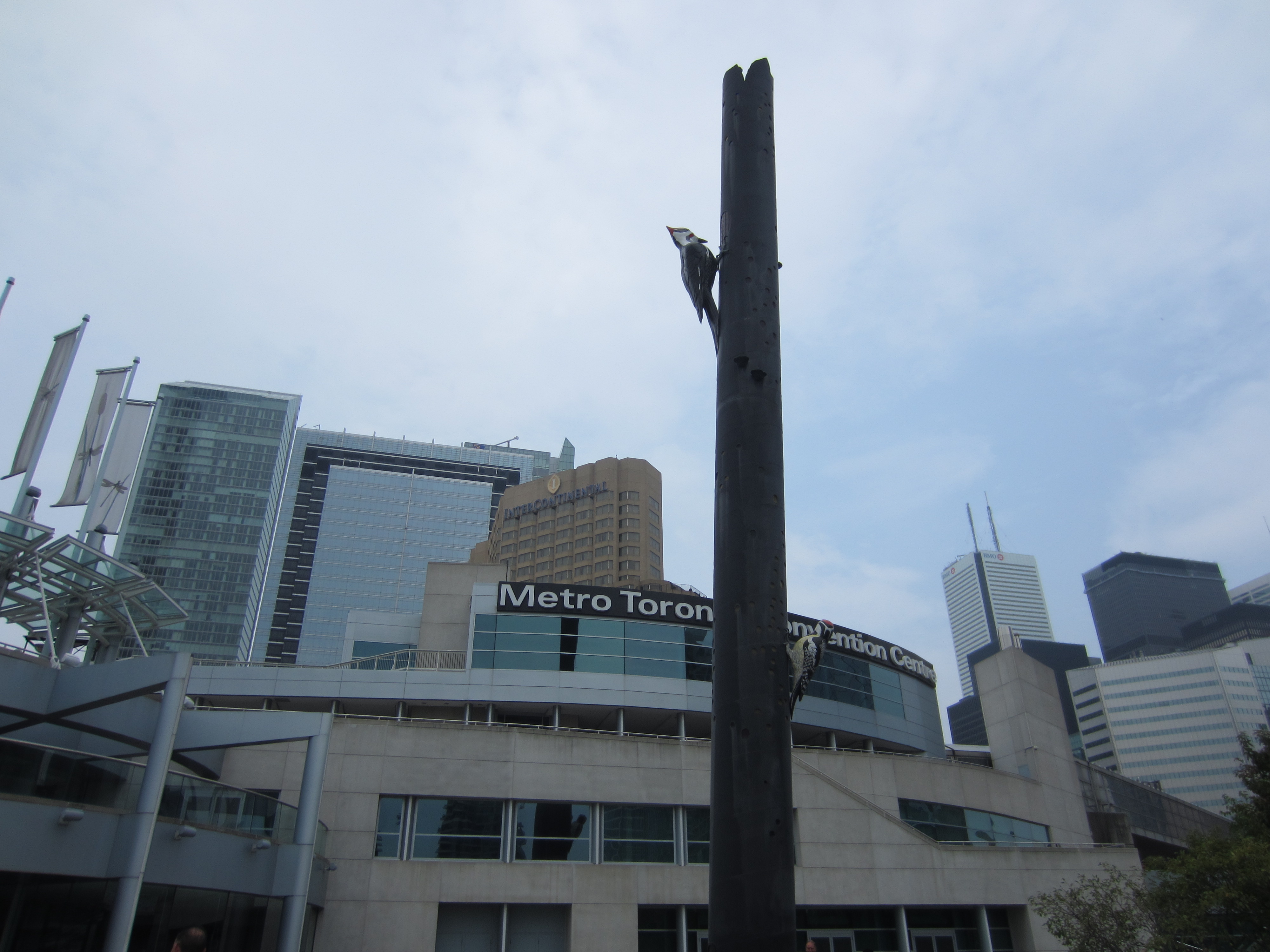
Metro Toronto Convention Centre, where the NACAC conference took place.  Love the woodpeckers!

Metro Toronto Convention Centre, where the NACAC conference took place. Love the woodpeckers!

I was also extremely fortunate to take part in the 30th anniversary of The Fiske Guide to Colleges, where I got to meet the man himself – Edward (Ted) Fiske.  It’s really an amazing accomplishment.  Sourcebooks honored him with a champagne toast and gave away several stacks of his books, which were gone in two minutes flat!

The champagne toast - Congrats to Ted Fiske for an amazing 30 years!

The champagne toast – Congrats to Ted Fiske for an amazing 30 years!

Tomorrow I’m giving a talk at the Stuyvesant Parents’ Association.  Back-to-School is a busy but exciting time!

The Secrets of Top Students Book Signing

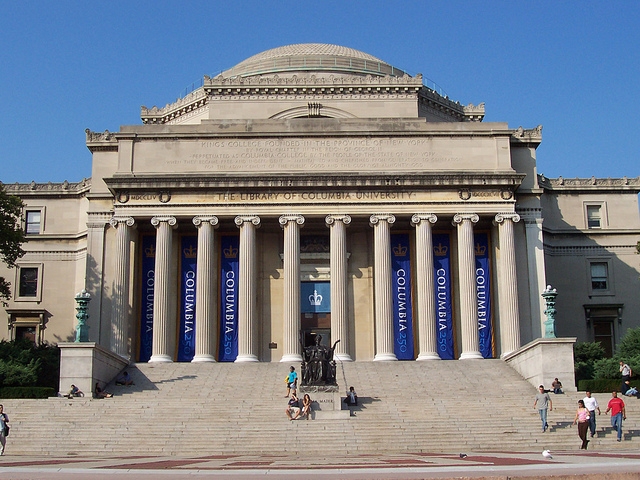
Photo of Columbia University, courtesy of InSapphoWeTrust via Flickr

Photo of Columbia University, courtesy of InSapphoWeTrust via Flickr

I’m excited to announce that I’m doing a book signing for The Secrets of Top Students at the Columbia University Bookstore on Thursday, September 19, at 6 pm. I’ll also be sharing some of my top study tips for high school and college students!  This is a great event for parents and students in the NYC area.

The Columbia University Bookstore is located at 2922 Broadway, Lerner Hall (114th St.), New York, NY 10027. Hope to see you there!

Going the Distance…From Your Living Room (Guest Post)

Will Bankovich, freelance blogger for Study2U.com and full-time dad, wants to be Bill Cunningham when he “grows up”.

My three-year-old is crying, the cat just barfed on the carpet, spaghetti is bubbling over onto the stove and, in the midst of all this, I’m on the phone with a shady mechanic trying to get quotes on a new alternator so I can make it to work this week. The last thing on my mind is “Gee, I should really go back to college”. But maybe it should be.

Are you a single parent thinking about going back to school? (Photo courtesy of Kevin Cawley via Flickr)

Are you a single parent thinking about going back to school? (Photo courtesy of Kevin Cawley via Flickr)


A 2010 National Poverty Center press release reports that over 31% of families headed by single individuals were under the national poverty line. This is by far the poorest sub-group in the country, without factoring in ethnicity. Naturally, this statistic leaves out some vital factors: assistance such as food stamps, Medicare/Medicaid, employer-provided insurance and other subsidies/social services. Including, most importantly, that life with low-to-modest wages does not equal a deprived life for you and your kids. Small budgets can lead to creativity. You can be penniless and still build a life of love.

However. When you’re trying to take care of your family, higher learning equals higher earning. The statistics on this are well-known facts. Those in possession of a college degree are making more money. Fortunately, there are many, many resources out there for non-traditional students. I saw an article not too long ago focused on “the best fields of study for single parents”. Nonsense, I say! The best area of study for anyone is whichever career they want to go into. Period.

Distance learning is obviously a popular option for those with priorities at home. Online courses cover basically every area of study, are beamed right into your living room and tend to be cheaper than most standard colleges and universities. You work at your own pace and can probably make your kid a sandwich while you’re taking a test, or work full-time, squeezing classwork into your own spare moments. And forget the commute! You can earn credits in your robe and slippers.

With all the talk of student loans crushing the millennial generation, you’d think financial assistance would be a tough nut to crack. If this is your first foray into academia, Pell Grants are your new best friend (they can only be used towards a first degree). Pell Grants can be combined with other types of funds, and there are no restrictions on the number of scholarships you can apply for. If there’s any money left over the refund goes to you, to help out with other expenses.

The last thing to consider is the example you’re setting for your kids. Afraid they’ll see you pulling out your hair trying to juggle your job, a brand new course-load, being a good parent and well…life in general? Rest assured, you’re illustrating the importance of education to those kiddos. Not just school, but life-long learning and the pursuit of passions. And that’s just about the most important trait you could hope to instill.


No matter what type of student you are, The Secrets of Top Students can help you succeed.  Order your copy today!

How Stuyvesant Influenced My Writing Career

On Sunday, June 23, I was honored to participate in the “Writer’s Block” event at the Stuyvesant High School all-class reunion, along with eight other writers who are Stuy alumni: Richard (R.B.) Bernstein, Robert Timberg, Joe Dorinson, Peter Wortsman, Eugene Schlanger, Rebecca Pawel, Richard Herschlag, and Becky Cooper. They asked us to talk about things like the road to publication and the impact Stuyvesant has had on our writing careers. I thought I would include the questions that were asked, along with a summary of my answers.

The Secrets of Top Students

The Secrets of Top Students

(1) Tell us a little bit about your work (most recent or favorite) and what inspired you to write the book? Include why you choose the genre you did.

I just came out with my first book, The Secrets of Top Students. It’s an advice book for high school and college students on how to succeed in school. I was inspired to write this book because I felt like I had so much to share with other students. I’ve been a top student all my life – I was valedictorian of Stuy, class of ’99. I graduated from Columbia with the highest GPA in my class. I also have experience in a wide range of subjects – I have a B.A. in History, an M.A. in Art History, and a B.S. in Computer Science. Over the years I developed lots of techniques that helped me excel in school, and it just felt natural for me to write this book and share those techniques.

(2) What is your writing practice?

I just write whenever I can. My mind is usually the clearest in the morning, so I’m most productive then. I usually write at home, but I write outside whenever I can. I’m a pretty slow writer. I write a few pages, and then I spend a lot of time editing. Some days I’m much more productive than others.

(3) Describe the road to publication, from idea to release.

This idea started when I was getting my last degree, a B.S. in Computer Science from Columbia. I started writing down all the techniques that I was using, and all the things that my classmates were doing wrong – things like cramming for tests, not taking enough notes, not managing their time well, not asking for clarification, etc. After I graduated I wrote the first three chapters, did a lot of research, and surveyed forty-five other top students to get their insight into what it takes to be a top student. These people are Rhodes scholars, Goldwater scholars, Fulbright recipients, students at top law and medical schools, and even a National Spelling Bee winner. A few months later I got an agent, Coleen O’Shea, and she helped me find a publisher/ get a book contract. It then took me a few more months to finish the book, which came out in May. The whole process, from idea to publication, took 4 or 5 years – but the idea was gestating for a long time.

(4) Describe how you went about finding an agent and how you went about finding a publisher or decided to self-publish?

I got a book called The Writer’s Market, which has a great listing of literary agents. I sent query letters to agents who accepted non-fiction books, and luckily I got one! She helped me work on my platform and create a book proposal. Then she submitted my proposal to a couple of publishers. I had phone interviews with a few of them, and Sourcebooks gave me a contract! I was really happy because Sourcebooks has a great education division. They publish books like The Fiske Guide to Colleges and Gruber’s Test Prep series.

(5) Was there a Stuyvesant Muse? Describe whether attending Stuyvesant High School had an impact on your writing endeavors.

I wouldn’t be here today without Stuyvesant. I learned how to be a great student here. Stuyvesant has such high standards, and the student body is so talented, that I had to develop powerful techniques to succeed. I’m sure many of you will agree with me that college was relatively easy compared to Stuyvesant. And of course, being valedictorian of Stuyvesant has a certain cachet that helped me get a book contract in the first place.

I’m not sure if I would use the term muse, but I was really inspired by Dr. Nikol, who taught AP European History. He was a great story-teller and made history come alive, as they say. I remember I did pretty poorly on the first few tests in his class because they were so detailed, and I had to readjust/ refine my study habits. He was one of the most demanding teachers I had here, but I learned so much. He was a big part of the reason why I specialized in medieval European History at Columbia. I still have a love of history, and that’s why I’m writing a historical fiction novel set on Crete during the time of the Minoans, which is currently a finalist in the James Jones First Novel Contest.

A book review that warmed an author’s heart

Every once in a while, someone says something about my book that makes all the hard work I put into it worthwhile, and makes me feel like I truly accomplished something. I received such a review today, from someone called Stew Mulligan. I was so excited about it, I had to reprint it on my blog. The original review can be found here. Thank you Stew Mulligan, wherever you are!

The author and her book

The author and her book

“The Secrets of Top Students, by Stefanie Weisman, is a great book!

As a Stuyvesant High School alumnus, I know what it means to be that school’s valedictorian. Stuyvesant is not just any high school. It is a school that if you become a doctor you are considered an underachiever. They expect you to at least become head of a department in a major hospital or medical school. Stuyvesant graduate David Axelrod, is ONLY an advisor to the President; Stuyvesantian Eric Holder, is US Attorney General: not bad, but not a Supreme Court Justice. It’s where if you get 800 on your math SAT nobody lifts an eye. But in all seriousness, this is a school of really, really smart kids and, as such, I am awed by Stefanie’s academic accomplishments — not only the Stuyvesant valedictorian but she also graduated with the highest GPA from Columbia College. That’s like being the baseball Rookie of the Year and then following up by winning the MVP and Triple Crown. Stefanie knows how to hit academia’s fast ball, curve and knuckleball, and all for homeruns.

As a rule, if you want to learn something well, it is a good idea to learn from the best, and Stefanie Weisman’s Secrets of Top Students is now THE SOURCE on how to maneuver through the obstacle course of higher education. I guarantee that this book will not disappoint.

If school, in general, and tests, term papers and the like, in particular, give you anxiety attacks, then this book is definitely the relaxant. By all rights, Stefanie should never have become valedictorian. In fact, she probably should have been mediocre at best, since she has a certain learning disability. But by putting excuses aside, she learned how to use her strengths to overcome her weaknesses, by developing a relatively simple system of studying. In Secrets of Top Students she conveys her system, no longer secrets, in a clear and concise manner. And, I might add, with a particularly droll and somewhat self-effacing sense of humor. In other words, she explains how to walk the walk, how to traverse through the killing fields of the classrooms with the least possible pain and suffering. She explains how to avoid being an academic casualty or also-ran and to get through it all, knowing you did the best you can, while actualizing your potential.

This is not a textbook. But it tells how to penetrate the textbooks. This is not a lecture, but it tells how to absorb and retain what the lecturer is “trying” to expound. Being smart is not enough. You have to know how to learn. This book shows how to do it in an efficient and intelligent manner. Stefanie’s prose is concise and easy to follow and the book develops in a logical manner. (It ends with a chapter on “How to Take a Test”, by the way, since test taking is where the rubber meets the road.) The use of well placed bullet points and bold font help to highlight the most important concepts. At the same time, the book makes clear that there are individual differences, and that students have to make adjustments in their own studying methods that work best for them. Nevertheless, these basic concepts are still applicable, to different degrees and with different emphasis, to all types of learners.

Nor does the book sugar-coat the reality. It tells it like it is, which is to say that the most important thing in becoming a good, or a great student, is commitment and a willingness to work hard, damn hard. There is no easy way. There is only a EASIER WAY, a SMARTER WAY. This book is the roadmap.

I guess my only complaint, after reading this book, is that it was published 40 odd years too late. If only there had been a Stefanie Weisman to write such a book for us baby boomers, to help us get through the morass known as education, like a machete in a rain forest, who knows what grades I would have gotten. But today, 2013, if you are a young person wanting to maximize your potential in school, or if you are a parent of a student and would like to see your child rise to the top, take my advice and go out and purchase this book ASAP.”

New Book Reveals Secrets About Acing High School and College

My new flyer pretty much says it all. Thanks to the people at Sourcebooks for doing such a great job on it! The Secrets of Top Students is available at Amazon, Barnes & Noble, and other fine booksellers.

How to get better grades in high school and college

The Secrets of Top Students Flyer

The Best Birthday Present Ever

My copies are here!

My copies are here!


Today is my birthday, but more importantly – for me, at least – it’s also the official release date of my book, The Secrets of Top Students: Tips, Tools, and Techniques for Acing High School and College! As a birthday gift from my publisher, I got fifty free copies of my book – which I now have to distribute to influential people, I suppose. (Anybody in the media or education want a copy?) But it’s such a cool feeling to hold my own book in my hands. It’s kind of like holding your baby for the first time.

It’s also been a crash course in marketing and publicity for me. I’ve already had some mentions in the press (for example, in the New York Post and the IMT Career Journal). And I’m lining up talks and at least one book signing. It’s pretty exciting, and a bit overwhelming!

I’m in the process of making a nice-looking flyer for my book, but for now, here it is in draft form:

Pssst!
Want to get better grades?

Then get The Secrets of Top Students:
Tips, Tools, and Techniques for Acing High School and College

Written by Stefanie Weisman,
Valedictorian of Stuyvesant High School
Highest GPA, Columbia University

With insight from 45 of the best students in the country

Includes:
• How to take killer notes, improve reading comprehension, and write amazing papers
• How to get and stay motivated
• 50 Grade A test-taking tips
• Three game-changing learning techniques
• The mind-body connection
• And much, much more

“An insightful guide for high achievers—and those aspiring to such status—from an authoritative source.” –Alec Klein, Northwestern University professor, bestselling author and award-winning journalist

Available at Amazon, Barnes & Noble, and other fine booksellers.
Published by Sourcebooks, Inc. ISBN: 9781402280795

New Book Reveals How to Get Better Grades

The following is my book’s official press release.  It’s getting closer!

Secrets of Top Students

Valedictorian Reveals Secrets to Being a Top Student

New Study Aid Features Straight Talk and Practical Advice on Making the Grade

Stefanie Weisman is the epitome of the successful student—valedictorian at Stuyvesant High School and recipient of the Albert Asher Green Prize for the highest GPA in her graduating class at Columbia University, among other honors.

How did she achieve academic success?

It may be surprising to learn that Weisman developed the skills that led her to become a top student because of an undiagnosed learning disability in which she struggled with listening comprehension.

Weisman, along with top students including valedictorians, Rhodes and Fulbright scholars, and even a National Spelling Bee champ, shares learning tips and techniques in her forthcoming book, The Secrets of Top Students: Tips, Tools, and Techniques for Acing High School and College (ISBN: 9781402280795; MAY 7, 2013; $14.99 U.S.; Study Aids; Trade Paper).

Weisman contends that being a top student is a lifestyle and outlines practical strategies for studying smart, learning well, and staying motivated.

The Secrets of Top Students features a holistic approach to learning that includes:

  • How sleep, diet, and exercise can affect a student’s GPA
  • What motivates top students to academic success
  • 50 “Grade A” test-taking tips
  • Three game-changing learning techniques
  • The trick to taking killer notes and improving reading comprehension

Written in a conversational, down-to-earth tone, The Secrets of Top Students shows students how to maximize learning and get the grades they want.


About the Author: Stefanie Weisman was born and raised in Queens, New York. She was valedictorian of Stuyvesant High School and graduated from Columbia University with the highest GPA in her class. She has a B.A. in history, a B.S. in computer science, and an M.A. in art history.  Stefanie has received numerous awards including Best Performance in Columbia’s Core Curriculum, Best Senior Thesis in History on a non-U.S. Topic, Phi Beta Kappa, and Summa Cum Laude.  She was a Craig Hugh Smyth fellow at NYU’s Institute of Fine Arts, where she specialized in ancient Greek and Roman art. She works in the technology industry in New York City. https://valedictoriansguide.com/

Media Contact: Liz Kelsch – Asst. Publicity Manager – 630-536-0595 – liz.kelsch@sourcebooks.com