The galleys have arrived!

The Secrets of Top Students Galleys

There’s nothing like the moment when you see your first book in print! I just got five galleys (advance, uncorrected copies) in the mail today from my publisher, Sourcebooks EDU. It’s such a strange and wonderful feeling to see all your hard work finally coming to fruition.

The book’s coming out in May, but you can also pre-order it on Amazon here:
The Secrets of Top Students: Tips, Tools, and Techniques for Acing High School and College

How to get rid of test anxiety

Do you do great on homework and essays, but freeze up on exams?  Do you have nightmares about the SAT?  Two recent articles in The New York Times and Time magazine address this common malady, and they have some interesting advice on how to bring your nerves under control.

Thinking about test anxiety.

Thinking about test anxiety.

Advice from the Time magazine article “Relax, It’s Only A Test,” by Annie Murphy Paul (Feb. 11, 2013)

1.  Engage in “expressive writing.”  Spend ten minutes before the exam writing about your thoughts and feelings.  This helps you cast off your anxiety and focus on the task at hand.

2.  Do a “values-affirmation exercise.”  Choose something that’s important to you – for example, music, family, religion, anything – and write about why it matters to you.  Research has found that minority and female students who did this improved their test-day performance.

3.  Write down positive statements, self-affirmations or mantras and keep them in a handy place.  The article describes how girls at the Laurel School in Ohio were given “special test-day pencil[s],” which were wrapped in pieces of paper that contained encouraging (and true) statements such as, “Girls get higher grades than boys.”

4.  Make sure you’ve prepared for the test the right way!  It may not be enough to read and re-read your notes and books – you should also take practice tests, ask yourself questions about the material, and try to predict what’s going to be on the exam.

5.  Do relaxation exercises, such as yoga.  The article describes how third-graders who were taught breathing and relaxation exercises showed a significant reduction in test anxiety.

Advice from The New York Times article, “Why Can Some Kids Handle Pressure While Others Fall Apart?” by Po Bronson and Ashley Merryman (Feb. 6, 2013)

This article’s a bit more scientific and complex.  Its basic premise is:

Understanding their propensity to become stressed and how to deal with it can help children compete. Stress turns out to be far more complicated than we’ve assumed, and far more under our control than we imagine. Unlike long-term stress, short-term stress can actually help people perform, and viewing it that way changes its effect. Even for those genetically predisposed to anxiety, the antidote isn’t necessarily less competition — it’s more competition. It just needs to be the right kind.

The article talks about the COMT gene, which has two variants: one that slowly removes dopamine from the brain, and another that clears it quickly.  People carry one variant or the other, or a combination of the two.  Studies have found that under normal conditions, those with the slow-acting variant have a cognitive advantage.  However, in stressful situations – e.g., test time – the people with the slower enzyme can’t remove dopamine fast enough, and those with the speedier kind take the lead.  They’re often the ones who do better on tests.

Some researchers have labeled those with the fast-acting enzyme “Warriors” and those with the slower variant “Worriers.”  One isn’t necessarily better than the other, it’s just that the Warriors may have an advantage in situations such as tests.  About half of us are a mix between Warrior and Worrier, while a quarter carry Warrior-only genes, and a quarter are Worrier-only.

So are we all predestined to be good or bad test takers, based on our genes?  Researchers say it’s not that simple.  People who are Worriers can significantly improve their performance if they are exposed to stress the right way and allowed to acclimate to it.  Based on their research, here are some more ways you can become a grade-A test-taker:

1.  Tell yourself that stress is beneficial.  It may sound weird, but it works!  Here’s an interesting tidbit from the article:

The first experiment was at Harvard University with undergraduates who were studying for the Graduate Record Examination. Before taking a practice test, the students read a short note explaining that the study’s purpose was to examine the effects of stress on cognition. Half of the students, however, were also given a statement declaring that recent research suggests “people who feel anxious during a test might actually do better.” Therefore, if the students felt anxious during the practice test, it said, “you shouldn’t feel concerned. . . simply remind yourself that your arousal could be helping you do well.”

Just reading this statement significantly improved students’ performance. They scored 50 points higher in the quantitative section (out of a possible 800) than the control group on the practice test. Remarkable as that seemed, it is relatively easy to get a result in a lab. Would it affect their actual G.R.E. results? A couple of months later, the students turned in their real G.R.E. scores. Jamieson calculated that the group taught to see anxiety as beneficial in the lab experiment scored 65 points higher than the controls. In ongoing work, Jamieson is replicating the experiment with remedial math students at a Midwestern community college: after they were told to think of stress as beneficial, their grades improved.

The study found that the students were still stressed, but that “it had different physiological manifestations and had somehow been transformed into a positive force that drove performance.”  The researcher also found that “the people told to feel positive about being anxious had their blood flow increase by an average of more than half a liter per minute, with more oxygen and energy coursing throughout the body and brain. Some had up to two liters per minute extra.”  Amazingly, hearing that stress is beneficial can improve your cognitive function!

2.  “Inoculate” yourself to stress by engaging in competitive activities you might actually enjoy, such as math competitions, trivia contests, spelling bees, science fairs, chess teams, etc.  Although these things can be stressful, they can also be fun and rewarding.  And getting used to competition will make it easier to take tests.

Good luck!


For more tips on studying and much more, order your copy of The Secrets of Top Students today!

Hey, tigers, leave them kids alone!

I’m happy to announce that my article Taming the Tiger of Achievement is up on the New York Times blog SchoolBook.

The term tiger mother comes from Amy Chua’s book, Battle Hymn of the Tiger Mother. You’ve probably heard about the shocking techniques she used to get her kids to excel in school – such as forbidding them to go on playdates, calling them “garbage,” and demanding that they be the #1 student in every subject except gym and drama. Well, my article argues that most top students don’t have tiger mothers criticizing their every move. Their folks are supportive without being pushy. The most successful students tend to be those who are self-motivated, not forced to do things by mommy and daddy.

By the way, in this article I talk about a survey I’ve given to top students. If you or someone you know would like to participate, click here.

What do you think about the tiger mother phenomenon?


Give your child the gift of great grades.  Order a copy of The Secrets of Top Students today!


Hey all you teenage girls out there!

My study tips article “Get smart! Six ways to rock the end of the semester” is in the new issue of Girl’s Life Magazine! This is the first time I was able to walk into a Barnes & Noble and buy something with my name in it – and it’s a pretty cool feeling.

See where it says “Rock Finals!” on the right? That’s me!

In this article, I talk about easy things you can do to get better grades – things like taking naps, snacking during exams (if your teacher lets you, of course), and answering test questions out of order. In case you were wondering, I’ve used all the techniques I wrote about – and I wouldn’t have been a top student without them!

Happy studying, everyone!


Give yourself the gift of great grades.  Order your copy of The Secrets of Top Students today!
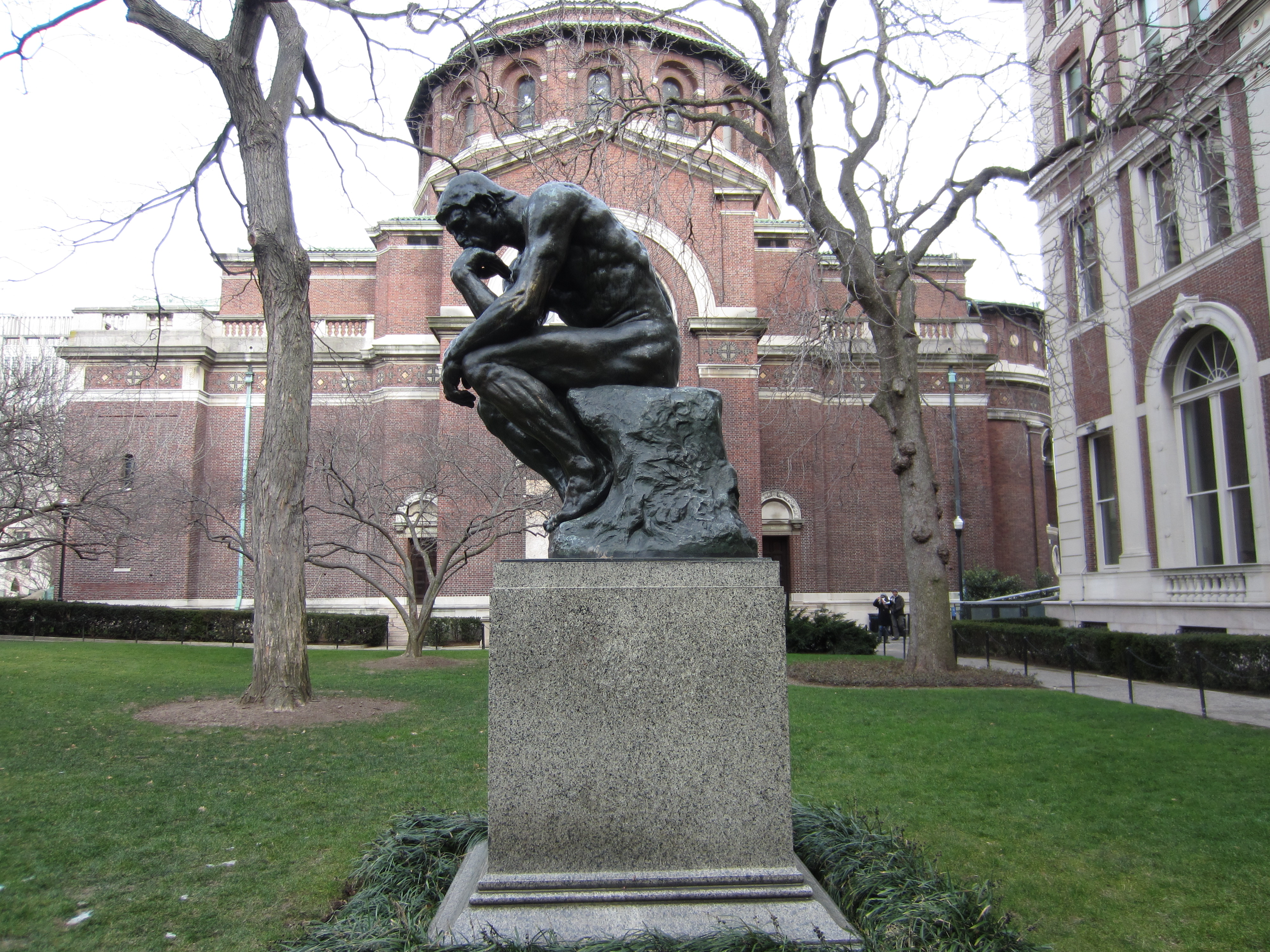
Thinking outside the box on education: 4 great books with a fresh new perspective

Some of the books with the most original, thought-provoking ideas about education these days aren’t even on education. They’re on subjects such as sociology, psychology, technology, and self-help, among others, but they challenge what’s going on in schools today. Here are some books that don’t fall into the category of education, but which have a lot to say about the way we learn.

1. Quiet: The Power of Introverts in a World That Can’t Stop Talking, by Susan Cain (Crown, 2012). This book is ammunition against a school system that increasingly views classroom education as an endless stream of group projects. While it’s important for kids to learn teamwork, all too often we forget the importance of solitude, concentration, and deep thought in the learning process. I know that when I was in school, I did my best work alone. As Ms. Cain writes:

What’s so magical about solitude? In many fields, Ericsson told me, it’s only when you’re alone that you can engage in Deliberate Practice, which he has identified as the key to exceptional achievement. When you practice deliberately, you identify the tasks or knowledge that are just out of your reach, strive to upgrade your performance, monitor your progress, and revise accordingly. Practice sessions that fall short of this standard are not only useful – they’re counterproductive. They reinforce existing cognitive mechanisms instead of improving them. Deliberate Practice is best conducted alone for several reasons. It takes intense concentration, and other people can be distracting. It requires deep motivation, often self-generated. But most important, it involves working on the task that’s most challenging to you personally. Only when you’re alone, Ericsson told me, can you “go directly to the part that’s challenging to you. If you want to improve what you’re doing, you have to be the one who generates the move. Imagine a group class – you’re the one generating the move only a small percentage of the time.” [page 81]

Another book about deliberate practice is Talent Is Overrated: What Really Separates World-Class Performers from Everybody Else, by Geoff Colvin (Portfolio Trade, 2010).

2. The Dumbest Generation: How the Digital Age Stupefies Young Americans and Jeopardizes Our Future (Or, Don’t Trust Anyone Under 30), by Mark Bauerlein. (New York: Penguin/Tarcher, 2008). The title says it all. Technology may be causing untold damage to the brains of young people. I’ve written two articles about avoiding the pitfalls of technology in education (see my piece in USA Today and the follow-up post on my blog). In this passage, Mr. Bauerlein paints a disturbing picture of this country’s rising generation of scholars:

Most young Americans possess little of the knowledge that makes for an informed citizen, and too few of them master the skills needed to negotiate an information-heavy, communication-based society and economy. Furthermore, they avoid the resources and media that might enlighten them and boost their talents. An anti-intellectual outlook prevails in their leisure lives, squashing the lessons of school, and instead of producing a knowledgeable and querulous young mind, the youth culture of American society yields an adolescent consumer enmeshed in juvenile matters and secluded from adult realities. [page 16]

There’s a book on a similar topic, The Shallows: What the Internet Is Doing to Our Brains, by Nicholas Carr (W.W. Norton & Company, 2011), which I hope to read soon.

3. Outliers: The Story of Success, by Malcolm Gladwell (New York: Little, Brown and Company, 2008). In addition to talking about the 10,000 hour rule (the theory that it takes at least 10,000 hours of practice for someone to become an expert in something), Mr. Gladwell also discusses why Asian students often outperform their American peers, especially in science and math:

We should be able to predict which countries are best at math simply by looking at which national cultures place the highest emphasis on effort and hard work. So, which places are at the top of both lists? The answer shouldn’t surprise you: Singapore, South Korea, China (Taiwan), Hong Kong, and Japan. What those five have in common, of course, is that they are all cultures shaped by the tradition of wet-rice agriculture and meaningful work. They are the kinds of places where, for hundreds of years, penniless peasants, slaving away at the rice paddies three thousand hours a year, said things to one another like “No one who can rise before dawn three hundred sixty days a year fails to make his family rich.” [pages 247-49]

4. The 4-Hour Workweek, by Timothy Ferriss (Crown Archetype, 2009). This one may be a bit of a surprise. Am I suggesting that you can get great grades by working four hours a week? Not at all. Nor am I encouraging you to outsource your schoolwork to India. But Mr. Ferriss does present some useful advice on how to work more efficiently and effectively, whether you’re a student or an entrepreneur. Here’s an example:

Parkinson’s Law dictates that a task will swell in (perceived) importance and complexity in relation to the time allotted for its completion. It is the magic of the imminent deadline. If I give you 24 hours to complete a project, the time pressure forces you to focus on execution, and you have no choice but to do only the bare essentials. If I give you a week to complete the same task, it’s six days of making a mountain out of a molehill. . . . The end product of the shorter deadline is almost inevitably of equal or higher quality due to greater focus. . . . . There are two synergistic approaches for increasing productivity that are inversions of each other:

  1. Limit tasks to the important to shorten work time (80/20).
  2. Shorten work time to limit tasks to the important (Parkinson’s Law). [page 75]

What are some of your book recommendations?


Give yourself the gift of great grades.  Order your copy of The Secrets of Top Students today!

The Benefits of Going Low-Tech in College

Low-tech tools

USA Today‘s College Blog just posted my article on the benefits of going low-tech in college!  In it, I explain why ditching your laptop may be good for your GPA.  There were a bunch of things I didn’t get to include in the article, though, so here’s some more advice about how to avoid the pitfalls of technology in the classroom.

      1. How to use slides.In my article, I caution against relying too much on the professor’s PowerPoint presentations, which are now commonly posted online.  But that doesn’t mean you shouldn’t use them at all – they can make taking notes easier and faster, if you use them the right way.  Here’s one way to do it:
        • If the slides are posted before class, print them out and number each one.  Bring the print-outs and a notebook to class.  Write today’s date on your slides and in your notebook.
        • Take notes directly on the slide printouts as they are covered in class.  Flesh out the slide’s outlines with details and examples provided by the professor.
        • If you run out of space on a slide printout, write that slide’s number in your notebook and continue taking notes there.  That way, when you’re reviewing, you can easily match up the slide with the relevant section in your notebook.
        • If the slides are posted after class, take notes as you normally would and use the slides as a supplement.

The benefits of paper

    1. When in doubt, print it out. Many professors have joined the environmental movement by posting syllabi and assignments online instead of printing them out.  This is all well and good for Mother Earth, but it may not be the best thing for your GPA.  If you don’t print out important documents, there’s a much greater chance that you will overlook some key detail.  I observed this numerous times in my paper-free classes.  For example, when essay assignments were posted online, many of my classmates were unaware of essentials such as the due-date and topic.  During finals, they often lost points because they hadn’t noticed certain required readings on the online syllabus.  During meetings for group projects, I was often the only one who could clarify the requirements because I had the assignment right there in front of me.  Printing out documents saves you from having to turn on your computer and navigate to your course’s web page every time you want to check something. If your conscience nags you about killing trees, remind it that you can recycle the paper when the term is over.
    2. Books aren’t dead yet. Dr. Jakob Nielsen, a web usability expert, has some alarming things to say about how technology affects reading comprehension.  “The online medium lends itself to a more superficial processing of information,” he says. “You’re just surfing the information. It’s not a deep learning.” Although reading speeds on electronic devices have improved, they’re still not as good as reading on paper: in Mr. Nielsen’s study, the iPad measured at 6.2% lower reading speed than the printed book, whereas the Kindle measured at 10.7% slower than print. And if you’re even thinking about doing serious reading on your iPhone, I have one word for you: don’t. Reading comprehension scores are 48% of the desktop level when using the iPhone-sized screen. That is, it’s twice as hard to understand complex content when reading on an iPhone versus on a full-sized computer screen.
    3. Be more independent. Lastly, this week’s Time magazine provides more evidence that we’re becoming overly dependent on technology and losing our ability to contextualize information. According to Annie Murphy Paul in the article “Your Head Is in the Cloud”

      Research conducted by Betsy Sparrow, an assistant professor of psychology at Columbia University, and published last year in the journal Science has identified three new realities about how we process information in the Internet age. First, her experiments showed that when we don’t know the answer to a question, we now think about where we can find the nearest Web connection instead of the subject of the question itself. . . . A second revelation: when we expect to be able to find information again later on, we don’t remember it as well as when we think it might become unavailable. . . . The researchers’ final observation: the expectation that we’ll be able to locate information down the line leads us to form a memory not of the fact itself but of where we’ll be able to find it.”

      Scary stuff. You can’t have an intelligent conversation if you have to look something up on your computer every 20 seconds. We must use technology with restraint, both in school and in our post-graduate lives.


Give yourself the gift of great grades.  Order your copy of The Secrets of Top Students today!
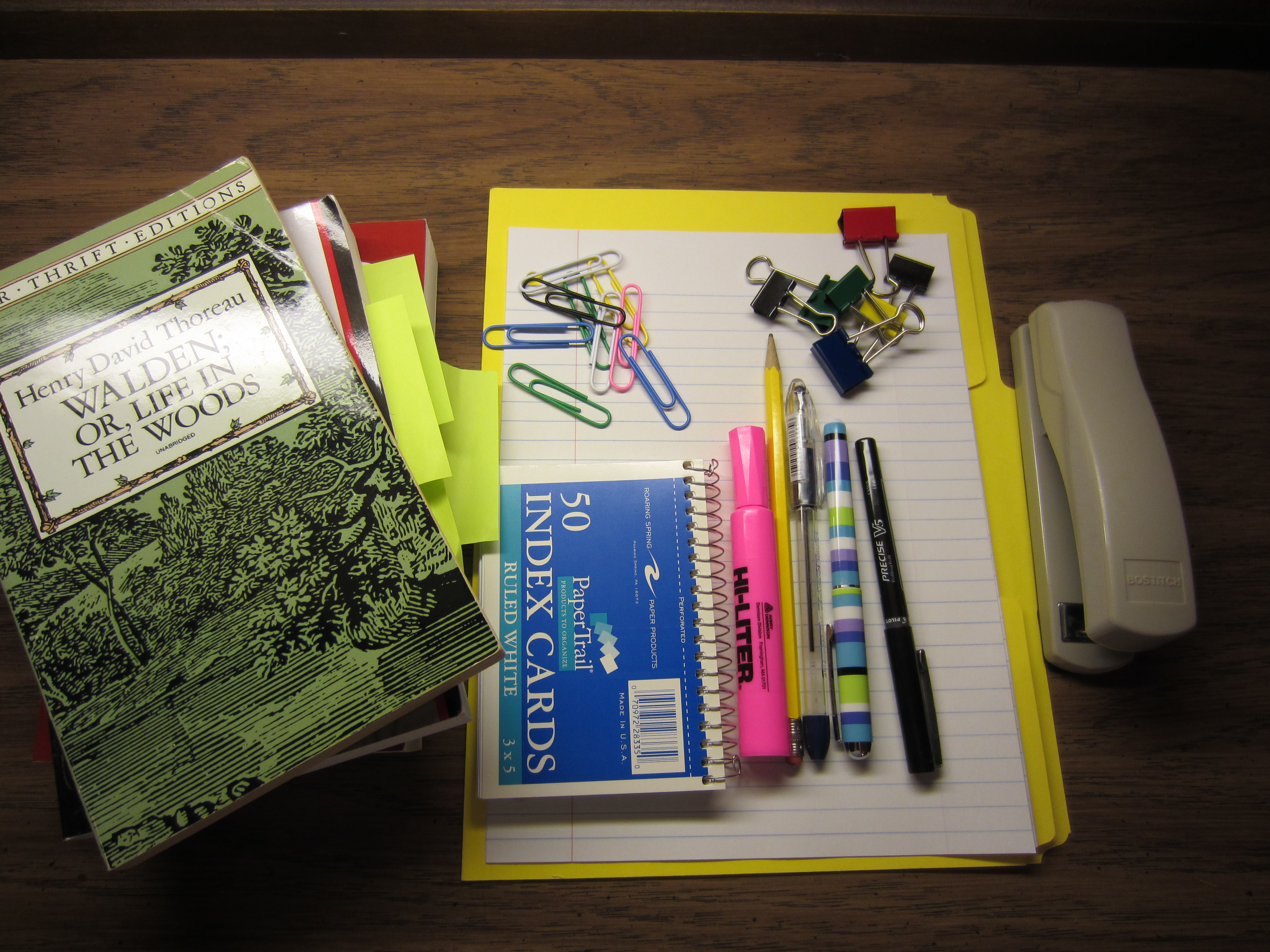
Introverts Unite!

I love the article “The Upside of Being an Introvert (And Why Extroverts Are Overrated)” by Bryan Walsh in Time magazine. I’m glad that people are finally starting to give introverts their due. I am an introvert to the extreme – I got the highest possible score for introversion on the Myers-Briggs personality test. Ten times out of ten, I would rather stay home with a good book than go to a party. That’s not to say that I’m a social outcast or don’t know how to behave around people. I just find it hard to be around large groups of people for long periods of time. I can force myself, but it’s not pleasant. I suspect that there’s a connection between introversion and academic performance. Introverts like solitude, and solitude leads to mastery of skills. As Mr. Walsh writes:

Florida State University psychologist K. Anders Ericsson believes that deliberate practice — training conducted in solitude, with no partner or teammate — is key to achieving transcendent skill, whether in a sport, in a vocation or with a musical instrument. In one study, Ericsson and some of his colleagues asked professors at the Music Academy in Berlin to divide violinists into three groups, ranging from those who would likely go on to professional careers to those who would become teachers instead of performers. The researchers asked the violinists to keep diaries and found that all three groups spent about the same amount of time — more than 50 hours a week — on musical activities. But the two groups whose skill levels made them likelier to play well enough to perform publicly spent most of their time practicing in solitude.

Unfortunately it’s getting harder and harder to escape the distractions of group work. This is true in school and even more so in the workplace. I hope that writers like Mr. Walsh and Malcolm Gladwell (who wrote about a similar subject in Outliers) will convince people of the power of being alone.


Give yourself the gift of great grades.  Order your copy of The Secrets of Top Students today!

Want to increase the number of students in STEM? Try grade inflation

There’s been a lot of talk these days about how to get more students to study STEM (science/technology/engineering/math) in college. Of course, one of the problems is that the math/science education provided in many high schools is inadequate. But there are also lots of students with exceptional educational backgrounds who decide they just can’t hack it in STEM. See the article “Why Science Majors Change Their Minds (It’s Just So Darn Hard),” by Christopher Drew in The New York Times, from November 4, 2011.

Here’s my half-serious suggestion: use grade inflation. Elite students are used to getting straight-As and stellar SAT scores. Throw them into an environment where they’re suddenly getting Bs and Cs, and of course they’re going to freak out. The humanities have endured grade inflation and survived. Many teachers now use A+s to signal extraordinary achievement. Honestly, I don’t care if you raise grades in STEM or lower grades in the humanities, but there should be some kind of standardization. Why should STEM courses have completely different grading criteria? Teachers can do whatever they want; there’s almost no regulation. If an engineering student is struggling just to get a C and sees his roommate earning an easy A in anthropology, he’s not going to be happy.

Top universities also need to offer more practical STEM courses, not just theoretical. Students who can’t or don’t want to join academia are given short shrift. I had to take a continuing education web design course at NYU one summer because there was nothing like that offered at Columbia. The requirements for STEM majors should also be less restrictive. As a Computer Science major at Columbia, I couldn’t take a lot of CS courses that interested me because they didn’t fulfill the requirements for my concentration, and I didn’t have the time or money to pursue them. Instead I had to take a bunch of required theory courses that I detested and never got any use out of.

As a side note, Sesame Street is also getting in on the math/science craze. I’ll be interested to check back in 15 years and see if it made a difference.

I selected this post to be featured on www.educationblogs.net. Please visit the site and vote for my blog!

Give yourself the gift of great grades.  Order your copy of The Secrets of Top Students today!

How to Write a College Research Paper

I’m happy to announce that my first guest post for StudentAdvisor.com is now online! Click here to read The Five Rs of Writing a College Research Paper.
In case you’re wondering, the Five Rs are:

  • Read the instructions
  • Restrict your focus
  • Research actively
  • Reinforce your argument
  • Revise, Revise, Revise

Okay, so maybe that’s Seven Rs, but who’s counting? Read more here.

2/8/12 Update:
The Rise Scholarship Foundation has re-posted my article here!


For more tips on how to write a paper and much more, order your copy of The Secrets of Top Students today!