Ode to Astoria

I’m taking a short break from education issues to explore the town where I was born, raised, and still live: Astoria, Queens. I’ve seen Astoria grow from a working class, mostly Greek neighborhood to a haven for young urban professionals. The Greeks are still here though, and they’ve been joined by large numbers of Egyptians, Brazilians, and countless others. Needless to say, the food here is phenomenal.

Fun fact: Astoria was named for John Jacob Astor, in an attempt to persuade him to give the town lots of money. The ploy didn’t work too well, though – he forked over only $500 and never even set foot in the place.

The weather was so nice last weekend that I took my camera out and photographed some of my favorite local spots. Hope you like them.

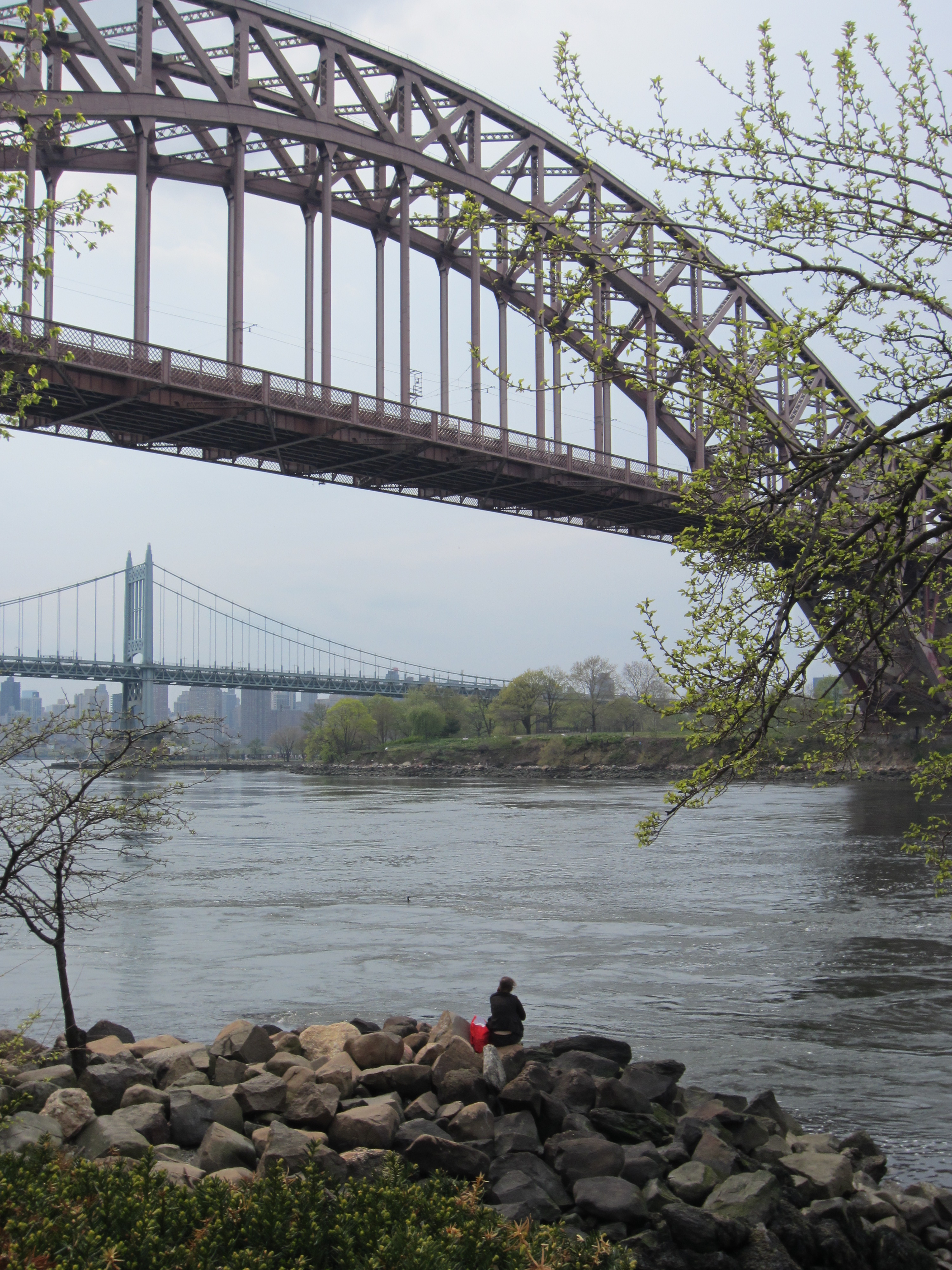
A view of Hell Gate Bridge from Astoria Park


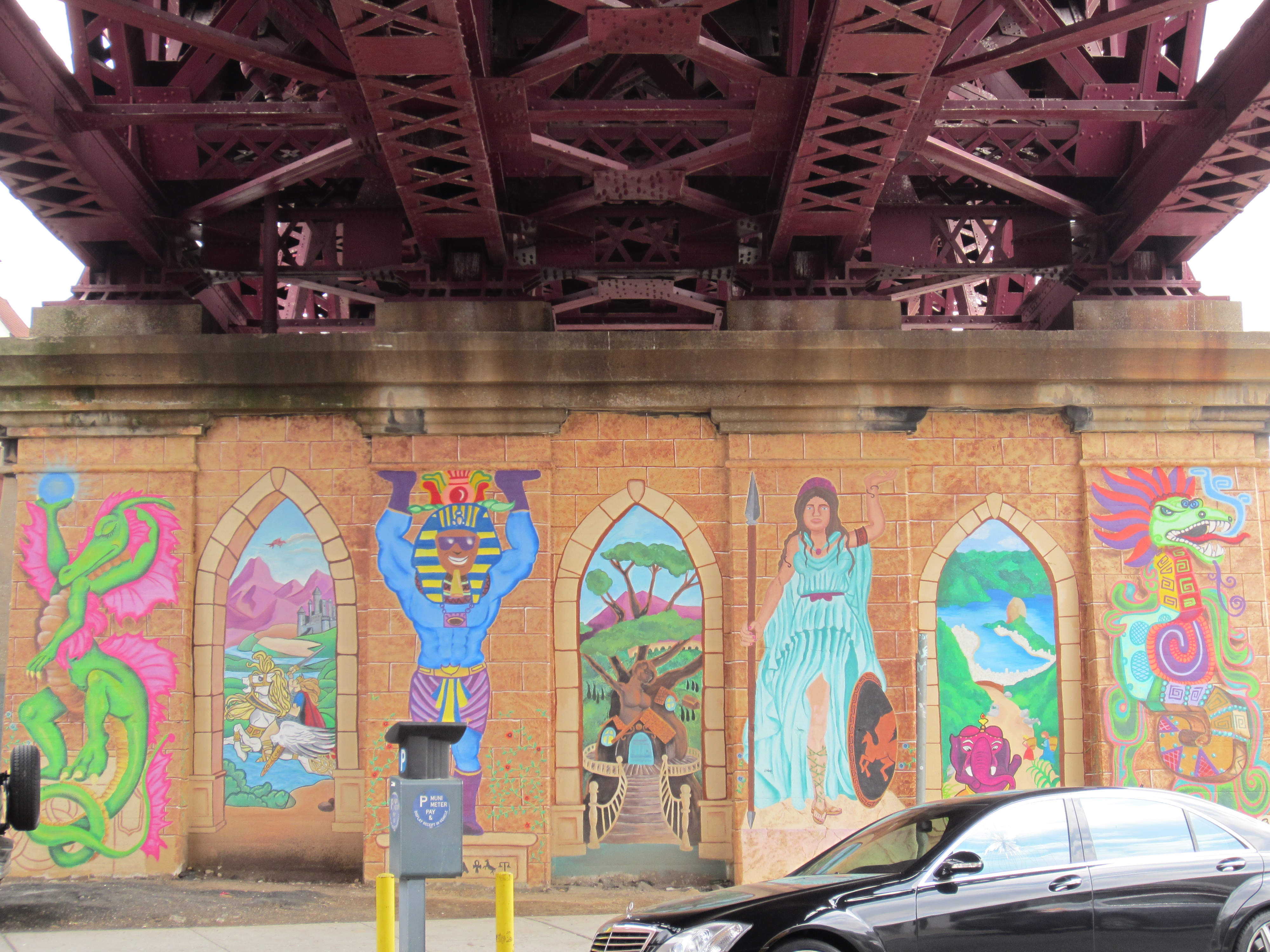
A strange Astoria mural - on Steinway Street


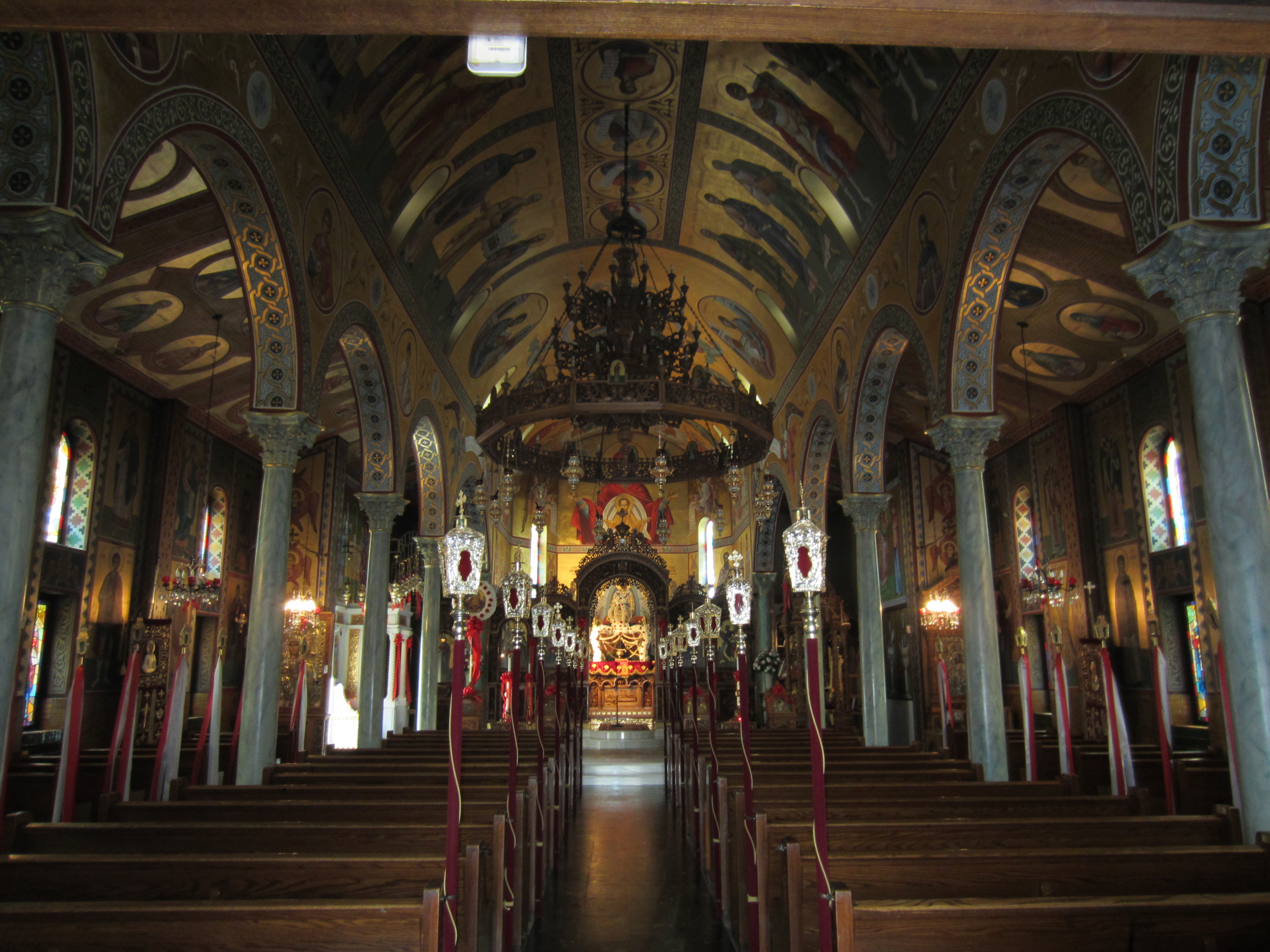
My favorite church in Astoria: St. Irene Chrysovalantou Greek Orthodox Monastery


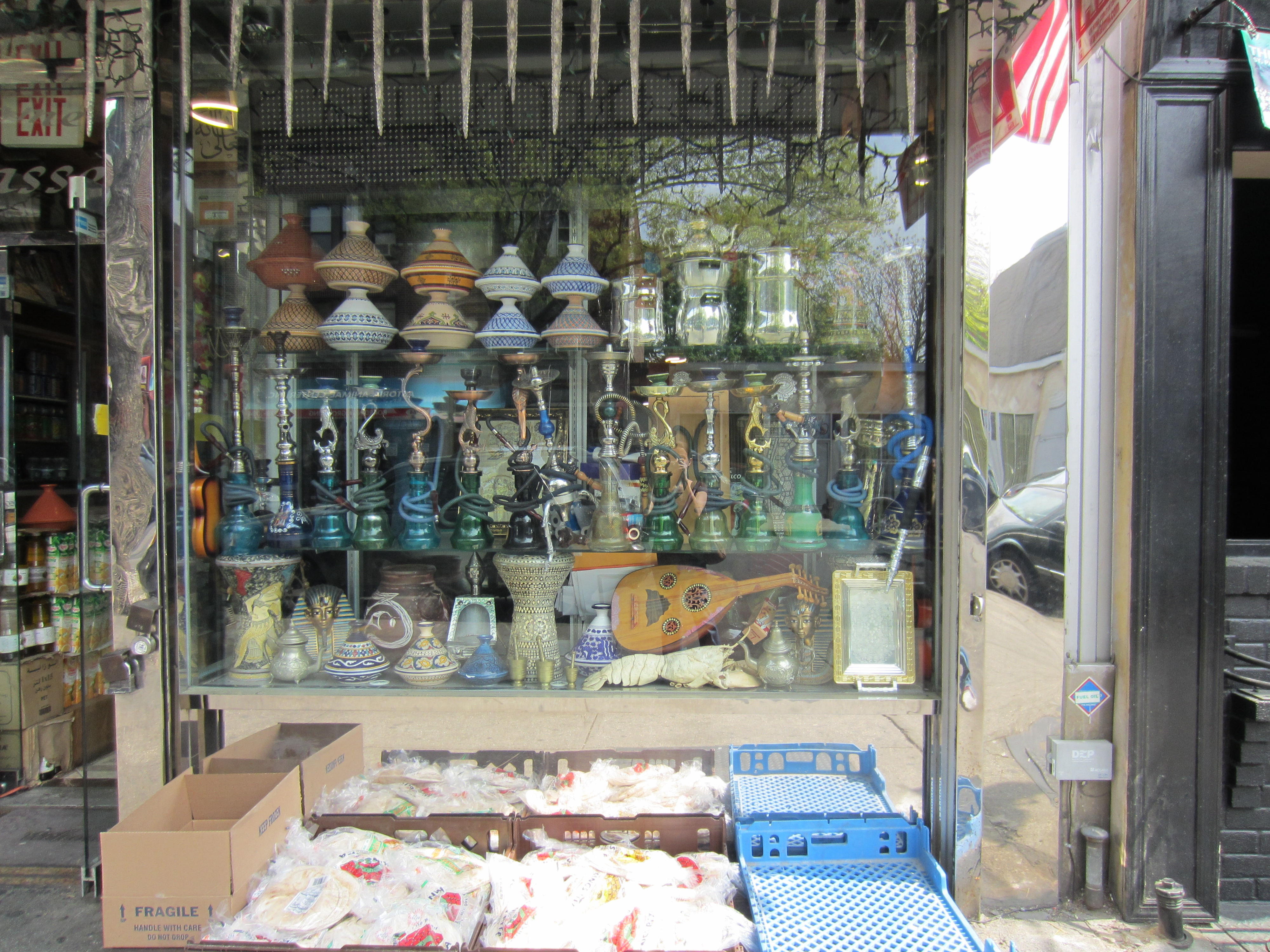
A store window in Little Egypt, Steinway Street


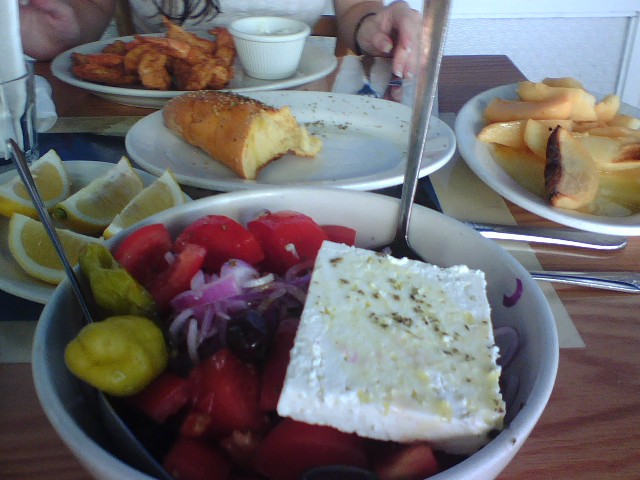
Some local fare - Greek salad at Taverna Kyclades


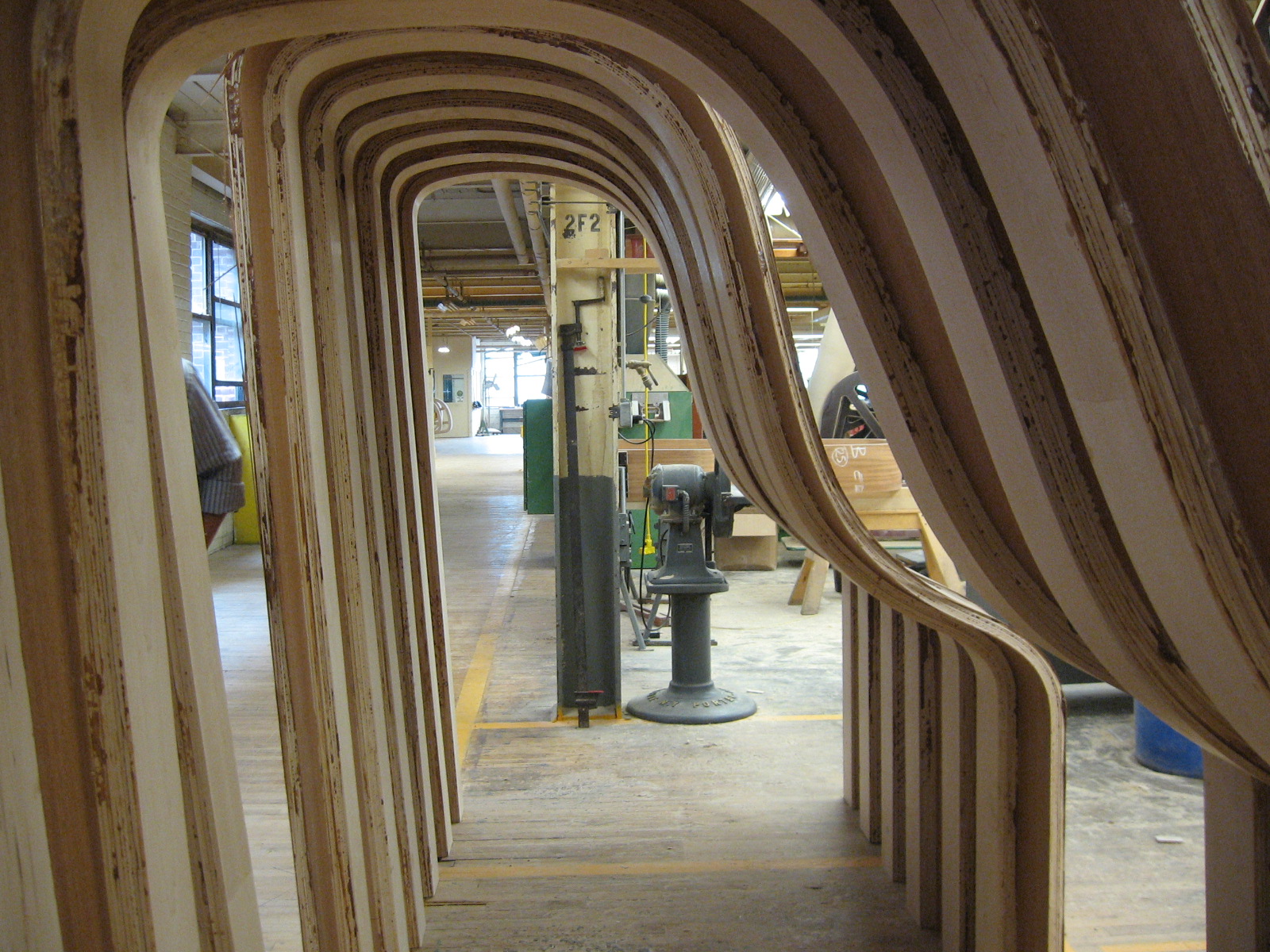
Tour of the Steinway piano factory. You have to sign up in advance to go on the tour. Their phone number is (718) 721-2600.


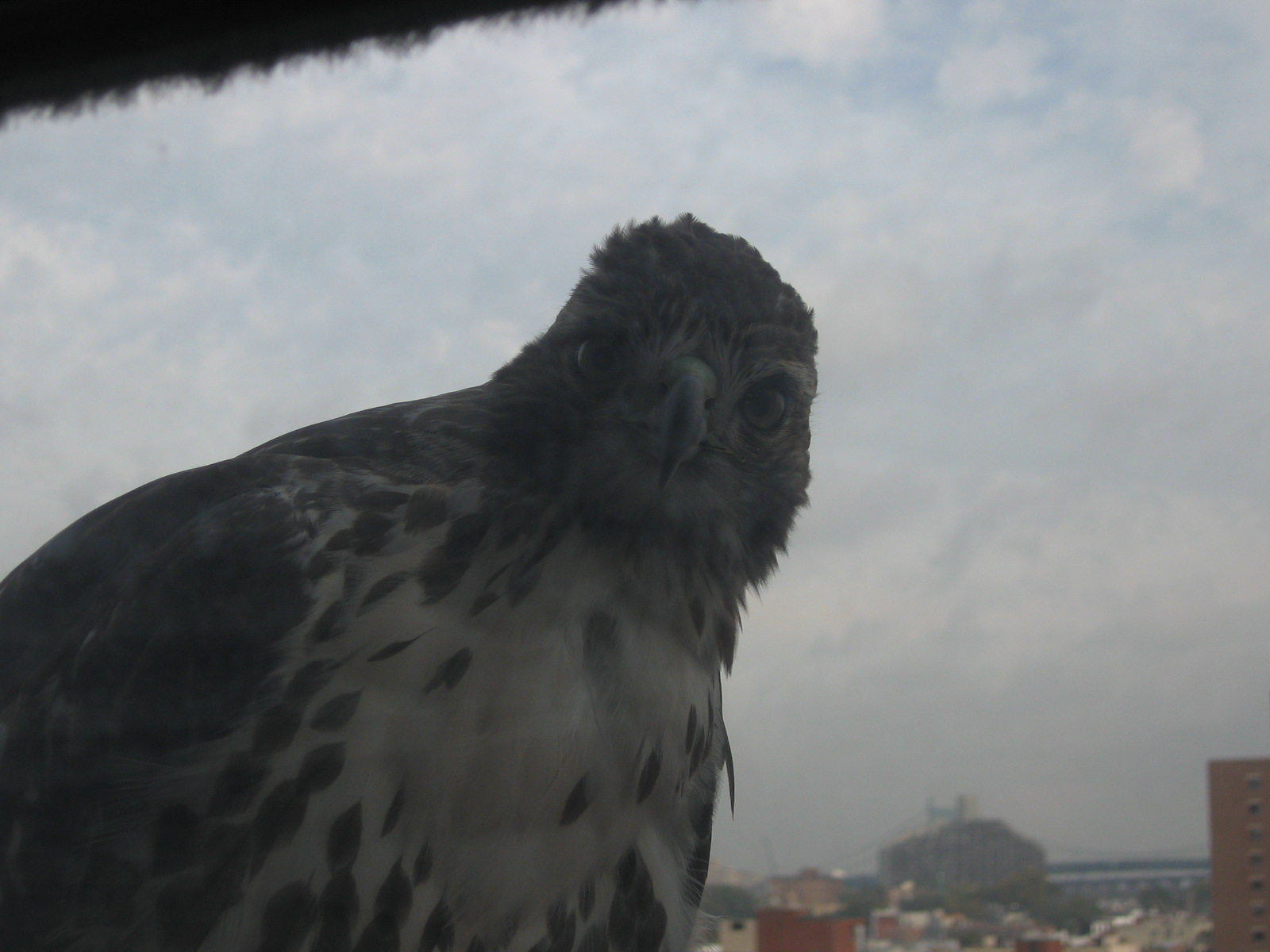
Hawks live in Astoria - here's one on my air conditioner!

In Search of Charlotte’s Web

Did you know that E.B. White had a farmhouse in North Brooklin, Maine, which served as the inspiration for Charlotte’s Web as well as many of the articles he wrote for The New Yorker and The Atlantic Monthly? It’s also the focus of my story, “In Search of E.B.,” which appears in the Winter 2012 issue of the Michigan Quarterly Review (available for purchase here and in text form here). It’s about an unexpected adventure my traveling companion and I had while trying to find this still privately owned farmhouse in the middle of the Maine wilderness.

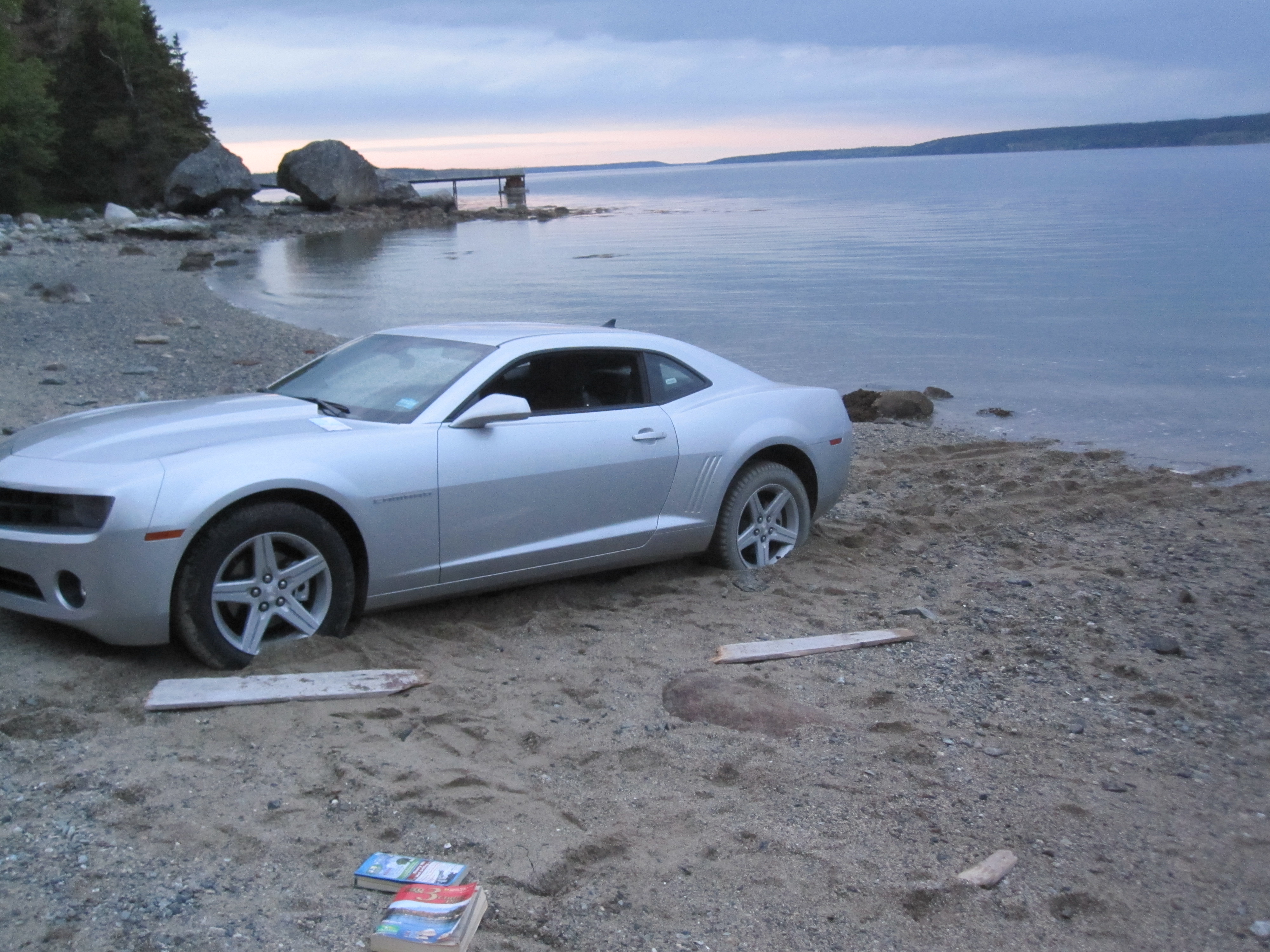
Without giving away too much of the story – I’ll just say it involves a Camaro, an unmarked road, and a rapidly rising tide – here are some pictures from the little trip we took last year.

Our Camaro and the approaching tide


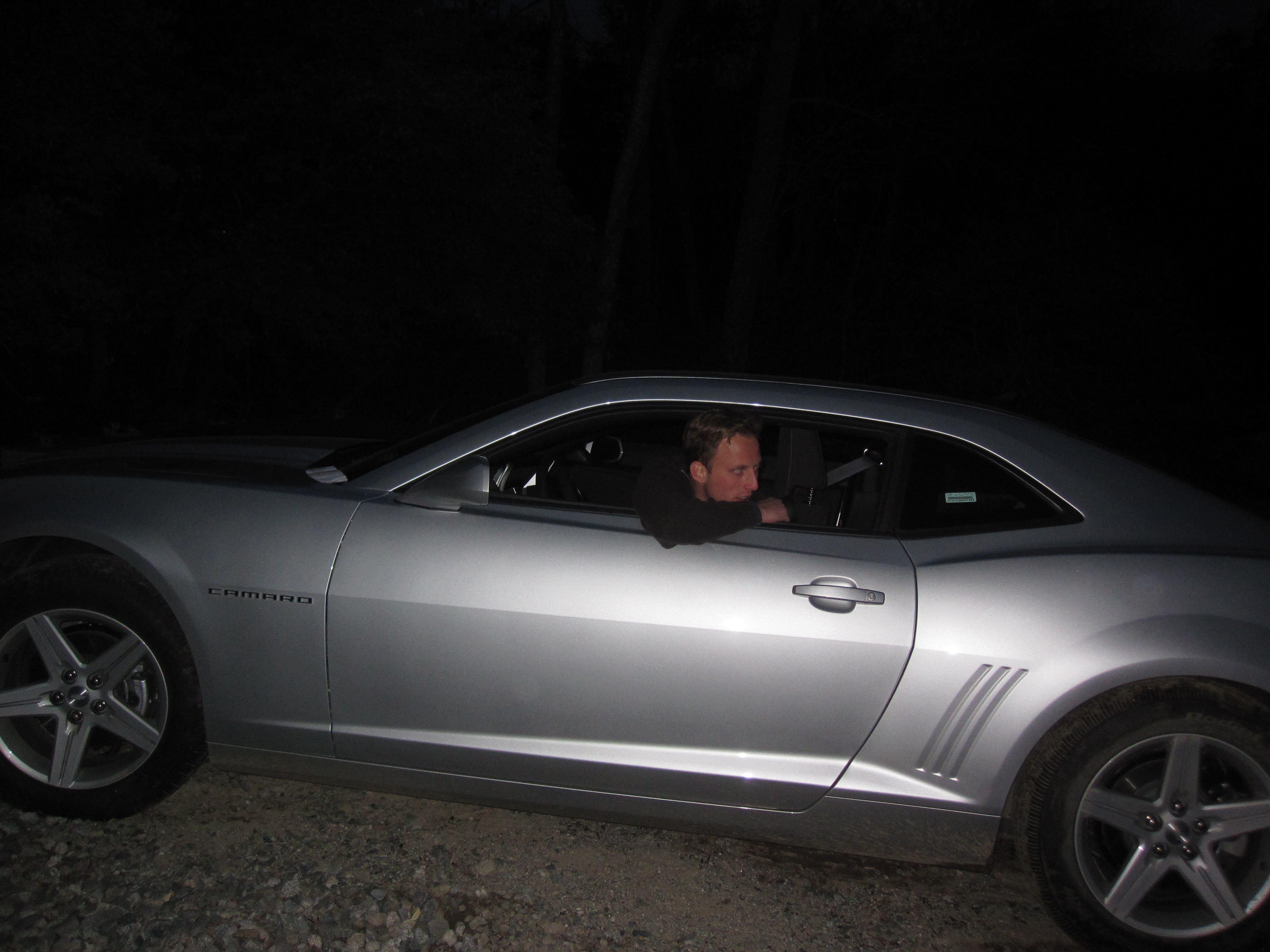
Looking back in disbelief

Pictures from E.B. White’s farmhouse!

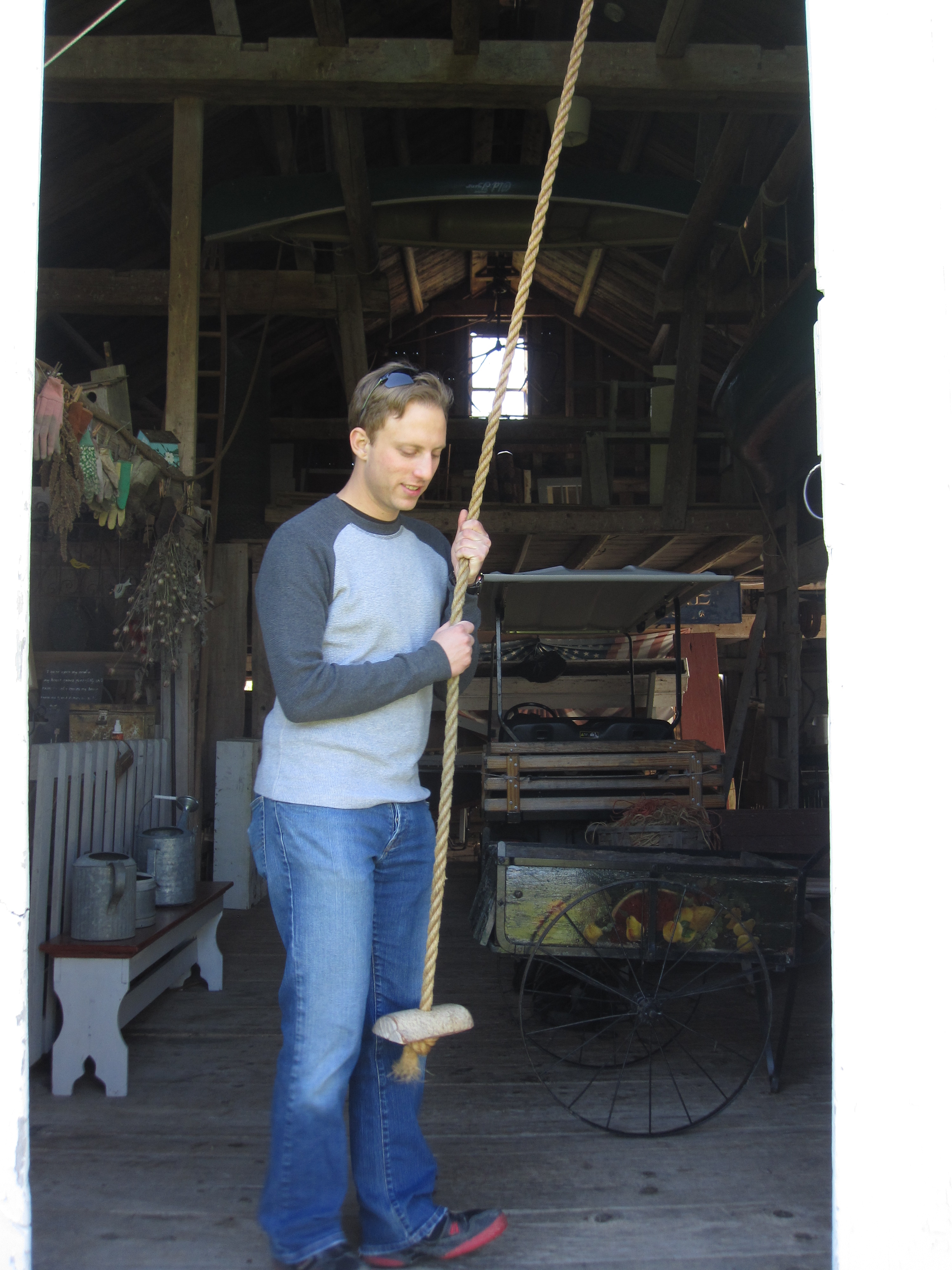
Rob holding E.B. White’s swing


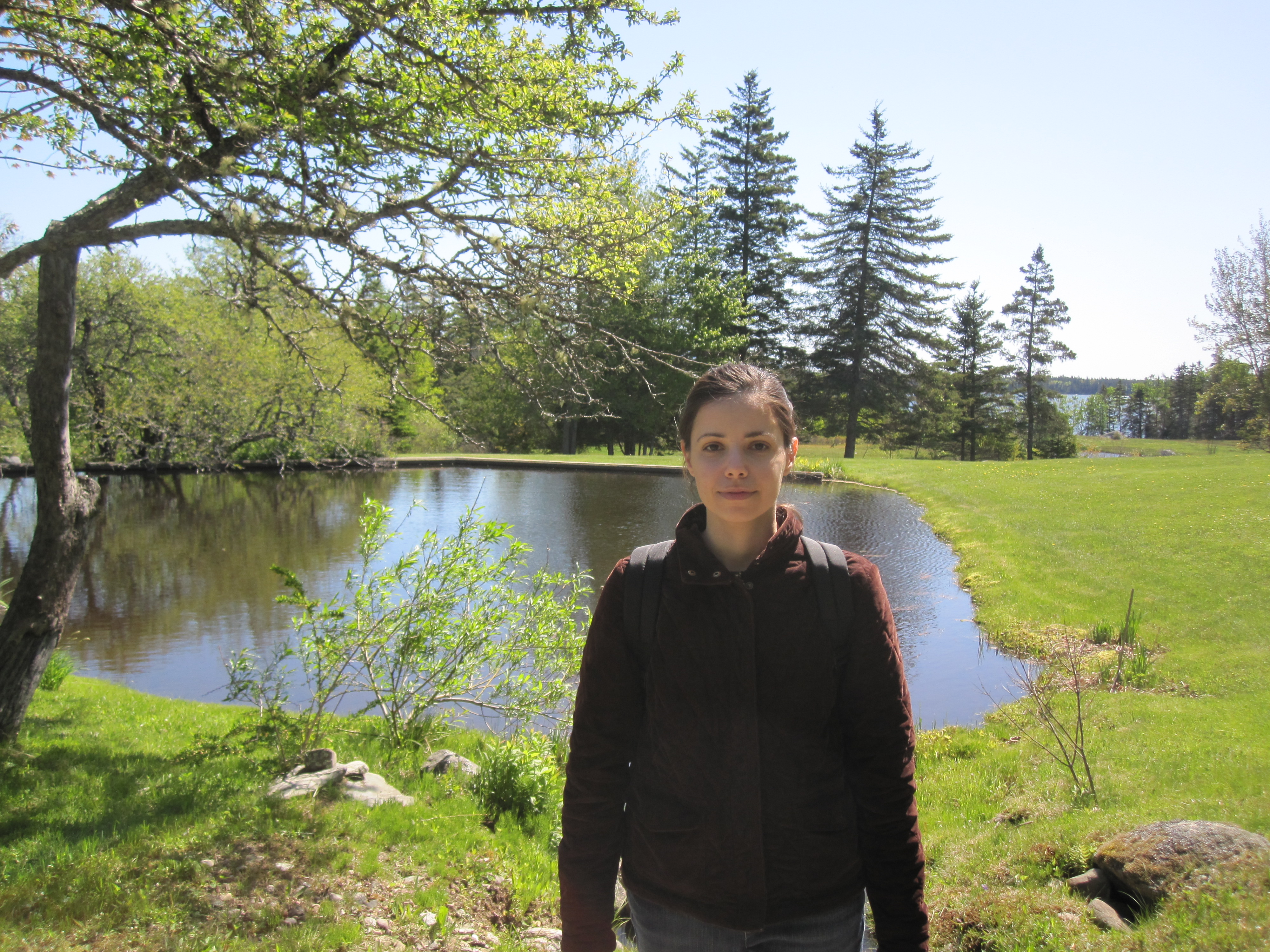
Stefanie Weisman on E.B. White’s farm


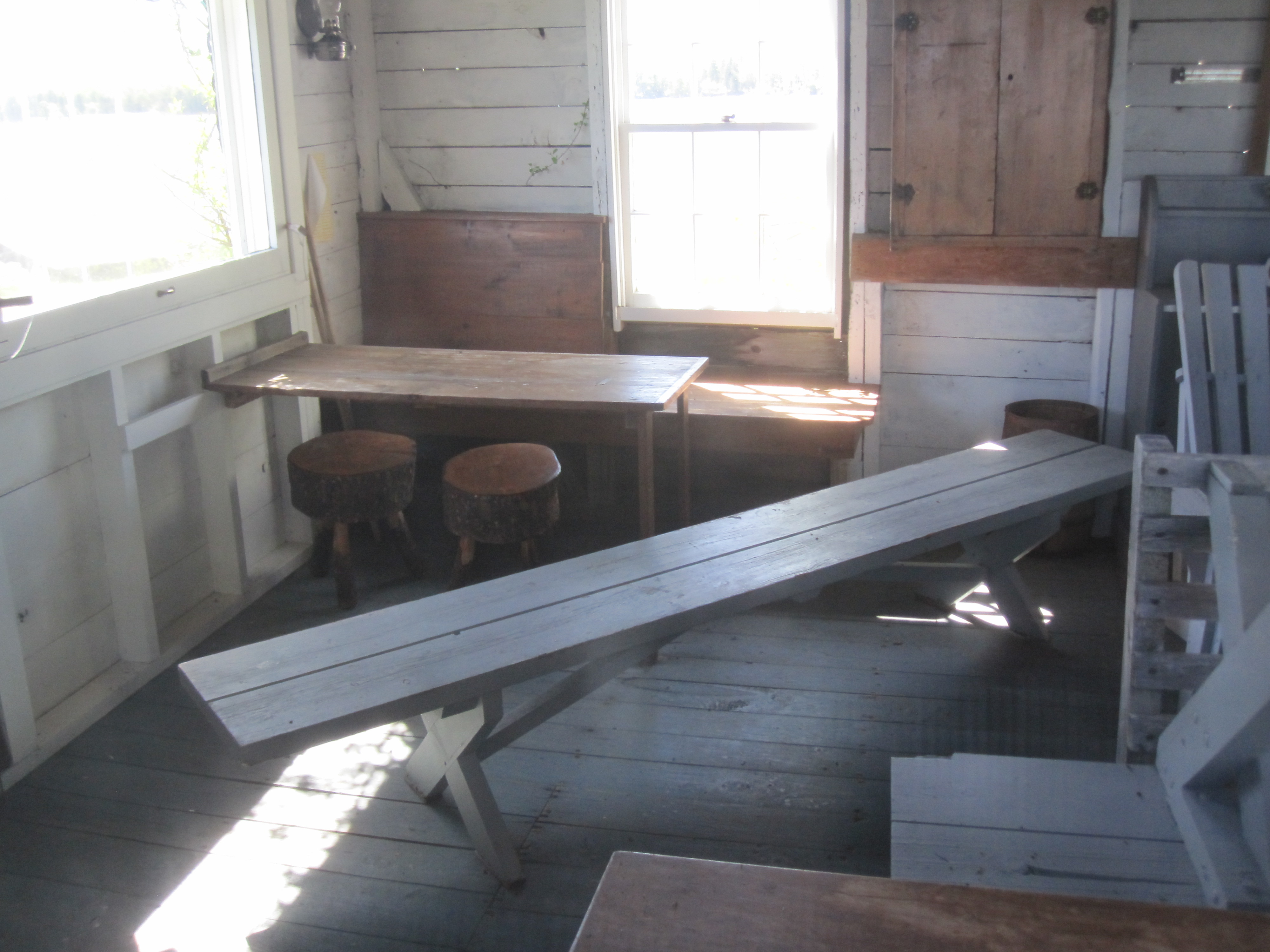
E.B. White’s boathouse/ writing cabin


E.B. White’s Maine retreat

On a related note, I’m almost done reading The Story of Charlotte’s Web, by Michael Sims. This brilliantly written book details the forces in White’s life that led him to create his masterpiece. I identify so much with E.B. White – like him, I’m an introvert who loves to write and feels more comfortable around animals than people. I realized, though, that most of my memories of Charlotte’s Web come from the 1973 animated film version and not the book, which I think I read only once. Growing up, I was a much bigger fan of Stuart Little, and recently I’ve developed a great appreciation for his essays. But now I can’t wait to pick up a copy of CW.

“…remember that writing is translation, and the opus to be translated is yourself.” – E.B. White

Cordoba 2011

Spain travelogue (Cordoba and Madrid)
June to July, 2011
Stefanie Weisman
Wednesday, June 29:
We got to Madrid and had to walk for what seemed like miles to the airport exit. We took the express airport bus to Atocha station for 2 euros. On the way there the glass of the back door actually shattered. I don’t know if it was because something hit it or because it was so hot outside/ cool inside. The bus driver didn’t stop, though.

At Atocha we bought AVE tickets to Cordoba. The train ride took about an hour and forty minutes. From the Cordoba station we took a taxi to our hotel, Hospederia del Atalia, which is in the Jewish Quarter. The hotel is in a residential complex and has a lovely whitewashed patio. The man at the front desk didn’t speak much English. Many people there don’t speak English, so I got to practice my Spanish a lot on this trip. Mom said she couldn’t have gotten along there by herself. Our room had lovely décor, but the hotel had several problems: the AC didn’t work well, there was no computer in the lobby, and there was no ice machine (a problem when we were constantly dehydrated and had only hot water to drink). We had to keep going to a hotel around the Mezquita and paying to use their computer.

After checking in we walked around a little. The streets around the hotel are extremely touristy and it was very hot (over 100). We walked to the Mezquita and went into the orange grove courtyard. We saw a workshop called Meryan which has beautiful leather goods. Then we went to the most basic restaurant we could find and had a late lunch/ early dinner of pizza and Spanish omelette, which were mediocre. We were too hot and tired to do much else after this so we went back to our hotel and went to sleep.

Thursday, June 30:
The hotel breakfast cost six euros, so we decided to try our luck outside. The only place that was open sold horrible croissants and sandwiches and coffee in plastic cups. I was also surprised by how most of the locals we encountered (like the cashier) were not friendly at all.

After breakfast we went inside the Mezquita, which was free until 10:30 am. They were holding mass inside. It was very impressive, and I was surprised by the massive Baroque altar and dome in the center of the cathedral. We decided to come back later and get the audio guide.

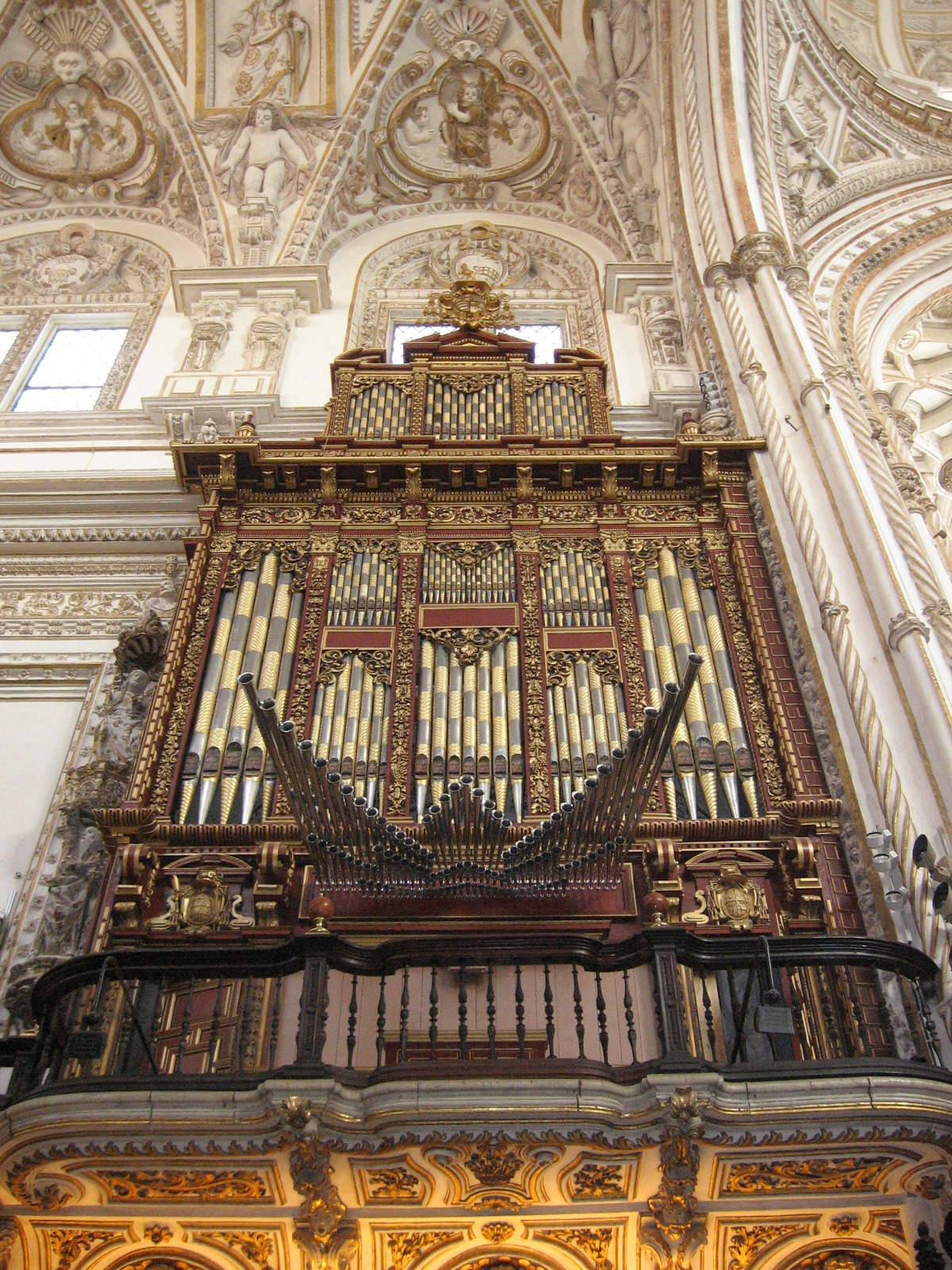
Organ in the Great Mosque, Cordoba


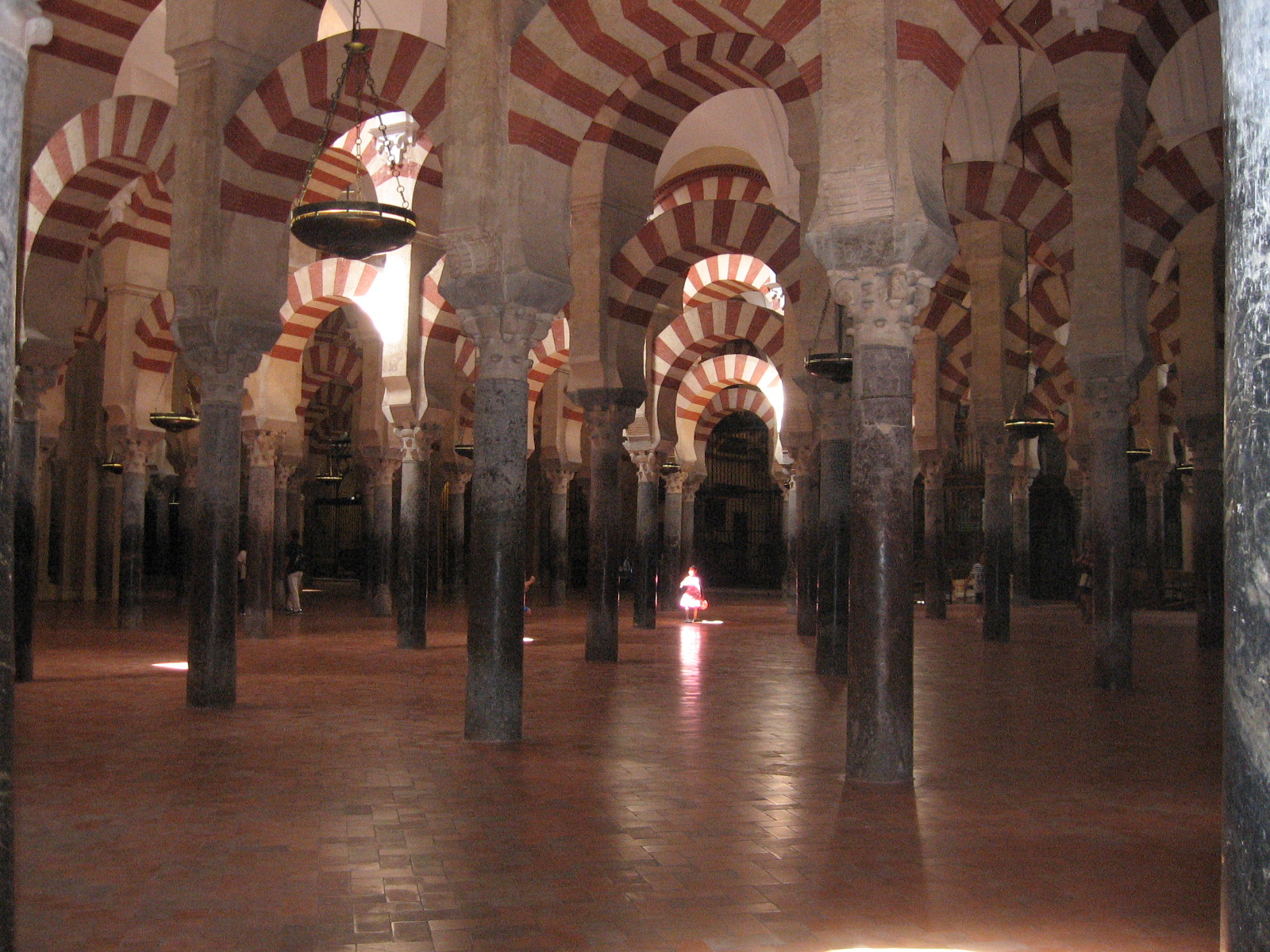
Little girl with fan in the Great Mosque (Mezquita), Cordoba


After this we walked over the Roman bridge. I had an umbrella to protect myself from the sun, but it was still pretty intense. Then we went to the Jewish Quarter and saw the synagogue, which is small but fascinating. The decorations reminded me of the Alhambra. Then to the Casa Sefarad, which is interesting but like many other Jewish museums I’ve seen in Europe – without many authentic Jewish artifacts, and what artifacts there are relate to the liturgy. It also had a lot of reading, including a wall-size page of text on Maimonides. There were a lot of other American Jews there.

I think then we went to eat lunch in Casa Mazal, which is connected to Casa Sefarad and has Sephardic-style food. We got falafel and an eggplant and rice dish. The food here was the most basic, healthy and natural of anything we had in Cordoba. Next we went to Casa Andalusi, which had some nice things, including a Visigothic mosaic in the basement and a pool covered in flowers, but very little depth or information. I got the book Tales from the Alhambra by Washington Irving there. We bought tickets for a flamenco show that night at the Cardenal, outside the Mezquita. The owner of the place was very nice to us, said he wanted to polish his English and that we seemed like nice people (at first he said “well-to-do”).

We took a nap in our room and had dinner in the Maimonides restaurant outside the Mezquita. I had the Cordoban version of gazpacho, which was good as a dip; “mountain stew,” which was salty beef and kind of disgusting; and fruit. Mom got a chicken which was very plain and good, and ice cream. We walked around a little more, but when we passed the Cardenal the owner saw us and said that the show had been cancelled because there weren’t enough people. He gave us our money back and said he was sorry for us because we wouldn’t get to see it. We were disappointed, but I was glad I had already seen a flamenco show in Seville a few years ago.

Friday, July 1:
In the morning we walked towards the Plaza de las Tendillas, which is more modern and commercial. The area around our hotel is very touristy and has almost no grocery or clothing stores or anything practical like that. We found a café near a church which had a little better breakfast than the one from yesterday – but still only toast/croissant, orange juice and coffee.

Plaza de las Tendillas is pretty and has a clock with flamenco guitar chimes. We actually saw an Italian restaurant here, which was the first non-Spanish restaurant we had seen. We tried to go back there later for dinner at around 8 pm, but it was closed! We later found out it didn’t reopen until 8:30 pm, though of course there was no sign on the door with the hours.

We walked from the plaza to the Palacio de Viana, and on the way saw a lot of narrow winding streets and beautiful ecclesiastical buildings. A lot of the buildings here have an orange glow to them from the sandstone and are nicely weathered. There are a ton of convents and monasteries and medieval churches in this area. Everywhere you turn, there is another ancient building. I went inside San Miguel, where mass was again going on. All of the churches here have very lifelike, life-sized statues of saints or Christ and the Virgin. Luckily it was slightly overcast, so we were able to walk without getting overheated.

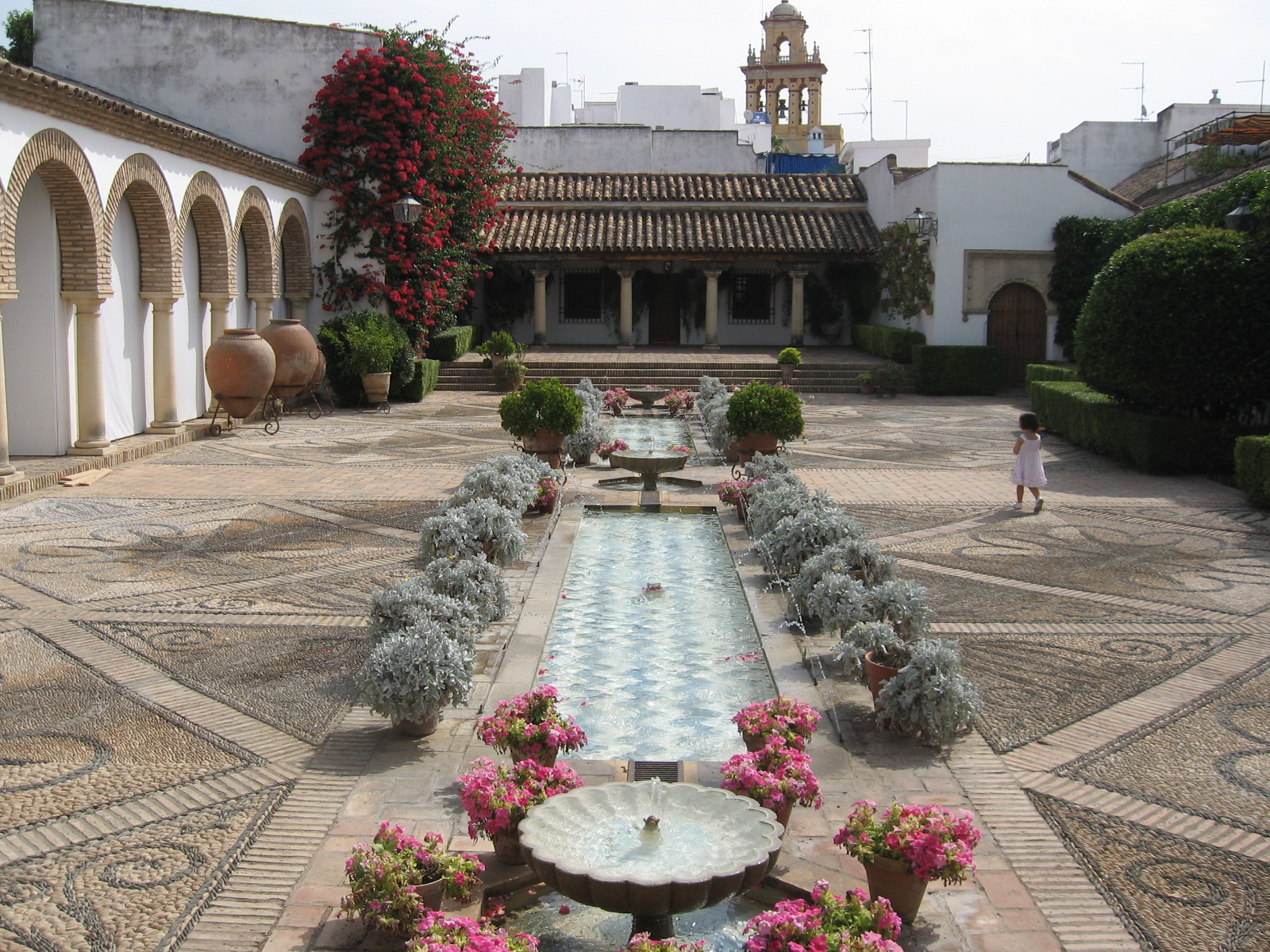
Eventually we reached Palacio de Viana, which has over a dozen beautiful patios with bougainvillea and fountains. We took a tour of the interior, which was only given in Spanish with minimal English translation. The house has a lot of beautiful, rustic Spanish furniture. I didn’t like the imported Italian and French and English furniture as much – it didn’t seem to fit.

Courtyard in Palacio de Viana


After this we walked back towards the Mezquita. We passed the Roman mausoleum, the ruins of a Roman temple (and the modern city hall right behind it), and the main plaza (which was kind of seedy). We went to the Museum of Fine Arts, which I was not too impressed with. At least one of the rooms was closed. We tried to have lunch before going to the museum. I thought there would be a lot of trendy places to eat near the museum, but I was wrong – just more tapas bars and restaurants. They’re all the same and look depressing. They offer either disgusting tapas or heavy, greasy meals for the middle of the day. I saw one tapas bar selling ox tail with chocolate! We walked around for a while and finally just decided to get some ice cream (strawberry and chocolate). At the Mezquita we got the audio guide. This time we had to pay to get in. The audio guide was very factual and not terribly exciting, but it’s good because it makes you stand in one place for a while and look around.

Then we went back to the Plaza de las Tendillas to join a night walking tour we had booked at the tourist office yesterday (when I asked the guy whether we should buy tickets in advance because it gets filled up, he just kind of shrugged his shoulders). Since the Italian restaurant was closed, we ate in a café and got sandwiches with vegetables, egg, and ham and cheese. Their food is so unhealthy. They use huge slabs of white bread, never whole wheat, and everything is greasy and/or salty. The Spaniards themselves don’t seem to eat much. All they do is drink beer, and occasionally they’ll pop a few olives in their mouths. The tapas really just facilitate the drinking of beer. We also saw them eating a lot of ice cream. I think one reason their food is so bad is because they didn’t have much immigration. There’s almost no variety here, and the restaurants are closed at such inconvenient times. We were also shocked by how many people were smoking. Very few people here are overweight, probably because they eat so little and smoke so much. It would make a huge difference in the tourist experience if the restaurants had more variety and better hours. There are a lot of restaurants in Cordoba, they just all sell the exact same things.

There were a decent number of people on the tour and most of them were English speakers. One of them was a woman from California who was doing a house and car-swap with a family from Madrid. She was there with her husband and daughter. The tour was pretty good, though it covered a lot of the ground we had already seen. We saw the very narrow streets of the Calle de las Flores and el Panuelo, which had the smallest plaza I’ve ever seen. We made a stop at an inn in the Plaza del Poltro, which was the basis for one of the inns in Don Quixote, where there was an actor dressed as Seneca who made a speech in Spanish. We also made a stop at the Chapel of Saint Bartholomew, which is tiny but very beautiful. At this stop, the same actor made a speech dressed as Maimonides. After the tour, the tour guide took us to a tapas bar where we could get a tapas and a drink. I got chorizo, which was disgusting, and water. The woman from California mentioned that she had had very good paella for lunch, but that it’s reheated for dinner. I can’t eat anything that heavy for lunch, especially when it’s over 100 degrees out.

Saturday, July 2:
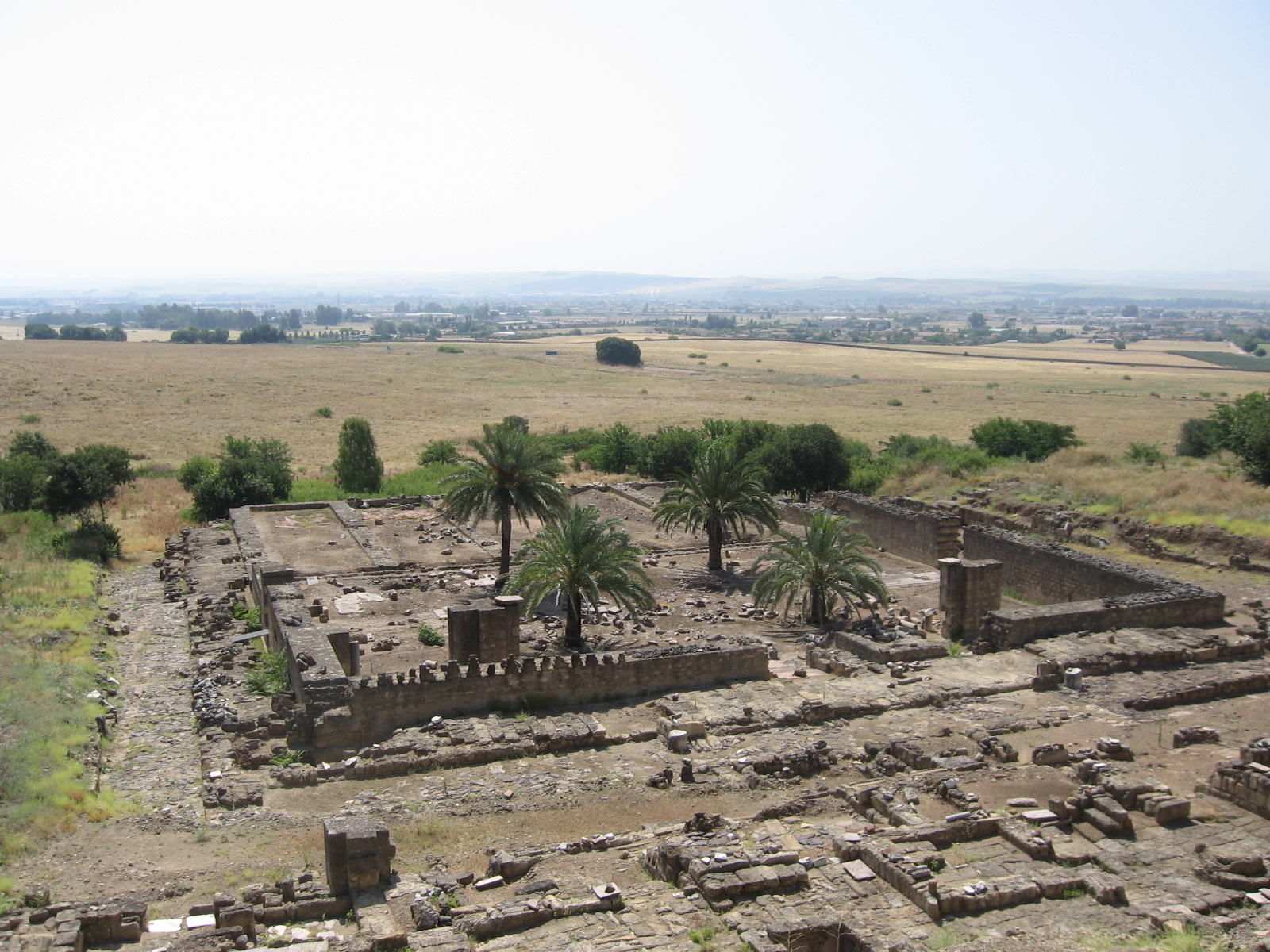
I asked the lady at the front desk to book us on a tour to Medina Azahara for the day, but she said it was already filled up. This was surprising because things seemed pretty slow around there. So we had to buy bus tickets from the tourist office. We had breakfast in the hotel lobby. It was better than we expected; they had croissants, toast, orange juice, coffee, ham and cheese (which we didn’t get), fruit, and yogurt. Afterwards we walked to the bus. I stopped in the church of St. Nicholas, which had some very interesting statues of Christ and Mary. The bus picked us up outside the Roman mausoleum and dropped us off near the museum. We watched a short film on the site, which had very good computer-generated reconstructions. Then we took another bus to the site itself, which was fascinating. I’ve never seen a Muslim archaeological site. Unfortunately the main hall was closed for renovation or excavation. It was incredibly hot standing out there in the sun, so we went through the site as quickly as we could. I was the only person carrying an umbrella for shade. There were only one or two places where painted decoration was still visible. I also saw a well-preserved brick oven. There was a lot of nice vegetal decoration on the walls, though much of it is still on the ground being pieced together.

Ruins of the mosque in Medina Azahara

We took the bus back to the museum and ate pineapple and a pizza at the café. Almost everyone else was drinking beer. We had to go through the museum very quickly to make the bus back to Cordoba, but it seemed excellent, with many more computer-generated videos and artifacts. It would be nice if reproductions of the artifacts were placed in the site itself. I would have liked a half hour more at the museum, but the bus was leaving.

Note: Cordoba is full of swallows and white or near-white pigeons.

When we got back to Cordoba we took a nap, then went out for a walk around the Alcazar and Royal Stables. It was still siesta time (which lasts from around 2 to 8:30!) and the streets were almost deserted. I don’t know what they do for so long. It seemed very inconvenient to us. There are some lovely patios here, which you can see through the gates. The city walls are also quite impressive. I saw the old Moorish water mill on the Guadilquivir, but they were doing construction work in front of it. We went into the royal stables and saw them exercising the horses. We had tickets for the 9 pm equestrian show. We thought we would have dinner at Casa Mazal before the show, but we found out they don’t open until 8:15, which wouldn’t leave us enough time. So we actually went to the Burger King outside the Mezquita. We didn’t want to go, but we felt we had no choice! We got Whoppers and a salad, and it was the best meal we had in Spain!

The show at the Royal Stables was very enjoyable. We were seated on a few benches on one end of a stone building, and the horses came out one by one or in pairs and did dressage and tricks for us. The riders wore traditional outfits. For two parts, a flamenco dancer came out and danced with the horse. Kind of corny, but it was nice to watch. They introduced the horses in Spanish and played music on the loudspeakers. The show might have been cut short because they had a huge dinner party coming into the stables, as we saw when we were leaving. They had two horses with riders standing at the entrance.

Flamenco and horse at Royal Stables, Cordoba

Sunday, July 3:
The next day we ate breakfast at the hotel and walked to the train station. It’s cool in the morning so it wasn’t too hard to walk; it took about half an hour. We got tickets but they didn’t have any seats until 11:30 am, about 2 hours away. Again, I was surprised by this, since things seemed pretty slow. I also realized that with our ticket stubs from Madrid to Cordoba, we could get a 20% discount on the return tickets. However, I didn’t find this out till after I had bought the return tickets, so I had to go back and get a refund. I had to do all of this in Spanish, since they didn’t speak much English.

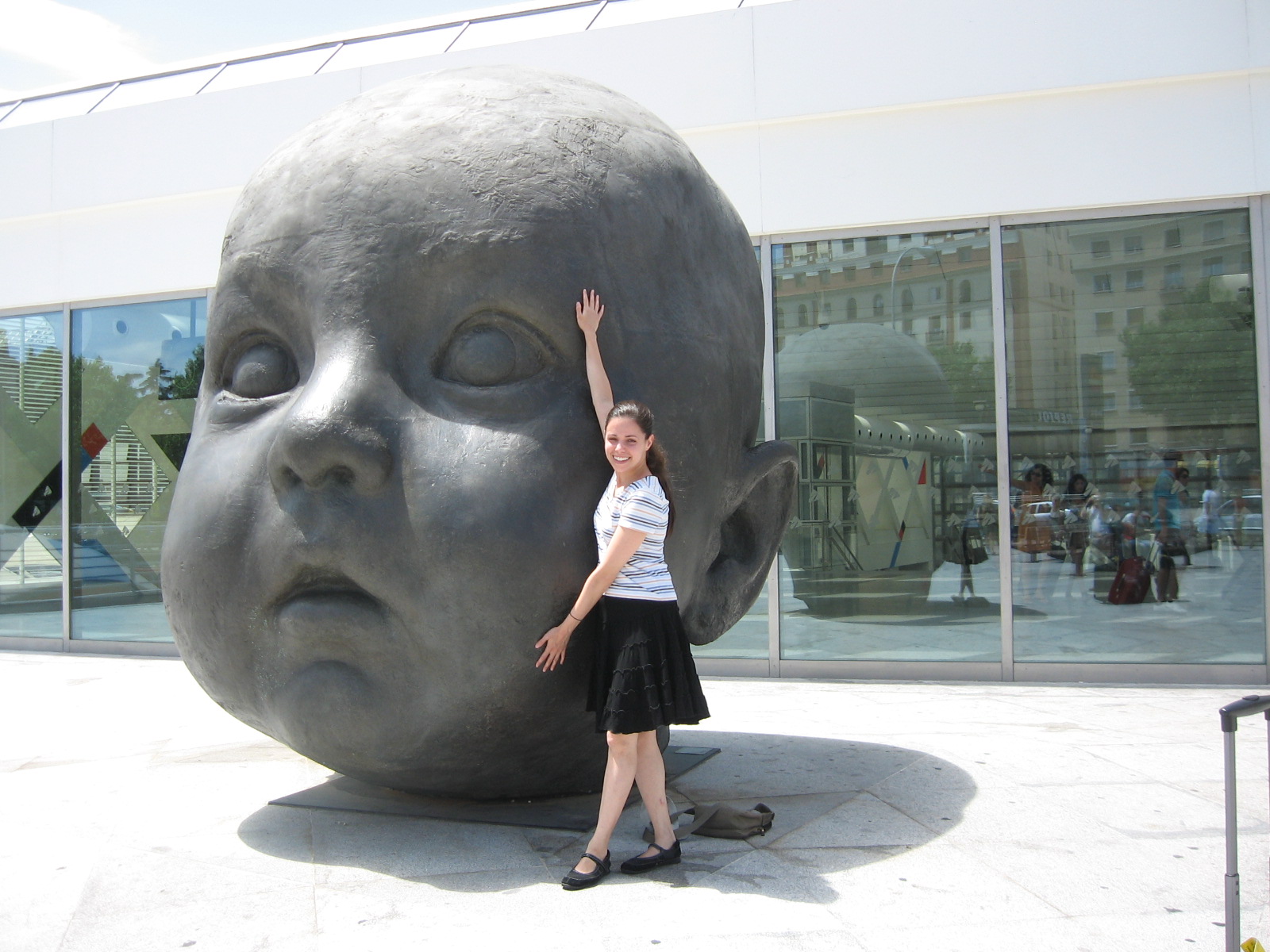
Outside Atocha station there were some huge bronze baby heads (by Antonio Lopez?).

Me with giant baby head outside Atocha station

We walked to our hotel, the AC Carlton, which was a few blocks away from the station. Madrid is a little grungy and much dirtier than Cordoba, where they whitewash their houses all the time. The hotel was pretty modern and comfortable, though the bathroom smelled a little. It had a mini fridge and computers in the lobby. There’s a lot more food variety in Madrid. They have Mediterranean food, Italian food, lots of Burger Kings and McDonald’s, and even Starbucks and Dunkin’ Donuts. Normally I don’t like to see chains, but they were a welcome sight to us in Spain. We went to a Starbucks outside of the Reina Sofia museum and had a yogurt parfait, a cookie and a pasta dish.

Then we walked to the Thyssen-Bornemisza museum, which has an excellent collection. I love their pre-modern stuff. They also had an Antonio Lopez exhibit that was sold out. After this we went to the CaixaForum, which hadn’t existed last time I was in Madrid. However they only had an exhibit on Russian avant-guard art, which I had no interest in seeing. I did get a peacock note-holder from the gift shop, however.

At this point everything was closed, so we just walked around. I basically retraced the steps I had taken the last time I was in Madrid. It stays light in Spain until almost 10 o’clock this time of year, which is great for sightseeing. The weather was also much cooler than we had had in Cordoba. We walked around the Prado, then went up to the Puerta del Sol which neither of us liked. It’s extremely crowded and full of freak shows. Then we walked to the Plaza Mayor. Madrid is a lively place, but I don’t like these large public areas too much. We walked back to the area where we had seen a few Italian restaurants and had pizza in a small pizza parlor. It was fresh and smelled good, but the cheese was very salty.

Monday, July 4:
We got up at 4:30 am and walked to Atocha, where we caught the bus to the airport. I had the most horrible airport experience in my life here. The loads were really bad and we didn’t know what flights we were going to get on, if any. We didn’t even know what terminal to go to; there were no signs. We started out at Terminal 2, which had lines almost out the door. It was a madhouse. This was only for European flights, however, so we found out we had to go to Terminal 1. We checked in for the US Airways flight and went through security, where the guards shout at you in Spanish and you have to carry your trays to the scanners. Terminal A, with all the flights going to the US, is miles away and takes forever to get to. They hadn’t even opened it yet when we got there, and we all had to stand or sit on the floor waiting for the guards to arrive. Finally they did, and there was no order to anything…. [A lot of stuff happened here because I didn’t have regular tickets; I was flying what they call “non-rev.” I won’t go into all the details here.]

When I went through security again one of the guards (in Spanish) looked at my plastic bag of 3-oz. toiletries and said, “This is a really big bag.” I started complaining that I always traveled like this and never had a problem, so he let me through. Made the huge walk back to Terminal A, went through security there again. I made sure I was listed for both the US Airways flight (to Philly) and the Continental flight (to Newark). The US Airways gate agent said it didn’t look good, but the Continental agent said don’t worry, you’ll get on. The US Airways flight left a little earlier, so I kept going back and forth (the gates were next to each other, though they were very far apart) until I got my Continental ticket. I don’t think they ever called me for the US Airways flight. The flight back was uneventful. There was even an empty seat next to me. I watched the 2011 version of Jane Eyre, which was excellent, and The Informant!. I was so stressed out from the airport experience. I should have known that the loads weren’t good enough and made alternate plans, or something. The Madrid Barajas airport is also the worst airport I’ve ever seen. It’s clean and modern, but the layout is terrible, the workers are rude and don’t speak English, the signage is bad, and it’s a complete nightmare if you’re trying to do anything out of the ordinary.

In conclusion, Spain is a beautiful country, but they need to improve their food situation!

Brazil 2011

Brazil 2011 journal
Stefanie Weisman

Sunday, May 8:
Flew from LaGuardia to Charlotte, N.C., then caught the flight to Rio at night. There’s a lot of paperwork involved in going to Brazil. The US Airways flight to Rio was terrible. The interior of the plane hadn’t been refurbished since the 80s or 90s, and the pitch of the seats left us barely any room to move. When the person in front of me reclined his seat I couldn’t even lean forward to rest my head on the tray, which is how I sleep. We couldn’t reach our bags beneath our seats without serious effort. The food was disgusting, and they played movies all night long on one screen in the front of the plane. I could hear the sound through people’s headsets. We got barely any sleep, and just as we did fall asleep they woke us up about 2 hours before landing to give us “breakfast” (coffee-cake).

Monday, May 9:
The airport in Rio is one of the ugliest I’ve ever seen. It looks like it’s from the 60s or 70s. There weren’t any ATMs in the main hall so we asked at the information desk, where only one guy kind of spoke English. The ATMs were very far out of the way and we had to go up several flights of stairs. There we had to try 7 or 8 different ATMs before we found one that recognized our cards! We were shocked that so few Brazilian banks accept American ATM cards. I think the only one that worked was Bradesco.

We got some money and went outside and found the waiting area for the hotel bus, which goes down Avenida Atlantica and passes the major hotels. The people in charge spoke almost no English. Throughout the trip, we were surprised at how hard it was to communicate even with people in the tourist industry. We waited for the bus for a long time. The bus is poorly designed and can fit only 5 or 6 pieces of luggage in the bottom. The rest we had to take up with us. It cost 9 reais and was moderately comfortable. The roads are very bad though and we were jostled pretty violently. Rob and I were exhausted since we had gotten almost no sleep on the plane, so we kept falling asleep and being jerked awake by the bumpy road. I caught my first view of Sugarloaf Mountain, which is breathtaking.

When Rob woke up as we entered Copacabana he realized his camera was missing. I didn’t even know he had taken it out, but he said he had put it on his lap or by his leg to take pictures. We assumed it must have fallen and searched all over the bus for it. The guys behind us tried to help us out. As we searched for it the bus passed the street that went up to our hotel and didn’t stop. I didn’t realize you had to call out to make the bus stop, and we were kind of panicking because we still couldn’t find the camera. We got our luggage and Rob made one final search, but still no luck. We were in a really bad state because we were so sleep deprived and confused and disoriented. Rob realized that he was missing his sunglasses, too. Up to this point we thought the camera had just fallen, but now we realized he had probably been robbed. He wasn’t sure if they had taken the sunglasses off his head or if he had put them near his camera. We think that the people behind us must have reached between the window and the seat and taken the things. That’s why they were pretending to be so helpful.

We walked a few blocks to the Apa Hotel in a state of shock. We had gotten robbed within an hour of landing in Rio. We were afraid of everybody, thinking they might be thieves or kidnappers or something. We couldn’t even enjoy being on Copacabana Beach. Apa Hotel is a few blocks off the beach, and when we got to the front desk they told us we couldn’t check in until 2 pm, which was 2 hours away. We were too scared and confused to want to leave our luggage there and head back out, so we just sat in the lobby and used the hotel computer to send emails to our mothers. My mom was pretty calm about it, but Rob’s mom sent back emails that really scared us.

Finally they let us check in. The room hadn’t been renovated in years, but it was spacious and relatively clean and comfortable. We locked all the doors and fell asleep for several hours. We felt much better when we got up, though we were still pretty scared. It was wintertime so it was already dark when we got up (it got dark around 5 pm). Rob did some research on where to eat, and we took a cab to a seafood restaurant in Ipanema. This neighborhood felt okay to us. The restaurant prices were so high that we had to leave after we had already been seated. Looking back on it, though, I’m not sure if the prices were for one person or two people. The food prices in Rio in general are surprisingly high.

We wandered around a bit and saw a few nice restaurants. The area along the beach is well-maintained and full of joggers, rollerbladers, etc., so we felt safe. We walked away from the beach a few blocks and settled on a relatively inexpensive chicken restaurant with outdoor seating called Galitos Grill. We got a chicken in mild spicy sauce and a rice dish with eggs and potato chips. The food here was delicious. Rob got a caipirinha, which he liked but which I thought was disgusting, and a Guarana soda. Rob was still hungry afterwards so he got a farofa dish, even though he didn’t know what it was. I thought it was okay though I couldn’t eat much of it, and Rob thought it was too dry. We took a cab back to our hotel. Since we were too afraid to walk or take public transportation here (all our guide books said to avoid taking the buses, especially at night), we ran up a fortune in taxi cab bills over the course of our trip. Rio is a very expensive city for tourists. We couldn’t figure out how most residents could afford to live here, either. When we got back to our hotel we asked them to register us for the Favela Tour – the one associated with Marcelo Armstrong – which we had heard was safe and well-organized, though of course we had our doubts.

Tuesday, May 10:
I had a good breakfast at the hotel. Unlike in Europe, where the eggs are usually runny, salty and undercooked, they do eggs right in Brazil. They were buttery and unsalted. The buffet also had fresh fruit, cakes, liquid yogurt, cereal, bread, and some interesting Brazilian treats.

The Favela Tour guide picked us up at our hotel in a van in the morning. Her name was Marina or something like that. Her English was very good and we felt we could trust her. There were about 10 other people on the tour, all English speakers, most of them from the UK. One girl was wearing some flashy jewelry, which struck me as a bad idea. The van driver lived in a favela (Vila Canoas). The tour guide spoke favorably of the people in the favela, explaining that they were “nice, good people,” and did a good job of describing what life was like there and what the government was doing to improve things for them.

We drove to the enormous favela of Rocinha. The tour guide said that we were safe there because we were considered guests of the favela, and it’s expressly forbidden to hurt guests. Also the rich people who live in expensive mansions right next to the favela are safe because they are neighbors, and it’s forbidden to hurt neighbors. One of the best, most expensive schools in Rio, the American School, is right next to the favela. It’s a very strange situation.

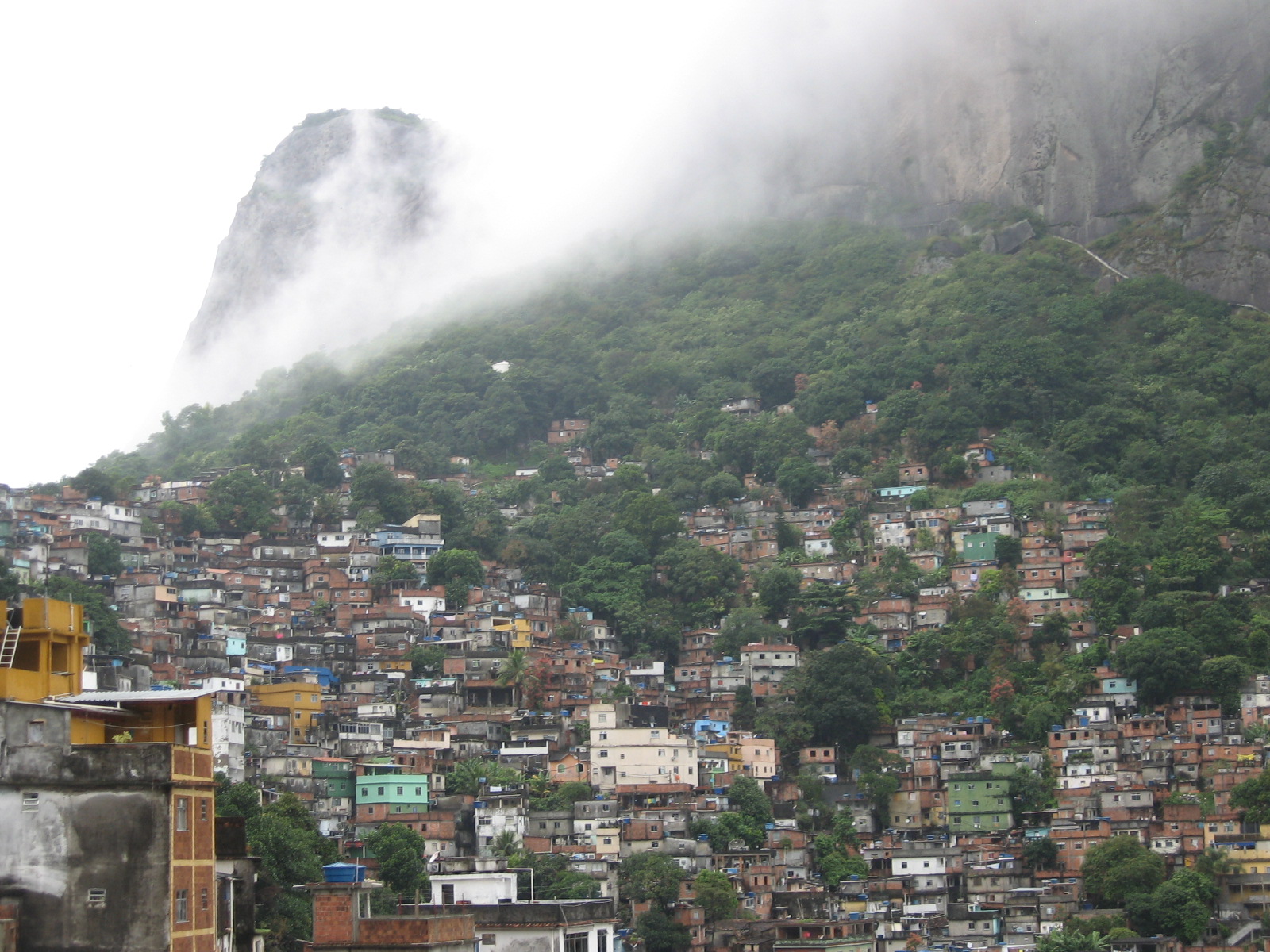
The guide told us not to take pictures of people here, because the drug dealers don’t want their pictures taken. She took us into a building with a balcony that had a magnificent view of the mountains and the entire favela. It’s hard to conceive how large it is; it just goes on and on.
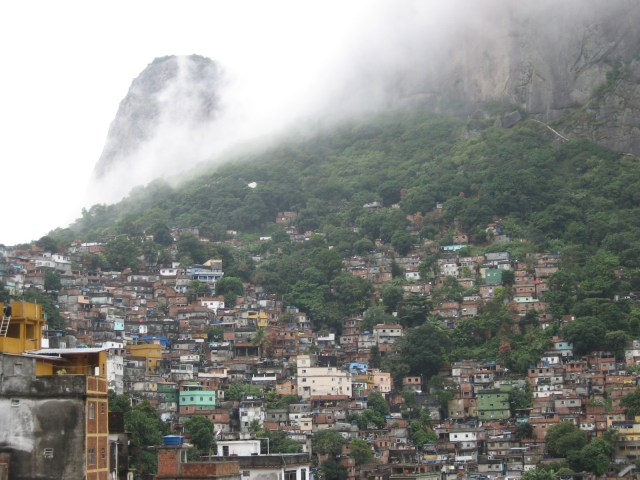
View of Rocinha favela


The alleys are extremely steep and narrow, and the more desirable homes are closer to the base of the mountain. The government has added some infrastructure, public housing, sports facilities, etc., to this favela recently. The guide said that some residents are middle class, but they don’t leave because all their family is here. The favela reminded Rob and me of a medieval Italian town. Everything was built ad hoc and without planning or building codes. I kept thinking how this area would be devastated by earthquakes, landslides, etc. We saw one man with a gun under his shirt, and Rob said he saw another with a gun out in plain sight. The van stopped near some craft stalls with really nice merchandise: handbags, shell jewelry, and paintings. I asked a woman how much one painting was, and she said 70 reais. That was too expensive for me, so I walked away. Before we got into the van, she came back to me and said 60. I went down to 50, and she checked with the artist – a young man who was sitting nearby – and said okay. So I made my first purchase. She rolled it up and I took it into the van.

We felt very safe in the favela with our guide. Nobody harassed us, and some people were actually friendly. We walked through the commercial area, where there were all kinds of shops. I was surprised by how normal life seemed here. There were a lot of shops selling live poultry, groceries, fruits, construction materials, etc. Lots of motorcyclists provide transportation and many of them serve the drug trade. This was the one place in Rio where food was actually cheap. There were huge bundles of cables crisscrossing the streets for electricity, cable TV, etc. All of the houses have blue water towers on top.

After this we got back in the van and drove to a much nicer, smaller favela called Vila Canoas. This favela has been “pacified” by the police, and we went to a school (Para Ti) that is partially funded by the tour company. I think they said that most students attend public school for only half a day. This school gives them something to do in their free time. We went to a computer lab, some classrooms, saw some art they had made out of plastic bottles, etc. Also went into a gift shop with local crafts.

Then we walked through some of the alleyways, which are incredibly narrow and hard to navigate. The alleys here actually have names and, unlike Rocinha, they can get mail here. We saw a small playground. It’s incredible how jumbled up everything is. It reminded me of an M.C. Escher painting.
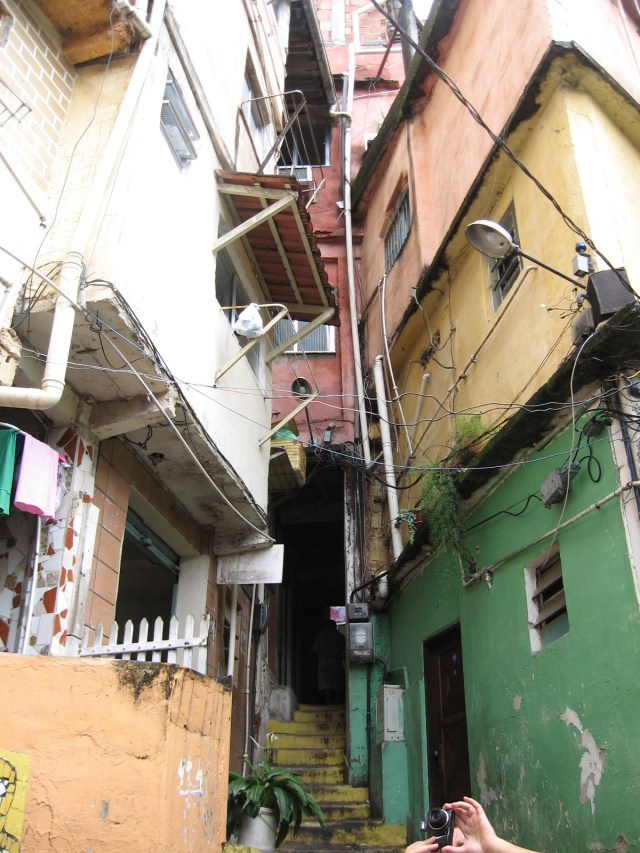
Favela alleyway

They have bars with pool tables and lots of restaurants with delicious-smelling food. We came back to the main road and Rob met a friendly stray dog.

The tour took about three hours and was the highlight of my trip. Afterwards we had the van drop us off near the Botanical Gardens. I was only wearing flip flops and had to buy some band-aids because I was getting some very painful blisters. This area wasn’t pretty but it was busy enough, so we felt safe. The Botanical Gardens were pleasant but not nearly as interesting or well-kept as gardens I’ve been to in America. Walked through a rainforest, palm tree colonnades and bamboo forests, saw carnivorous plants, ponds, etc. Saw an egret, some far-off toucans, a hummingbird, etc. It was very calm and peaceful here.

We went back to the Copacabana area and stopped at one of the many sucos-and-sandwich shops they have on almost every corner. We didn’t know what was in the sandwiches but we ordered two that had ham and cheese, and I got an acai na tigela, which is basically frozen acai. It was very, very good.
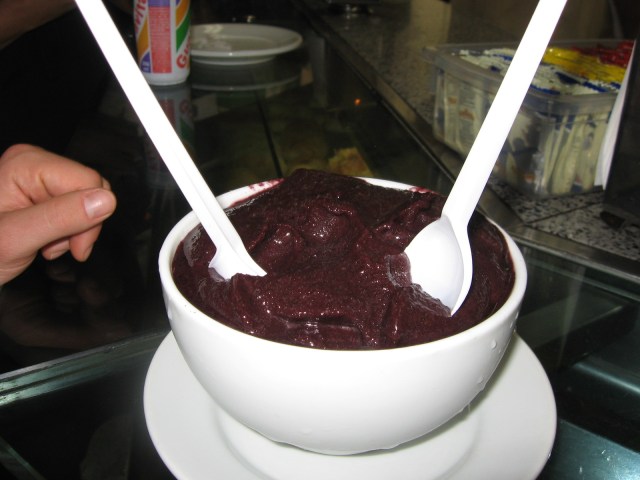
acai na tigela

Then we went down to the beach and strolled along the Portuguese pavement. Saw some nice sandcastles and the Copacabana Palace Hotel. They installed lights here a few years ago and it feels very safe now. We window-shopped in some jewelry stores and someone who worked at Amsterdam Sauer saw us and invited us in. He thought I was Brazilian. A very nice salesman inside showed us a small museum with Brazilian gems, and when I said I liked opal he showed me some very expensive pieces. We told him we weren’t looking to buy, but he didn’t seem to mind showing us. For dinner we went to a Brazilian per-kilo buffet place since we weren’t very hungry. I got a small piece of chicken but it was still pretty expensive. You get a card where they mark off everything you’ve eaten, and you pay at the end. Later on Rob got a conde fruit suco, which is a kind of tropical fruit we had never seen before. The man showed us what it was and it looked like an artichoke. I really enjoyed the sucos throughout our trip.

Wednesday, May 11:
The next day I forced Rob to walk down to Copacabana beach with me so I could see it in the daylight. The water was too violent and cold to swim in, and there were very few people on the beach or in the water. Plus it’s so hard to swim here because anything you leave on the beach is likely to get stolen. Rob and I aren’t beach people, anyway. The beach is very beautiful, though, surrounded by green cliffs and mountains. We thought Rio was one of the most naturally beautiful places we had ever seen.
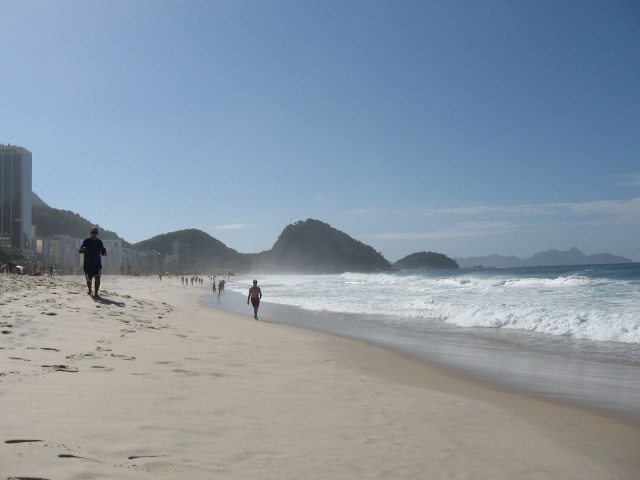
Copacabana beach


After this we set out for Corcovado/ Cristo Redentor. This turned into a nightmare. We had a guide book that was 2 or 3 years old that said it costs about 10 reais to get to the mountain by taxi, and another 5 reais to walk the rest of the way to the statue. The cog train, on the other hand, costs 36 reais, so we thought we’d do it the “cheap” way and take the taxi. First, however, we took the metro to Cosme Velho, then cabbed it to the place where the cog train departs from. There was a line of taxis by the cog train, so we got into the first one and told him we wanted to go to Cristo Redentor. He had no idea what we were saying, even when we spoke to him in Spanish. We kept saying statue, statua, Cristo Redentor, Corcovado, but he didn’t get it. He asked us for the address, which we thought was ridiculous – just go up to the big statue! It seemed like he had never been up to the top before. He called over his supervisor who spoke a little English, and the cab driver said he could do it but first asked his supervisor for directions.

So finally he went on his way up the mountain, which was very curvy. Then he made a wrong turn and went to the helipad instead of the statue. I don’t know where he got that idea from. Rob and I told him again where we wanted to go and he seemed to get it, and finally he got us to the parking lot for the statue. Here he wanted to wait for us until we got back. Our tour books and internet sites had warned us against accepting this offer, so we told him we didn’t want him to wait. We asked the people at the entrance whether we could take any cab down, and they said yes, he didn’t have to wait. At this point he got very upset and practically refused to leave. He tried to charge us 40 reais (the meter said 16 reais) and seemed so upset that I was inclined to give in, but Rob gave him 16 and not a penny more. Finally he went away. It was a very stressful experience. At the park entrance we were in for another shock – our tour book had said it cost 5 reais to walk to the statue, but now it was 18 reais whether you walked or took the vans they had lined up by the entrance. We were very upset and almost didn’t want to go the rest of the way, but eventually we paid. Rob wanted to walk up the road to blow off some steam. We didn’t know where to go, but eventually found a man who spoke Spanish who directed us and said it was about 2 km. It was actually a very nice walk through the Tijuca rainforest, and we saw a lot of lush vegetation and butterflies. We were the only ones walking up or down, however. Luckily it was wintertime and the weather was quite nice.

After about a 15 minute walk we got to the statue. The views were incredible, and the statue was impressive. We were above the vultures and hawks and even the airplanes that were landing at the airport. It was a little hazy but not too bad.
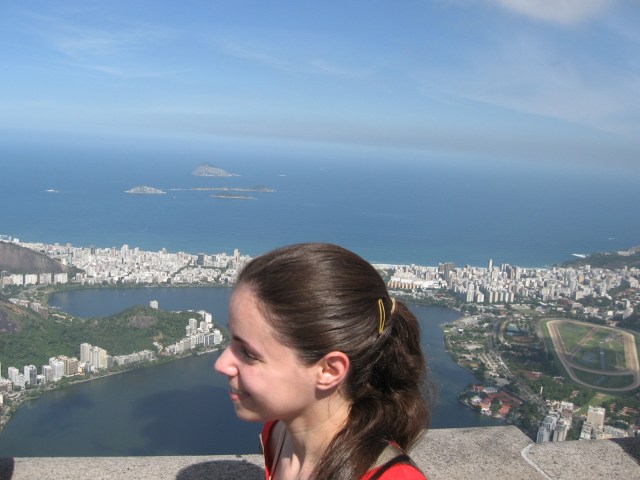
Me at Cristo Redentor


We were desperate to avoid taking a taxi back down, so we were relieved to find that we could buy a 1-way ticket back down on the cog train. It cost 18 reais for each of us. If we had known how complicated it was, we would have just taken the cog train in the first place. The trip down was uneventful. They were playing samba music in the car in front of us.

When we got back down the mountain, we had a cab take us to Catete Palace. The drivers don’t seem to understand where you want to go unless you say it in perfect Portuguese. We showed him the spelling in our guide book. Before going in we had a sandwich and a pizza and an acai drink at a sucos bar. The people here weren’t very friendly, and this area of the city has nice architecture but isn’t kept up well. We went into the palace with eagles on top. It was free to get in that day but we had to pay for the audio guide because none of the signs were in English. It’s a pretty impressive palace, but all of the pieces are copies of European originals. We saw the room where President Vargas committed suicide, including the pajama shirt he had on when he shot himself. The guards kept telling us where to go in Portuguese and couldn’t speak a word of English. We asked them where the bathrooms were – I called them banheiros, as my guide book told me to. The guards seemed to have no idea what I was talking about. We kept getting directed to different places. Finally someone mentioned the word toileta, or something like that, and pointed out a room with no sign. The men’s and women’s toilets happened to be in the same room.

Afterwards we started to walk to the Centro area to see the cathedral. The architecture here is gorgeous, but the area has become a slum. We saw a lot of poor people selling random items on mats – I told Rob to keep an eye out for his camera. Eventually we walked into such a bad area that we had to hail a cab. We saw the Arcs of Lapa from the taxi.

We were shocked by how ugly the cathedral was. We both agreed it was the ugliest building we had ever seen. It was also extremely dark and depressing inside. Rob said it reminded him of the Star Wars tube auditorium thing. We walked around the Centro for a bit, where all the businesspeople were getting out of work. The office buildings are also extremely ugly and have no personality. We decided to take the bonde up to the Santa Teresa neighborhood, though it took us a while to find the bonde station. It’s .60 reais for a seat, and it’s free if you hang on to the outside. It was a little like riding the trolley in New Orleans. We went over the Arcs of Lapa, but you can’t see them from the bonde itself. Most of the riders were tourists and it was a pretty fun ride with a great view, though very bumpy. People kept jumping on and holding on to the sides. Santa Teresa is a nice neighborhood with a lot of art galleries, craft shops, and cozy restaurants. It seemed like it only had one main street, although I can’t be sure because it was night. We had dinner at a really cute restaurant and got fried goat cheese and sun-dried beef with yam fries, rice and black beans. The beef was too salty and overdone, but everything else was good. On the way back Rob decided to hang on to the side of the bonde, which he really enjoyed. Afterwards we took the Metro back to Copacabana. The Metro, by the way, is extremely clean and seems pretty safe, though it doesn’t run to too many places. At certain hours they have train cars expressly for women.

Thursday, May 12:
We had booked a tour of Petropolis (110 reais per person with ViaCopa tours) through our hotel and the van picked us up in the morning. There were about 8 other people on the tour with us, English and Portuguese speakers. The tour guide’s English was terrible. At one point in the tour, she pronounced the word abandoned as “a-bahn-dohn-ed.” Her descriptions were very unsatisfying and uninformative. However, the tour got us to Petropolis and back in one piece, and it would have been a nightmare getting there on our own. The tour guide was surprised I wasn’t Brazilian. I was getting kind of annoyed that everyone thought I was Brazilian and expected me to speak Portuguese.

The van ride to Petropolis was the most exciting part of the trip. We had to go way up in the mountains on a very curvy, bumpy road, and the driver – like most Brazilians – drove very fast. It was a little scary. We drove through rainforests and had some really beautiful views. I wish the van had stopped at one of the viewpoints so we could take it all in.

Petropolis is a pretty little European-style town in the middle of a rainforest. It’s much safer than Rio. The tour guide said that it’s the flower capital of Brazil, but I didn’t see too many flowers. We first stopped outside a German chateau-style condo that used to be a casino frequented by Hollywood stars. Then we went to a shop that sold chocolates and other touristy stuff. I got some very good biscuits. Next we drove to the Imperial Palace, which is pretty plain and modest for a palace. It was the summer home for the 19th-century emperors of Brazil. The staff made us put huge sandals over our shoes so we wouldn’t damage the floor, and I spent the whole time skating around the palace. The rooms were pretty and well-maintained. We saw the crowns and the golden pen Queen Isabel used to abolish slavery. I liked that one of the emperor’s coronation robes had orange toucan feathers on it. The tour guide gave us a bare-bones explanation of what we were seeing.

After this the guide went to have a very long lunch and most of the people on our tour joined her. Rob and I didn’t feel like spending a lot of time and money on lunch, so we walked around the town. We stopped at a playground that was a throwback to the 80s and had lots of “dangerous” equipment they don’t allow in American playgrounds anymore. We went on the seesaw, the wooden swings, etc. Then we walked towards the pretty cathedral in the center of town. There were some lovely mansions done in tropical Neoclassical and Victorian styles.
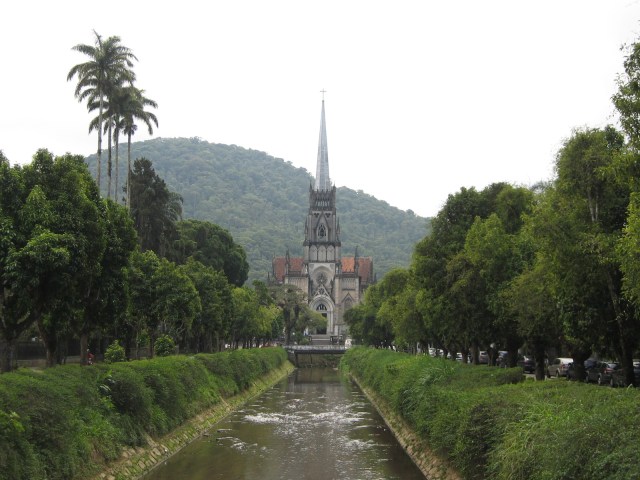
Cathedral in Petropolis


We had to wait around for a while until the rest of the group finished lunch and came to the cathedral in the van. While we waited we got a sandwich and some cake. The food prices are much more reasonable here than in Rio. After walking around the cathedral we drove to the House of the Seven Mistakes, which looks like a haunted house and has seven architectural oddities. Nearby is a cute restaurant built in the former stables, where they have tables inside what used to be horse pens. Then we drove to the Crystal Palace, which is another imperial remnant. All in all it’s a nice, pretty city, but not terribly exciting. The ride back was bumpy but uneventful. The highway outside of Rio, by the way, is in a terrible state, and it passes through an endless stretch of favelas. We were shocked by the extent of the poverty.

When we got back to Copacabana we decided to go to an Italian restaurant called La Trattoria, which has been there since 1976. It was very busy but we got seated right away and got risotto with mushrooms and gnocchi with chicken in a marsala sauce. Both were very good.

I should mention that all of the apartments and homes in Rio are surrounded by huge gates as a constant reminder of how much crime there is here.

Friday, May 13:
Getting to the airport from our hotel was a pain. We wanted to take the hotel bus but it only comes every 40 minutes (we heard) and you have to flag it down; there’s no designated stop. Rio has terrible infrastructure and services for tourists. We waited for 30 minutes but it didn’t come. A local man looked at us and shook his head, as if we were idiots for wanting to take the bus in the first place.

Finally a taxi driver stopped and offered to take us for 30 reais, which was a pretty good deal. We flew from Rio to the Sao Paulo airport on a TAM flight that was going on to Caracas. The Sao Paulo airport is slightly nicer than Rio’s. [We were going to Sorocaba, a town outside of Sao Paulo, for a wedding.]

A driver hired by the bride’s family met us at the airport and drove us to Sorocaba. It took about an hour and a half. He dropped us off at the Dan Hotel, formerly the Shelton Inn. Our room looked pretty nice – it was much more modern than the Apa Hotel – but it was actually less functional. The water pressure wasn’t as good, the safe didn’t work, the AC didn’t work, and the wi-fi was very weak. Also room service didn’t come at all the next day. And the front desk didn’t have a map of Sorocaba. And there were Catholic crosses and statues in the lobby. The breakfast was very nice, though, and larger than in Rio. The hotel had a pool on the roof, though it was too cold to use. The groom had told us it would be $50 a night, but it was actually closer to $70.

We went into the Sorocaba Shopping center right next to our hotel with ___, where we had some micro-waved cheese bread. The stores here are cheaper versions of what you would find in any mall in America. Then we went back to the hotel and met some other Americans who were staying at the hotel for the wedding, and walked with them to the commercial district. Sorocaba is safer than Rio but it’s pretty ugly and there’s not much going on there. We did find an indoor market, though, and Rob got his hair cut in a barber shop inside the market. The other guys got a pack of beer at the supermarket next door; that was their priority. Sorocaba is not a pedestrian-friendly city. Some streets were extremely difficult to cross on foot, and we almost got run over a few times. At this point we were pretty sick of Brazil.

We rested a bit at the hotel and then got driven over to a rodizio-style pizza restaurant on a block owned by __’s father for the pre-wedding dinner. They kept bringing out different pizza pies and beers until we couldn’t eat anymore.

Saturday, May 14:
Rob and I walked around Sorocaba. The shops in the pedestrian-only area are low quality, and the architecture is nice but not taken care of. Everything seemed so poor. There must be some serious money in Sorocaba, but it didn’t show in the downtown commercial area. We got some very good fruity milkshakes at a shop run by a Japanese-Brazilian couple, who were friendly but didn’t understand a word of English. I could understand enough Portuguese to make out that the man was telling us not to walk down the street we were on because it was dangerous, so we went back the way we came. Everything was closing early anyway.

We got ready for the wedding and were driven to the Cathedral, which is a beautiful Neoclassical building. The wedding ceremony was incredibly dramatic, with trumpeters and a drumroll leading up to the bride walking down the aisle, live singers and speakers placed throughout the church….

After the barbecue a van took us and some of the other Americans to the Sao Paulo airport. The flight back was uneventful and we were happy to be going home. Before coming to Brazil, I had thought the things I read about crime here were exaggerations, but now I don’t think they are. Rio has a lot of work to do before the World Cup and the Olympics in 2016.
An old movie, a new old movie, and some really old art

Here’s a recap of my cultural activities from the past few weeks.
I saw Braveheart for the first time in about 15 years. In spite of all the historical inaccuracies, the melodramatic plot, and Mel Gibson’s spotty reputation, I still really like it! It has such a medieval feel about it (whatever that means), and the character of William Wallace is so charismatic. The love story and the execution scene at the end almost brought me to tears.

I also saw the film The Artist recently. I have one word to describe it: charming. It’s shot in black-and-white and has almost no dialogue. The lead actor, Jean Dujardin, is absolutely incredible. I think I fell in love with him and his co-star, the dog Uggie. The movie dragged in parts, but there were enough brilliant scenes to make up for it. I won’t give away the ending, but it was one of the most uplifting I’ve seen in years.

I also saw an amazing exhibit at The Metropolitan Museum of Art: The Renaissance Portrait from Donatello to Bellini. I felt like I was in the Uffizi! The pieces exhibited here are really first rate and provide a fascinating glimpse into the ruling families of Italy in the fifteenth century. Most interesting are the realistic warts-and-all portraits of some homely Italian aristocrats, like the following:

Bust of Niccolo di Leonardo Strozzi by Mino da Fiesole

Doge Cristoforo Moro by Antonio Rizzo

An Old Man and his Grandson by Domenico Ghirlandaio

Lastly, I saw the exhibit Transition to Christianity at the Onassis Center on 5th Ave.  The Onassis Center puts on some great shows, and it’s all free!  I’m also sure it has the highest number of security guards per square foot of any museum in the world.  The exhibit provides a good overview of the move from paganism to Christianity in the Hellenistic world in Late Antiquity.  One of the most striking pieces is this beautifully carved head of Venus, with the eyes scratched out and a cross carved into her forehead.

Venus with cross on forehead

Barcelona 2011

Stefanie Weisman
Barcelona journal

2/8/11:
We landed in Barcelona in the late morning and took the train to the Passeig de Gracia stop in the city. The airport’s very close to the city and the train fare was less than two euros. Overall the train system here is quite good, though it was a slow ride. Our hotel was about a 10 minute walk from the stop. It’s called the Europark hotel, though Rob kept calling it the Eurotrash hotel – just for fun, not because it was trashy or anything. It was actually an extremely nice hotel. The room was clean and comfortable, with everything done up in black and white. The bathroom had an extra large sink and a shower with good water pressure, which you almost never find in hotels. We had two balconies – one facing the street and one facing the courtyard. They had blown up old (18th century) texts in English and lined the courtyard and one wall of the bathroom with them, which was an interesting touch. I found out that the text in our bathroom was from the biography of the man who created a stocking loom. The people at the front desk were polite but not very friendly. I feel like that characterizes most people we met in Catalonia.

Rob and I took a nap for a few hours, then walked to the Sagrada Familia, which was a few long blocks away. We passed a lot of cute-looking bakeries on the way and got a black and white cookie in one of them. Barcelona is filled with bakeries and candy shops and small supermercats. It was dark by this time and La Sagrada Familia was lit up by spotlights. It was much more impressive than I thought it would be. There was a bronze figure sitting between the towers and I didn’t know if it was Christ or St. Peter. Later I found out it was Christ Ascending. There were huge cranes over the towers because they’ve been doing construction for over a century.

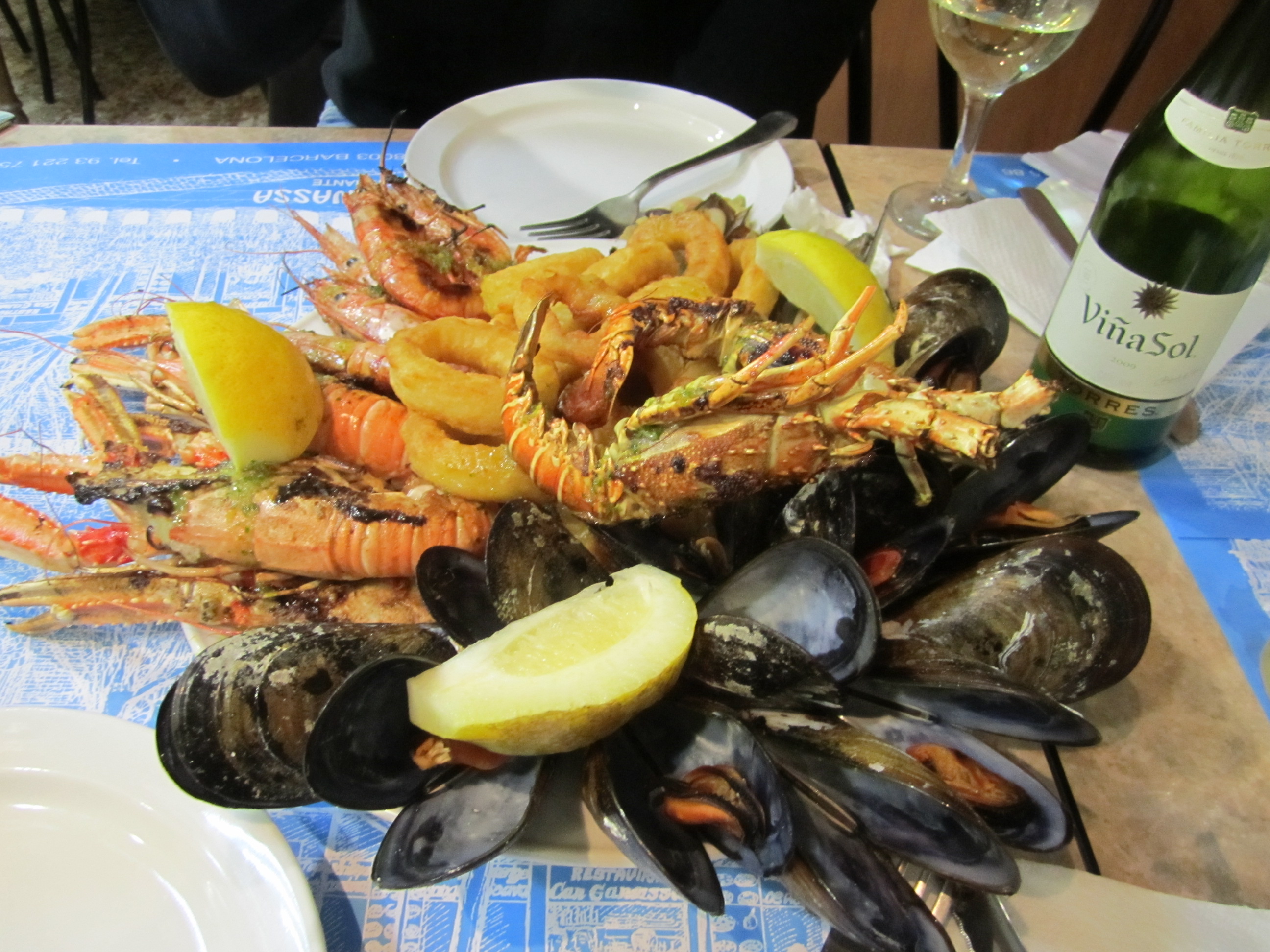
We started to walk towards Las Ramblas to find a restaurant for dinner, but Rob wanted to go to Barceloneta to get seafood. We took the metro and walked through the narrow streets of Barceloneta, some of which had no street lamps and were completely dark. We came across a square with a Renaissance style church and a few restaurants. We passed by the windows of one of the restaurants and saw some people eating a heaping plate of shellfish, and eventually decided to go in there. The restaurant was called Can Ganassa. There was a soccer game playing in the back room. It was a real hole-in-the-wall type place, but the food was very authentic and fresh. We ordered the same dish we had seen in the window, which was a mariscada for 2 people. It was amazing how many sea creatures were on the plate. There were calamari, prawns, razor clams, oysters, crayfish. They were grilled, I think.

Mariscada in Barcelona


I was a little overwhelmed, but I made a good meal of the prawns and some crayfish. Their meat was very nice and mild, not fishy at all. I had to take the heads and shells off the prawns. We finished everything. Rob told the waiter it was “Fantastico,” and the waiter corrected him and said, “Estupendo.” For dessert we had the Catalan version of crème brulee and a chocolate pudding. They were so-so. French crème brulee is much better. Later on I felt like the prawns were swimming in my stomach.

2/9/11
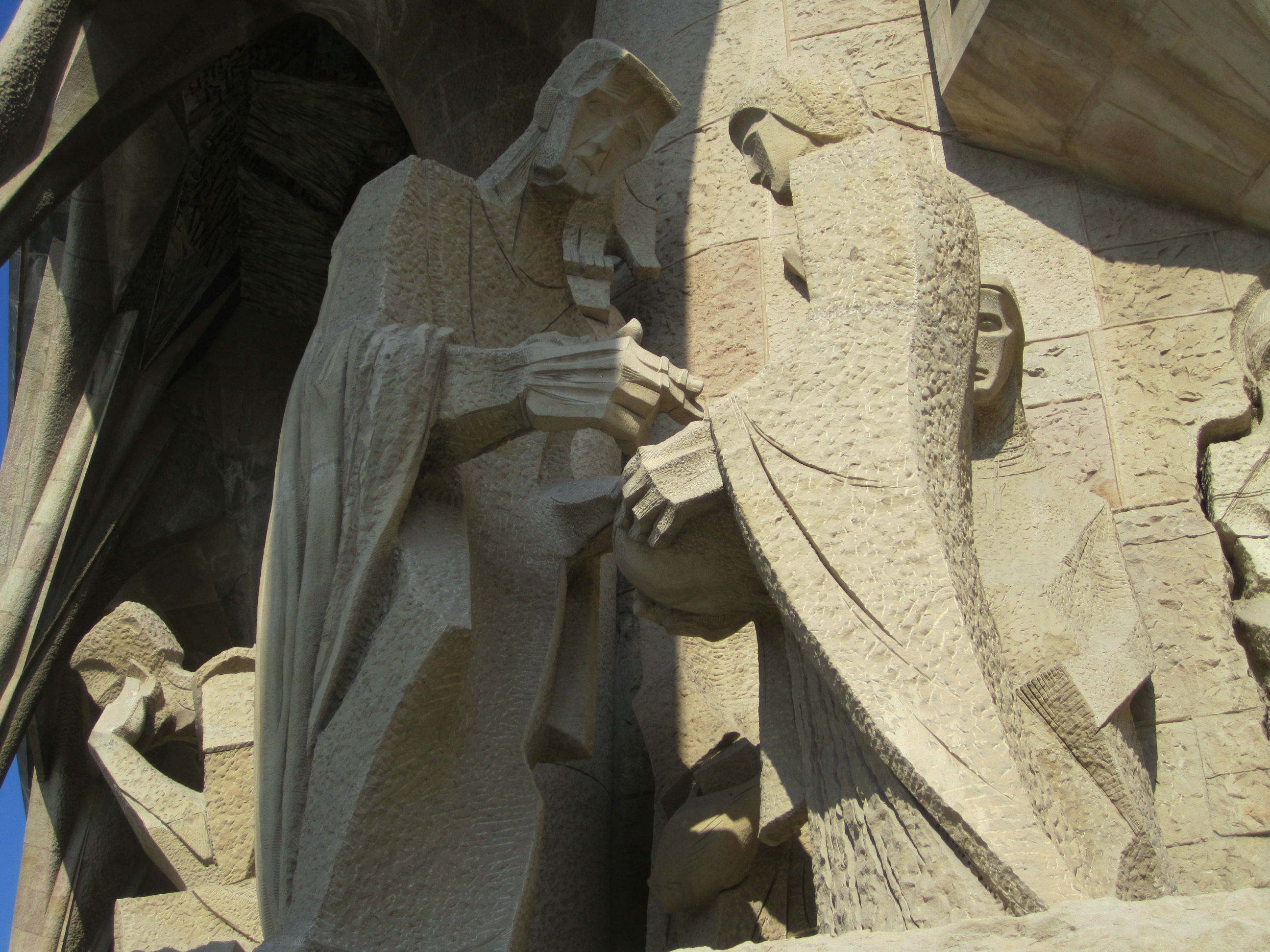
The next morning we set out for La Sagrada Familia. We got breakfast at one of the local bakeries: a (thin) Iberian ham sandwich, a black and white croissant, and some cream-filled doughnuts. La Sagrada Familia in the daylight really blew us away. I was impressed with Subirachs’ sculptures on the Passion façade, which is where you had to enter. They’re very stark and affective.

Pontius Pilate on facade of Sagrada Familia


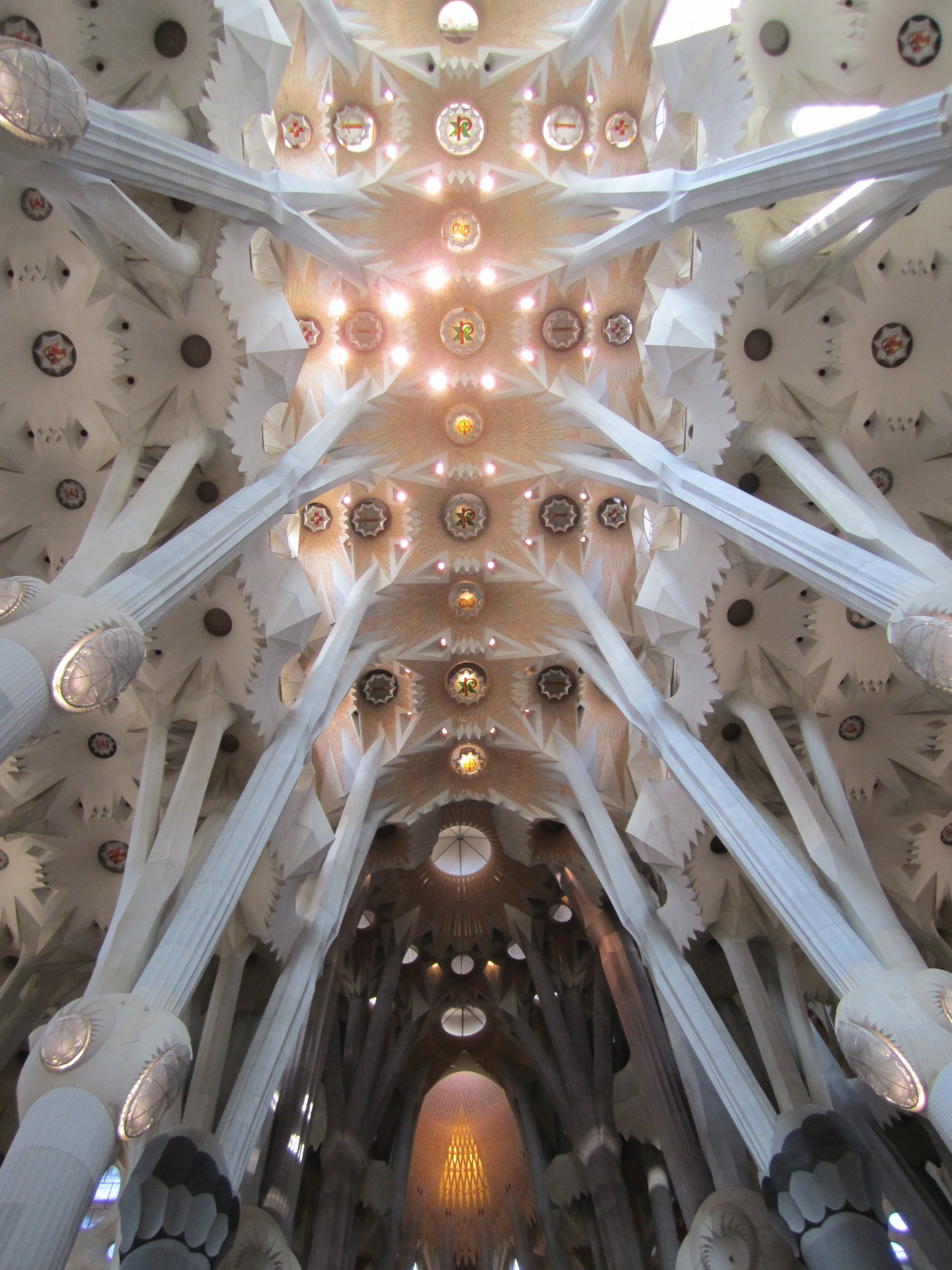
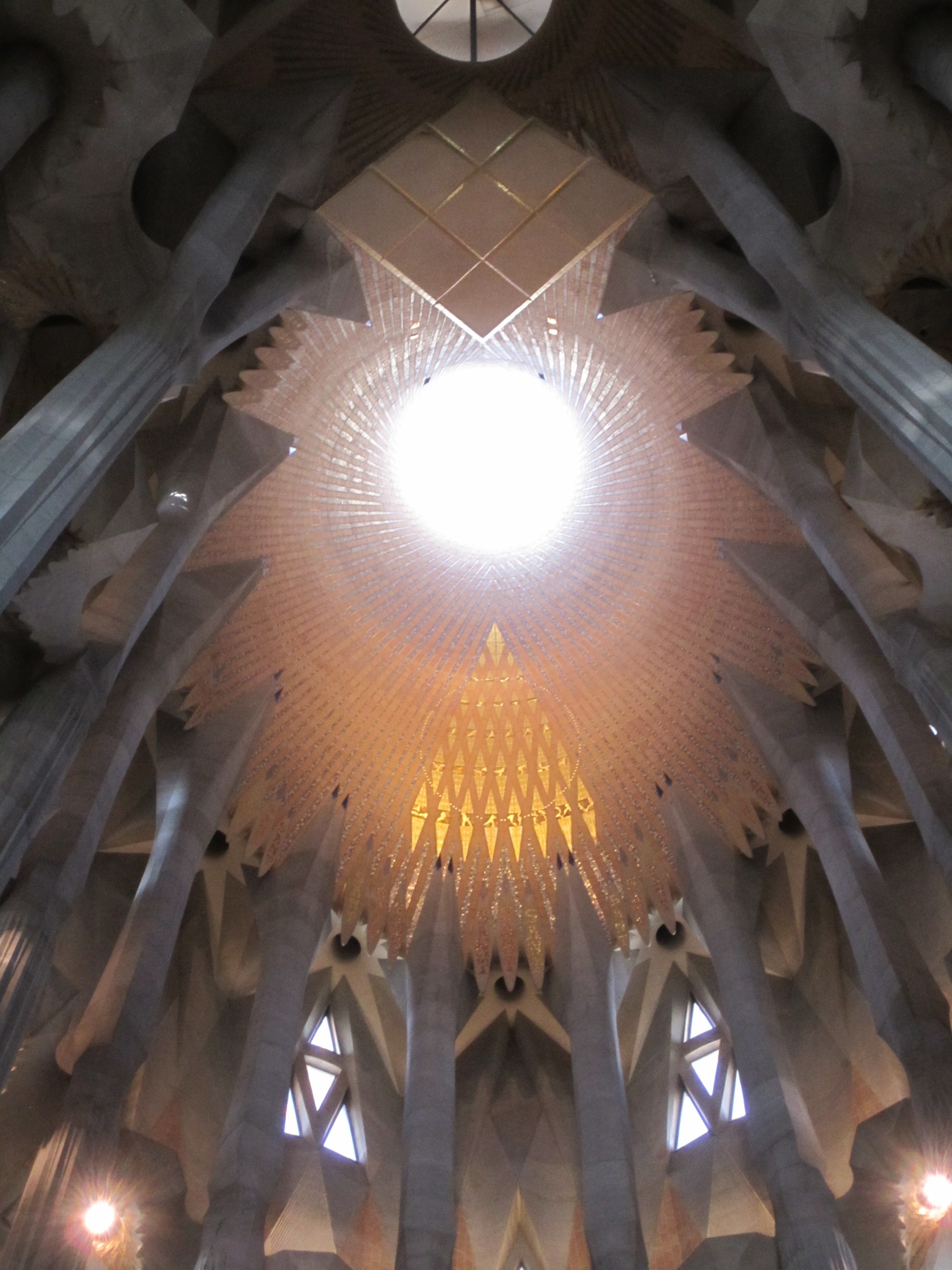
The interior was even more amazing. I had never seen pictures of the interior (I think it was only finished in 2010), and it was like nothing I had ever seen before. It was a kaleidoscope of light, colors, and shapes. The vaulting and columns were completely original. There was a beautiful oculus/ skylight over the apse with a golden triangle that represented the Trinity. The columns had glass in their capitals. There were glass keystones in the vaults, too. The columns branched out like trees. Even the abstract stained glass was impressive.

Sagrada Familia vaulting


Sagrada Familia golden oculus


I don’t know why more modern architecture can’t be like this. Most modern buildings are so ugly and plain. It doesn’t have to be like that. It’s crazy to think that this church is only half complete; the main portal isn’t even open yet. On the other side of the church was the Nativity façade. This was mostly done in Gaudi’s lifetime and was in a completely different style – very ornate and flowery. It was just as impressive as the Passion façade, but in a different way. This side emphasized the youth of Christ and was covered in vegetal and animal decoration. The turtles and chameleons were especially eye-catching. I think it’s the most beautiful church I’ve ever seen. I wonder if this is partly because I didn’t know what to expect, and because it’s so unique. We also walked through a museum attached to the church.

We then walked over to Las Ramblas. Rob really didn’t like it here, because it’s so touristy and crowded. It’s full of memorabilia shops that all sell the same things and whose vendors are very aggressive. There was an outdoor shop selling chicks and rabbits, and we didn’t know if they were for pets or to eat. There were also a lot of human statues that were quite creative. There was one guy with two heads, two guys without heads, Charlie Chaplin and some other movie stars, a guy sitting on a toilet, and a guy in a golden suit that was made to look like it was blowing in the wind, with the guy in mid-stride. I took some pictures of him and gave him some money, and he did a little dance and ended by wiggling his fingers at me as he froze again. The architecture in Las Ramblas is beautiful, with a lot of upscale, ornate buildings and old churches.

We found the Mercat de la Boqueria, which has an impressive colonnade around it. It’s lively, but some of the things grossed me out – lambs’ and pigs’ heads, hooves, and tongues, dead pheasants and rabbits, etc. I wanted to try some tapas but the bars here were crowded and I couldn’t figure out how or what to order anyway. I tried to order a bomba (which seems to be a potato dish) at one of them, but he didn’t understand what I was saying, and when I pointed to the thing on the menu he said they were out. Rob got some brie cheese which he liked but which I thought was disgusting (but I never like brie). They had seafood, candy, chocolates, and fruit stands. We got a fruit salad from one. It was okay but not great.

We kept walking and along the way I saw a candy store selling life-size chocolate shoes. We found the Maritime Museum, but when we went to the ticket booth they said the museum was closed for the next two years. We walked into the entrance to the museum, which is in the medieval shipyard building (Drassanes). The building is an impressive example of medieval secular architecture, with great rounded arches. They had two exhibits there, but you had to pay to see them.

We walked down to the pier and I saw a green bird gathering nuts from a palm tree. I later found out that this was a monk parakeet, and that there are lots of them in Barcelona. They apparently are descended from some pets that escaped in the 1970s. I always pay attention to the bird life of a city, and this made me happy. We walked down to the Columbus Column, then around the marina, over a bridge, and around a shopping mall on the water.

After this we turned around and walked back through the old city. We passed some medieval walls that had been built on top of the Roman walls and saw the façade of the Gothic cathedral. Then we found what we had been looking for – the Museum of the City of Barcelona. We went underground on an elevator, which took us to the remains of the Roman city. This included a fortification wall and tower (composed of rubble, cement, and tablets and slabs that had been reused), a laundry, a dyeing facility (which included a vat that was stained blue from the indigo dye), a fish-sauce factory, a winery (with imbedded clay containers for the wine), an early Christian church, and a slightly later bishop’s residence that was built on top of a Roman house with a fine mosaic floor. On top of this was a royal palace for the count of Catalonia or something like that. We saw the medieval chapel, but the great hall was closed. The outer courtyard of the palace is very pretty, with a tall loggia structure full of rounded windows. Near this site is a building that contains the agreement between Columbus, Ferdinand and Isabella regarding what Columbus was entitled to, signed here before he discovered the Americas. We only saw a reproduction of this. They were playing the New World Symphony in the background.

After this we wandered around the Gothic Quarter for a bit. In a lot of the passageways, you could see the Roman brick with the medieval structures built over and around it. We made our way to Santa Maria del Mar, which is very dark and austere. It’s in the early Gothic style and contains a black Madonna. They played medieval choral music in the background, which adds a lot to the atmosphere. The altar contains a statue of the Madonna with a model of a ship at her feet. The church is beautiful and impressive, but is pretty much the opposite of La Sagrada Familia.

At this point it was night and all the attractions had closed, but we couldn’t have dinner because the restaurants don’t open until 9 pm. We went into a tapas bar and got potatos allioli and mushrooms with pork. I realized that I don’t like tapas. I thought allioli would be olive oil, but it was a thick sauce like mayonnaise. The things were okay for the first few bites, but after a while I got sick of them. We went back to the hotel and took a nap because we were exhausted. When we woke up we weren’t hungry because we had eaten the tapas and didn’t feel like going out so late at night, so we skipped dinner. Rob said that before coming to Spain he thought he was going to like eating a late dinner, but that he had changed his mind. I agree. It certainly doesn’t fit in with my schedule.

2/10/11
I got a chocolate-bread roll from a bakery for breakfast. I was also very dehydrated, since the water in Barcelona tastes disgusting and I hadn’t been drinking much, so I drank a lot of Rob’s orange juice. We took the metro to La Barceloneta, which used to be a slum but now is cleaned up and has a lot of character. Rob got some plain chicken, pasta and french fries from a fast food place. We walked down to the beach where there’s a nice promenade lined with palm trees. Everything in Barcelona is very clean. There’s almost no litter on the beaches, there’s very little graffiti, and we even saw a train station getting scrubbed clean. I walked down to the water while Rob ate his food. I was mainly looking for shells, but didn’t find anything interesting. The water was cold, and nobody was in the water except for some guy on what looked like a surfboard with a sail. I saw what I think is Gehry’s Golden Fish in the distance. It’s very pretty for a city beach. The weather throughout our trip was in the 50s and sunny – perfect walking weather.

After this we walked up to the Catalonian History museum, which is in Barceloneta. It’s a very well done museum, with interesting interactive and multimedia exhibits and artistic dioramas. The lower level of the museum, which focuses on pre-modern history, was interesting, but we kind of lost interest when we hit the modern section. There were lots of school groups in the museum and they got to try on costumes for each period of history. The museum has recreations of a full-size Roman boat, a medieval farm, a medieval tower and chapel, a Roman room, paper-mache people from different periods, medieval weapons and knight’s armor, a horse you can sit on, rooms from different decades in the 20th century, a reconstructed air raid shelter from the Spanish Civil War, dioramas showing rebellions and protests, etc. I was struck by the fact that in the late Middle Ages, after the Black Death hit, the population of Catalonia was only about 200,000.

We then walked up to the Palace of Catalan Music. The outside is very pretty and full of mosaic work, though it’s a little hard to see from the narrow street. I was upset that all their English tours for the day were sold out, but I decided to take a Castilian Spanish tour so I could see the interior. While we waited for the tour, Rob got a cornetta (sp?) from a bakery, which he loved. It’s like chocolate-covered vanilla ice cream in a cone, but it’s not cold like ice cream, just rich and creamy. Then we went on the tour. I could understand most of what the tour guide said. The main hall was beautiful, though not as impressive as La Sagrada Familia. I was a bit surprised that people had rated this as the number one Barcelona attraction on Tripadvisor. The hall has a lovely stained glass ceiling in the shape of an inverted cupola, statues representing Catalan music and Beethoven and Wagner coming out of the proscenium, and statues of women playing different instruments coming out of the stage. There was more mosaic work on the columns. The tour guide pressed a button and the organ played for about a minute. She said that the acoustics were so good that every seat in the house can hear the music equally well.

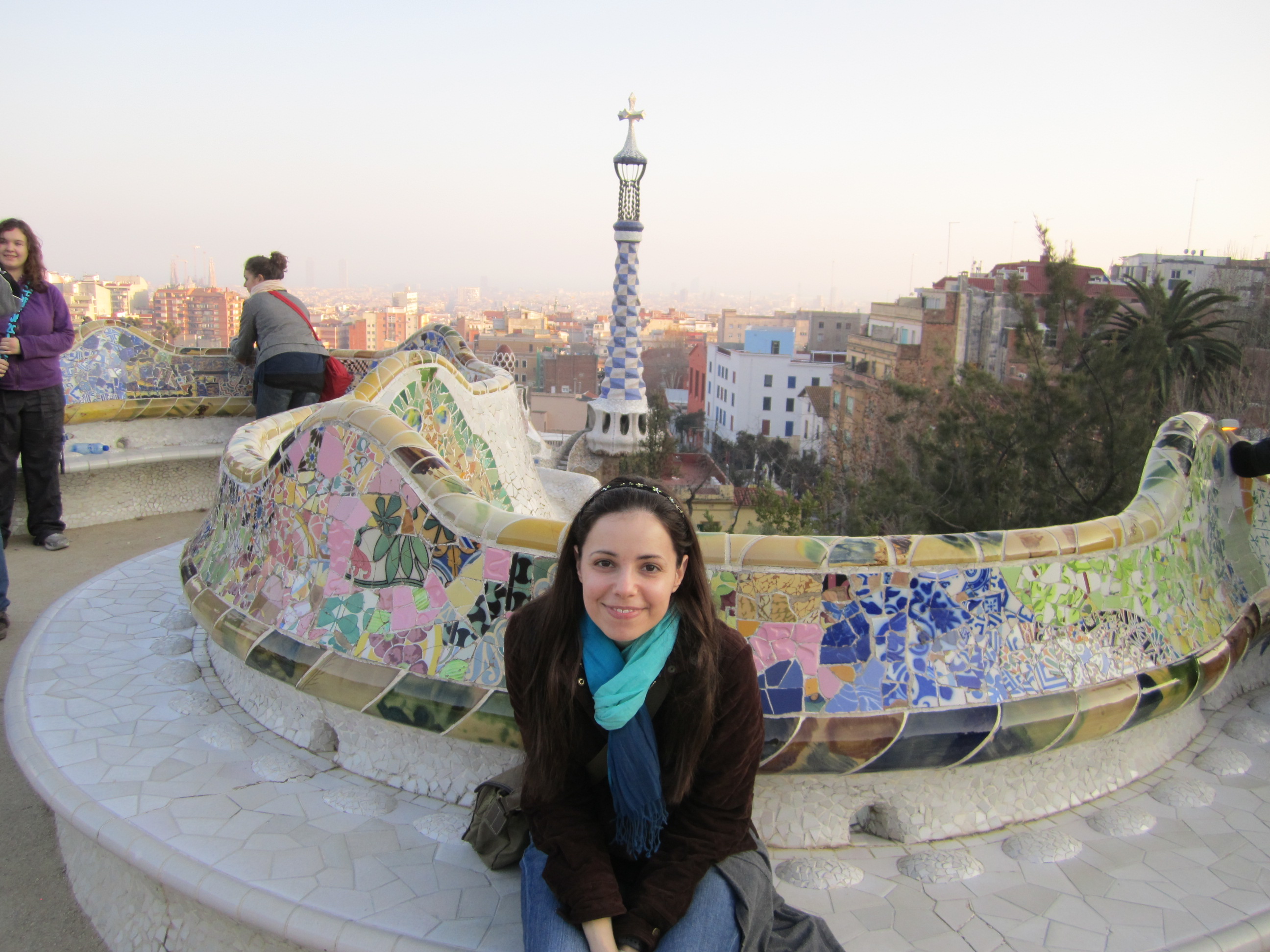
We then took the metro to Park Guell, though we got off at a stop that was pretty far and had to walk a long way uphill. This part of the city is much more modest and plain than the center of Barcelona. There were a lot of cacti and yucca plants near the park. When we got to the park, Rob went into a space-age WC with doors that whooshed open when you inserted some coins. I really enjoyed the park. There were flocks of the green monk parakeets all around, and I kept seeing little birds that may have been hummingbirds. I also saw what I think is a magpie. And of course pigeons and seagulls, but I don’t care about them. We walked up to the top of the mountain, where we could see La Sagrada Familia and the Torre Agbar, though it was kind of hazy. Gaudi’s cavernous stonework was everywhere; Rob said it reminded him of The Flintstones. We kept crossing paths with a group of nuns in blue habits who were sucking lollipops. We walked back down the path and saw Gaudi’s little pink house, which had cute mosaic towers/ chimneys and garden walls covered in more mosaics. Throughout my trip I had wanted to buy some mosaic work as a souvenir, but all I could find were cheap reproductions.

We walked down the path to Gaudi’s hypostyle hall, where a duo (cello and violin?) were playing classical music. There were some people selling crafts on blankets on the ground, and I bought two glass necklaces (they were 2 for five euros), one of which is shaped like a fish. I’m pretty sure they weren’t made in Spain, though — probably China. Then we walked up the stairs to the main plaza, with a serpentine bench covered in mosaics. It was very pretty and colorful, with a great view of the city and the gingerbread-like houses at the entrance to the park. We saw a workman breaking up whole ceramic tiles to resurface a part of the bench.

Me in Park Guell


Then we walked down to the lowest part of the park, which has the famous Gaudi mosaic sculptures of lizards/ dragons. There was another duo there playing some interesting music. One of them played the violin and the other was playing an instrument called a hang, which consists of two metal plates with indentations for different pitches, and which looks like a UFO. It has a very bright metallic sound. I got his card – he’s British and his name is Daniel Waples. The instrument is produced in Switzerland. I was having a nice time, though Rob was getting bored. After this we left the park and sat on a bench to try to find a place to have dinner. As before, all the attractions were closing, but we still had a few hours to kill before we could have a real dinner. We walked south from Park Guell with no particular destination. Rob liked it because he felt this was the “real” Barcelona. In one plaza there were some children watching a marionette show where the marionettes were playing a punk rock concert. There were several groups playing soccer in the streets. We came upon a nice-looking tapas bar/ restaurant that had apparently been there since the 19th century. We went in and asked for hot chocolate, but they were out. We got snails, “filled” (rellenos) eggs, and a plate with assorted tapas. We didn’t know until they brought them out that the eggs were filled with tuna. I was so sick of seafood. The snails are so-so, but I can’t keep eating them. The assorted tapas were more seafood, olives, pickled stuff, potatoes – nothing I like. Plus they sit around all day. I don’t see why people like tapas so much.

After this we walked down the Diagonal Avenue (in the Eixample) and passed Casa Mila (La Pedrera), and some other interesting buildings. We went back to our hotel because we still had some time to kill. After a while we found a restaurant near the hotel called Rene that looked inviting. This restaurant was more gourmet than the others and was a fusion of Catalan and international food. We got three half-portion (racion) dishes: a dish with mushrooms and Catalan sausage, pasta with foie gras filling, and Beef Wellington. Unfortunately, when I ordered the mushroom/sausage dish I didn’t say the whole thing and I think the waiter thought I meant that I didn’t want the sausage. So I never got to try Catalan sausage. The dish had a fried egg on top of the mushrooms instead, which was pretty good. The Beef Wellington was especially good.

2/11/11
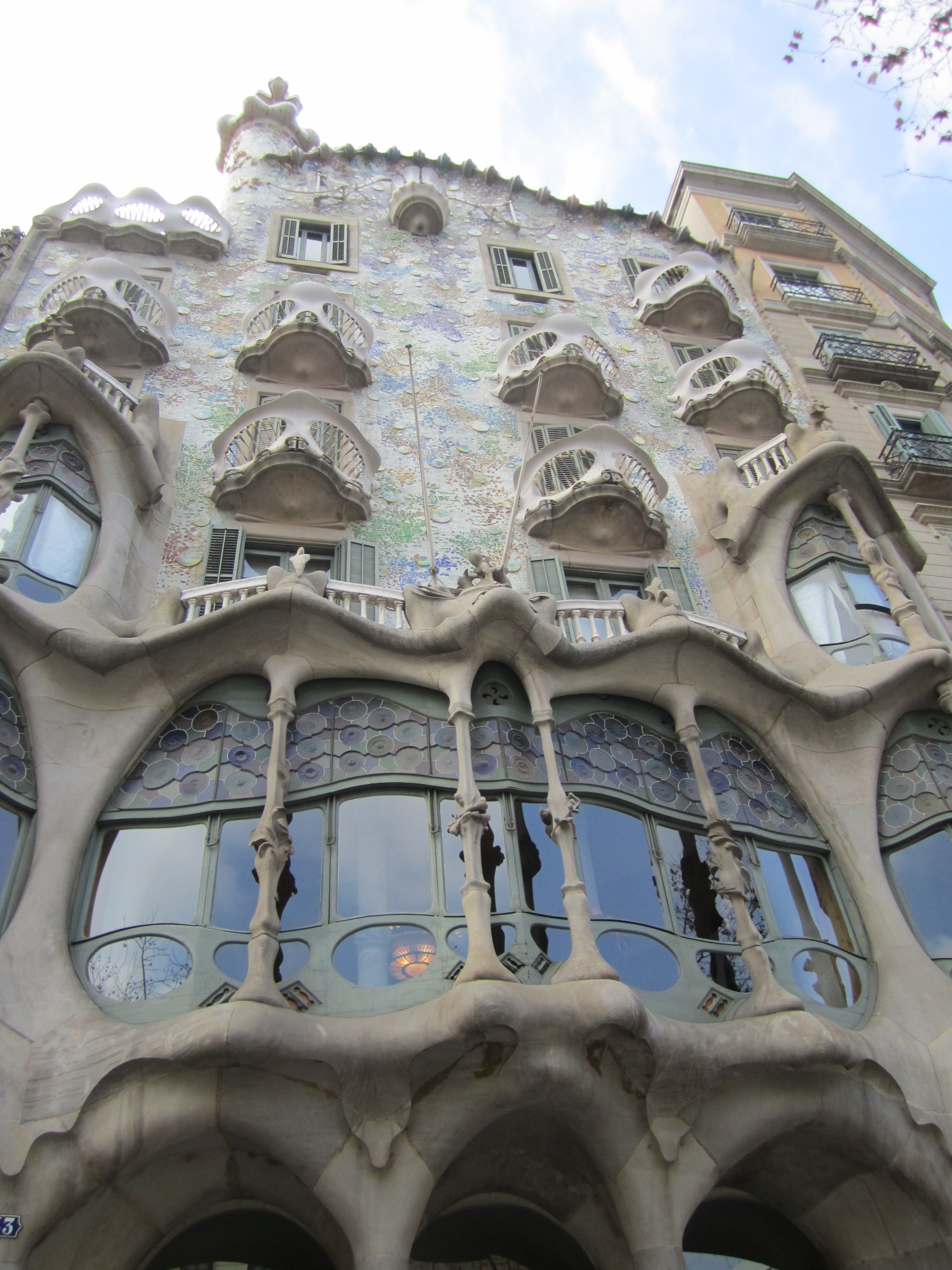
For breakfast we stopped in a bar/ diner on the corner next to our hotel. I got scrambled eggs, toast and orange juice, but the scrambled eggs were horribly salty. The food was expensive, too. Rob and I were sick of Spanish food at this point. Then we walked to Casa Batllo. It has a very high entrance fee (I think 14 euros for students?), but it was probably my second favorite thing in Barcelona after La Sagrada Familia. I love all the curved lines and glass and mosaics and swirling ceilings. There’s so much attention to detail. Again, I don’t know why more modern architecture can’t be like this. I wouldn’t hate modern art so much if it were actually aesthetically pleasing and took some talent, like Gaudi’s work. Inside the building is a tiled shaftway with a skylight that helps with ventilation. There was also a room with chairs designed by Gaudi. In the upstairs rooms, used by the servants, the arches look like whale ribs. The roof was magnificent, with mosaic chimneys, the roof with dragon or fish scales, etc. Again, I had never seen anything like it. His work is so unique.

Exterior of Casa Batllo


After this we took the train to Girona, which is about an hour and a half away. We were sitting next to a group of noisy American college students who kept saying “dude” and talked about their frats, surfing, buying shoes, etc. When the ticket agent came by, they didn’t have the right tickets, and one of the guys had to ask the others where he was going (Figueres). When Rob and I got off the train at Girona, I said to him something like, “I’m so glad we’re finally away from those stupid Americans,” and two guys (I’m pretty sure they were Spaniards) gave me a funny look.

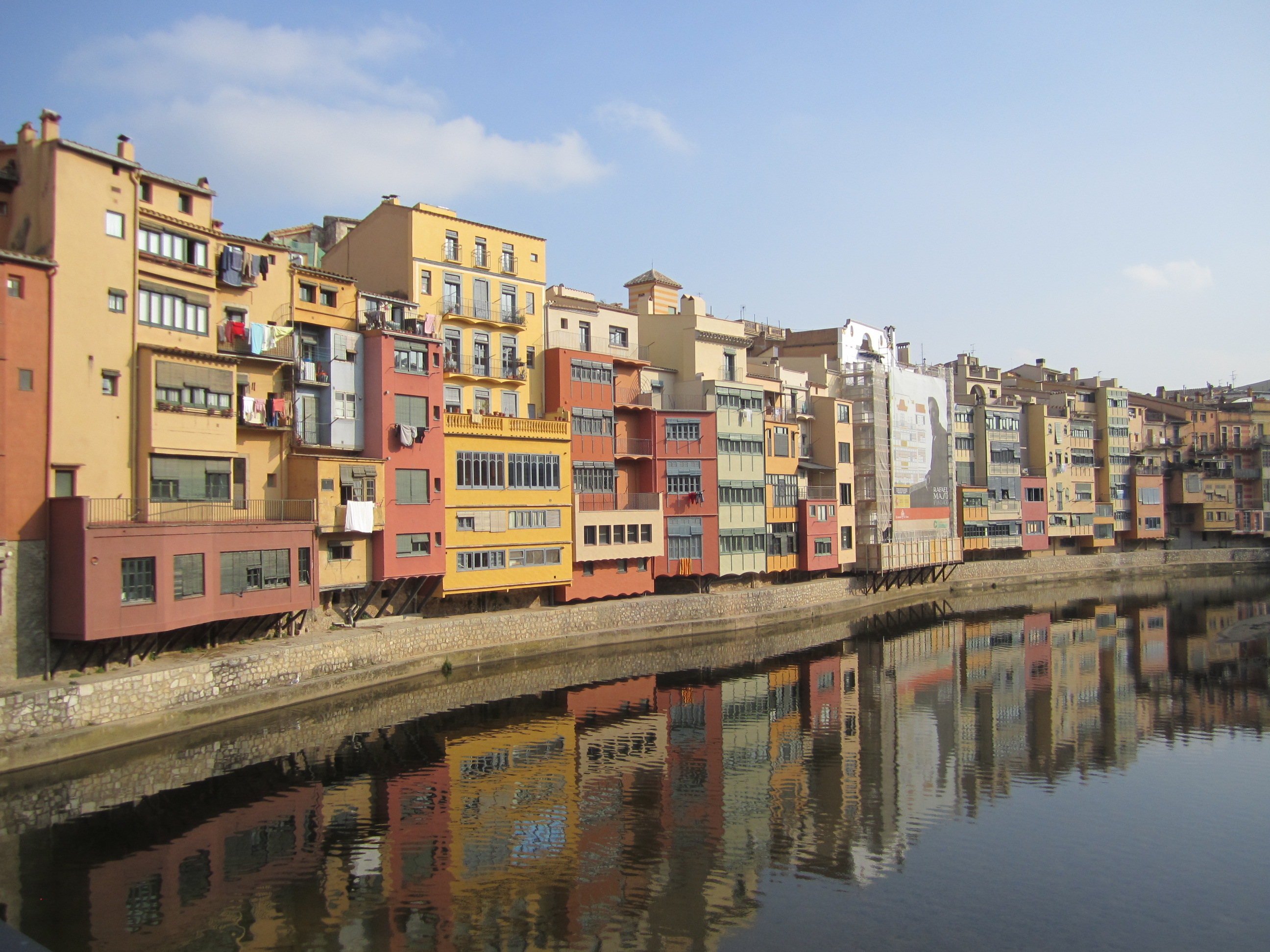
It took about 15 minutes to walk to the old city. We stopped at a tourist information office to get a map and directions. I was amazed at how medieval everything looked. I think Girona is the largest intact medieval city I’ve ever seen. Rob and I agreed that the tour guide books don’t do it justice. We walked over the bridges and saw all the orange and yellow houses facing the river (which was a pretty pathetic river).

Girona

The side facing away from the river looks much more medieval (no paint). We passed a lot of medieval churches and towers. Coming up to Girona Cathedral was amazing, because you enter the plaza from a very narrow Roman/ medieval alleyway, and all of a sudden you see this enormous white square building with a Baroque façade up a long flight of stairs. There was originally a set of Roman stairs leading up to a temple in the same location. The cathedral was completed in 1733, but much of it is medieval. We went in and took the audioguide tour. The inside is amazing too. It’s one of the highest churches I’ve ever been in. It also has the widest nave of any cathedral in Europe. We later found out that the vaults had been built over the roof of the earlier church, which was then dismantled. It has an ancient altarpiece and bishop’s throne attributed to Charlemagne. We then walked through the cloister, with ornate capitals and a floor that’s covered in tombs. We also went into the Treasury, which has the famous Beatus manuscript and the one-of-a-kind Creation tapestry.

After this we walked around the Roman/ medieval walls, which provide amazing views. All the streets around here are narrow, winding and steep. We found the Arab Baths, which are actually Romanesque Christian baths and very unique, but unfortunately they had already closed for the day. They have a lot of nice shops in Girona – much nicer than in Barcelona. I got a hand-made bowl with a flower decoration and a magnet with a Jewish star. When I went to the lady to pay, she called me “La Morena” – the dark-haired one. I liked that. But then, most people in Spain are morenos, so I don’t know why she singled me out. I’m sure that when most people saw me, they assumed I was Spanish. Next we went to the Jewish Museum in the Call, or Jewish ghetto. The building used to be a synagogue. The museum didn’t have too many original artifacts. Most of the things were reproductions, except for the massive tombstones from the Jewish cemetery. There was also a medieval mikvah in the upstairs level and a Jewish star in the tiles of the courtyard. Girona was a center of Kabalah in the Middle Ages. We stayed until the museum closed. Rob said if he had known how interesting Girona was, he would have tried to get there earlier. Oh, and for some reason, the “youths” of Girona made us feel uncomfortable. They kept giving us odd looks.

Then we went to the Museum of the History of Girona, which was closed in the middle of the day but which reopened in the evening. This museum was pretty interesting. It had a lot more authentic artifacts than the Jewish Museum. It used to be a monastery, and in the bottom level was a room with a lot of niches where they used to put dead monks to dry out their bodies (they would sit on top of drains), and when they were desiccated they would put the bodies out on display. It was pretty creepy. They also had part of a Romanesque cloister and, most importantly, a Roman mosaic showing a chariot race in the Circus Maximus, with a Catalonian man who was the victor of the races. As usual, we became less interested as we got to more modern history. Apparently Girona became a center for paper manufacturing. From the top of the museum, we had a wonderful view of the cathedral at night.

As usual, we had a problem finding dinner. We couldn’t stay till 9 pm because we wouldn’t finish in time to make the last train to Barcelona. We wandered around for a while, but there were only tapas bars and restaurants selling pizza and hamburgers. We went to the only restaurant that was serving Spanish food at that time, which we could tell was a real tourist trap. But it was only twelve euros for a three course meal. For the first course, Rob got snails (again!) and I got a tortilla, which is a Spanish omelette (eggs and potatoes). They were okay. It also came with cheap wine. For the main course, Rob got rabbit and I got Valencian paella, which is paella with pork and seafood. Rob’s rabbit was cold (it tasted like chicken), and all the rice in my paella had a fishy taste, so I didn’t like it. The pork was bony and unappetizing. We got ice cream for dessert and they gave it to us in little cardboard cups, like you would get in a supermarket! It was pretty bad.

When we got back to Barcelona, we stopped in a supermercat and got some food for tomorrow. We had to get the little chocolate-covered biscuits called Filipinos, because of the name. I later found out that some Filipinos had filed a protest over this name, which they thought was derogatory. The biscuits were tasty, though.

2/12/11
We actually got to the airport with some time to spare, because the trains were so efficient. Slept a lot on the flight and got back to Newark without incident. Overall I really liked Barcelona, and Rob liked it more than he thought he would, but I think it would be pretty boring without Gaudi. He really makes the city. My only complaints are the food and the fact that they speak Catalan and not Castilian Spanish.

Venice & Milan Travelogue

Venice and Milan, Dec. 12-19, 2011
By Stefanie Weisman

Day 1: Flight from Philly to Rome.

Day 2: Got into Rome, took the train to Rome Termini, then another train to Venice. The train ticket probably cost more than my flight. We were exhausted. Got into Venice about 5 hours later and walked to our hotel, Ca’ Dogaressa, without much trouble. It was a beautiful room with 18th-century style décor. We got a cup of Tiramisu from the place next door and took a long nap. Went to get dinner. Rob was trying to find a place listed in Fodor’s, but as usual we couldn’t find it. We found another place though and it was some of the best food I’ve had in Italy. I got pasta Bolognese and polenta gnocchi. Rob got a fish and shellfish platter and a salmon gratinee. The restaurant was called Casin something but we couldn’t read the second word because it was written in some wacky art nouveau font.

Day 3: The next day Rob couldn’t get up early enough so I had breakfast by myself downstairs – it was a small but nice breakfast, with juice, water, a hot drink, cereal, croissants, bread, nutella, jam, and yogurt. The owners of the place – an older man and his two kids? – are very nice. I took a walk around the Jewish Quarter, which was right next to the hotel. It was very peaceful and quiet. There was a Chabad house and a synagogue museum, and I saw some men praying.

Jewish ghetto in Venice


I went back to the hotel and got Rob and we made our way to St. Mark’s. It took about 25 minutes to walk there, especially since we kept getting lost. Spent a long time looking at the medieval mosaics in the atrium. Went inside and saw the pala d’oro, the treasury, and the museum where they have the original bronze horses. We also went out onto the roof and got a view of the piazza. Very impressive, even seeing it the second time. The whole time the weather was drizzly, but it didn’t rain much and I was very comfortable in my long coat.

We had lunch in a pizza place near Piazza San Marco, which was very good. I got caught up looking at everything and we got to the Correr Museum as it was closing. We walked to the Accademia museum, which was in the neighborhood where our restaurant from last night was. The museum was nice but I felt like the paintings needed a good cleaning. They were all so dark. After that we weren’t very hungry, so we found a supermarket (1 of the 2 I’ve seen in Venice) and got some bread, cheese, fruit, etc., and had a picnic in our room.

Day 4: We again left later than I wanted but after asking the hotel owner we found out that the vaporetto to the islands had a stop right outside the hotel. We bought a day pass from one of the tobacco shops (16 euros each, unlimited rides all day, as opposed to 6 euros a ride). It was nice seeing the island from the lagoon. I didn’t really want to stop at San Michele but Rob wanted to so we got off. It was interesting, with separate sections for nuns, priests, etc. There were 2 active funerals going on. I realized too late that I wasn’t supposed to take pictures (not that I took pictures of the funerals, but of the whole cemetery).

We got back on the vaporetto and went to Murano. I was overwhelmed by all the glass stores around me. The island itself is like a miniature Venice. We went into some of the larger stores and got creeped out because the employees kept following us – probably to make sure we didn’t steal/ break anything. The glass here is amazing, of course, but most of it is very modern and I wanted to find more ‘traditional’ pieces. Also I was disappointed there were no good deals here, at the source of production. It’s just as expensive as you’d find anywhere else. I was determined to buy a piece of glass before I left Venice, though. They had glass sculptures on some of the side streets. I especially liked the one with glass ducks facing the lagoon. We went into the church on the main canal, which had some masterpieces inside. Then we went into the glass museum, which was kind of a rip off. It didn’t have much and the stores outside were much more exciting. Got back on the vaporetto to Burano.

It took 15 to 20 minutes to reach Burano. You could see a lot of sand bars covered with birds in the distance. When we first got there a black cat went up to an Asian tourist and started rubbing up against her, but I couldn’t get it to pay any attention to me. We went into some lace stores, where again the people follow you around. The island was very pretty, filled with colorful houses like I saw in the photos. They were looking a little dull from the winter weather, though, and it was very foggy out. It’s a cute island, but there’s nothing to do there besides walk around and buy lace. We got some pastries from a bakery, and they were okay but nothing special. It was getting too cold and dark out to go to Torcello, so we decided it wasn’t worth it. We decided to go back to Venice for dinner since the restaurants here were very expensive.

Me in Burano

For dinner Rob found an Osteria that was listed in Fodor’s, but it was the worst meal we had in Venice. I got a nice bean soup and a main dish thinking it was veal cutlet, but it turned out to be calf liver so I could barely eat it. Rob got tiny sea scallops and some ravioli. The portions were tiny and it cost a small fortune. Afterwards we took a vaporetto under the Rialto and through the Grand Canal towards our hotel, since we still had the day pass. It was very beautiful.

Rialto at night


Fifth Day: The next day we walked to the Rialto and saw the fish and produce market. I think the fish market was closing up already because it seemed pretty small. At some point Rob got a slice of pizza (I think pizza by the slice is a new concept there) that was very good. We walked over the Rialto and I drove him crazy trying to find my piece of glass. I found a small picture frame I liked on the bridge that was 69 euros, but then I went to a store right off the Rialto and found a larger frame for 49 euros. I had Rob get me that one for my Christmas/ Hanukah gift.

After this we were going to go to the Naval History Museum by vaporetto, since it’s pretty far, but someone told us that they were on strike! So we had to skip the naval museum and walk to the Doge’s Palace. We spent quite a long time in there, and on the way out I saw the statues of the Tetrarchs, which I don’t think I had noticed last time. That was pretty exciting.

Me and the Tetrarchs


We were going to take the vaporetto back to our hotel and then catch a train, but we hadn’t realized that the strike was still on, at least for the vaporetto we needed to take. There were no signs. So we had to practically run back to the hotel in a panic – luckily Rob had learned his way around pretty well and we didn’t get lost. We grabbed our suitcases and ran to the train station just in time to catch the train to Milan. There were 1 or 2 more that night, but they got in very late.

The train ride was comfortable and passed towns I wish I could have stopped at – like Padua, etc. The central train station in Milan is huge, with ceilings higher than Grand Central Station. We found our hotel (Best Western Felice Casati) pretty easily and were immediately struck by how ugly and dark the streets were. The hotel room was such a stark contrast from our room in Venice. It was ugly and plain, without even a picture on the wall. There were portraits in the corridors, though. After settling in we went to a local pizza place and had personal pie pizzas, which were pretty good.

Sixth Day: The breakfast at our hotel was much bigger than in Venice, with hot food too. We set out for the Duomo and confirmed that Milan is very ugly. We were surprised that a city with so much wealth and such a strong artistic tradition could have become so ugly. The Duomo, of course, is gorgeous, though it’s surrounded by shopping. The outside is much prettier than the dark inside. Even better is the roof, which has a forest of spires with statues. You can see the Alps from there.

View from the Milan Cathedral roof


We then went to the Galleria Vittorio Emanuele II, which we didn’t find too interesting. Then to the Scala, which has a very plain exterior. Of course we couldn’t see an opera because you had to buy tickets months in advance (same for The Last Supper), but we went into the museum and into a box where you can see the inside of the theater. The museum was pretty interesting, with Verdi’s death mask and items found in his pocket when he died.

We walked around the city some more and saw some medieval buildings, which looked out of place. We walked down a huge shopping street that was so crowded we could barely move. I liked how it had some beautiful churches in the middle of that madness. For example, the beautiful little Renaissance church San Satiro, which has a Bramante façade and a trompe l’oeil in the apse. My goal was to get to the Basilica Sant’Ambrogio before it closed, which we did. I was very impressed by this one. It had a lot of interesting art inside, as well as being historically and architecturally important. The 12th-century ambo over the 4th-century sarcophagus, with 8th-century (?) metalwork, was quite unique. I paid a small fee to see the chapel with the original Late Antique mosaics.

Sant'Ambrogio ambo over sarcophagus

After this I made Rob go with me to Santa Maria delle Grazie, where we walked through a nice cloister and the church itself. Of course we couldn’t get tickets to see the Last Supper. After this we took the train back to our hotel and then went to find a restaurant. We chose a Neapolitan place, because it seemed popular. It was very good. I got an appetizer of fried things (cheese, dough, etc.) and a huge calzone that was half cheese and tomato and half cheese and ham. It looked like a face. Rob got some clams that even I liked, and some homemade pasta in a creamy tomato sauce.

Seventh Day: Went to the airport in Milan and flew into Newark with no problem. The flight was so empty that I was able to take over a row with three seats and go to sleep. One of the best flights I’ve had.

Venice & Milan 2011

Here are some pictures of my recent trip to Venice and Milan. It was my second time in Venice and I love it more than ever! Milan has some great buildings, but the city itself is not my cup of tea. You have to book months in advance to see The Last Supper or an opera at La Scala, so I missed out on both those things.

P.S. If you like these pictures, you can find more of my photos at http://www.flickr.com/photos/stefanieweisman/