What do you think? Have unpaid internships helped or hurt you?

Source: OnlineCollegeCourses.com
Give yourself the gift of great grades. Order your copy of The Secrets of Top Students today!
What do you think? Have unpaid internships helped or hurt you?
Source: OnlineCollegeCourses.com
Give yourself the gift of great grades. Order your copy of The Secrets of Top Students today!
I recently signed with Sourcebooks, Inc., and I couldn’t ask for a better publisher for my book, tentatively titled Rise to the Top: The Valedictorian’s Guide to Academic Success in High School and College. My book will be in excellent company – Sourcebooks is also the publisher of Harlan Cohen’s The Naked Roommate (the #1 book on college life with over 125,000 copies sold), Christie Garton’s U Chic, the Fiske Guides, the Gruber Test Prep series, and much, much more. Check out their book list here.
It’s been a lifelong dream of mine to publish a book, and I hope this is the first of many. I’m thrilled to be able to share my study techniques with high school and college students across the country. None of this would have been possible without my wonderful agent, Coleen O’Shea, and my friends and family – thank you, thank you, thank you!!! I am in extreme writing mode right now, and I love it. To read more about my book (and to sign up for my book list and contest), please go here.

Picture of Stefanie Weisman
There have been a lot of articles questioning the value of a college education recently – particularly the value of a liberal arts education. Take, for example, Frank Bruni’s The Imperiled Promise of College and Michelle Singletary’s Not All College Majors Are Created Equal. These articles warn against choosing majors that tend to result in low-paying jobs (or no jobs at all). That’s why I was glad to read Alina Tugend’s article Vocation or Exploration? Pondering the Purpose of College, which argues that college students can and should study the humanities. As Ms. Tugend writes, the question is this: is the purpose of college to “ensure a good job after graduation,” or “to give students a broad and deep humanities education that teaches them how to think and write critically? Or can a college education do both?” I’m going with door number three.
In the article, Ms. Tugend notes that what students major in has a greater impact on their future earnings than in previous decades.
So does that mean I should urge our son to pursue a degree he doesn’t have any interest in because it may provide him with a higher-paying job — or any job, for that matter — after college?
No, Professor Carnevale said, because if you don’t like what you do, you won’t do it well. The point is that “young people now need to have a strategy,” he said. “If you major in art, realize you will have to get a master’s degree. The economic calculus has changed.”
I like that line – if you don’t like what you do, you won’t do it well.
When I was in college, my most rewarding classes were in the humanities. I specialized in medieval history and got an M.A. in Art History before I majored and got a job in Computer Science. Do I regret studying history and art history, where job options are extremely limited? Not in the least. I’m glad I have a background in the humanities – I think it makes me a more well-rounded, knowledgeable, appreciative person. (However, I’m lucky that I didn’t go into debt to get my degrees. If I did owe lots of money, perhaps I wouldn’t be so pro-liberal arts.) One of the best things about Columbia, my alma mater, is that it has a Core Curriculum. All undergrads, no matter what their major, are required to take classes like Literature Humanities and Contemporary Civilization, where they have literally hundreds of pages of reading each week on everything from Homer to Dante to Freud. This was probably the highlight of my academic career.
Lastly, I was quoted in a Crain’s New York Business article last week – Goodbye, ‘bamboo ceiling’ – Corporate barriers spur Asian-Americans to start fast-growing enterprises, by Emily Laermer.
When Stefanie Weisman was Stuyvesant’s valedictorian in 1999, she said, the school was about half Asian. She described her time there as ‘the most intense four years of my life’ because of its competitiveness.
‘The students there are bright and hardworking, partly because there are so many Asian-American students,” she said, citing the influence of ‘tiger parents.’ . . . .
It’s also possible that tiger parenting ultimately backfires. Ms. Weisman, who is writing a book about academic success, said that those who enjoy learning – rather than studying because their parents insist – tend to do better professionally.
Give yourself the gift of great grades. Order your copy of The Secrets of Top Students today!
I’m happy to announce that my article Taming the Tiger of Achievement is up on the New York Times blog SchoolBook.
The term tiger mother comes from Amy Chua’s book, Battle Hymn of the Tiger Mother. You’ve probably heard about the shocking techniques she used to get her kids to excel in school – such as forbidding them to go on playdates, calling them “garbage,” and demanding that they be the #1 student in every subject except gym and drama. Well, my article argues that most top students don’t have tiger mothers criticizing their every move. Their folks are supportive without being pushy. The most successful students tend to be those who are self-motivated, not forced to do things by mommy and daddy.
By the way, in this article I talk about a survey I’ve given to top students. If you or someone you know would like to participate, click here.
What do you think about the tiger mother phenomenon?
Give your child the gift of great grades. Order a copy of The Secrets of Top Students today!
The reporters are kind of annoying, but they make some good points.
What do you think?
Give yourself the gift of great grades. Order your copy of The Secrets of Top Students today!
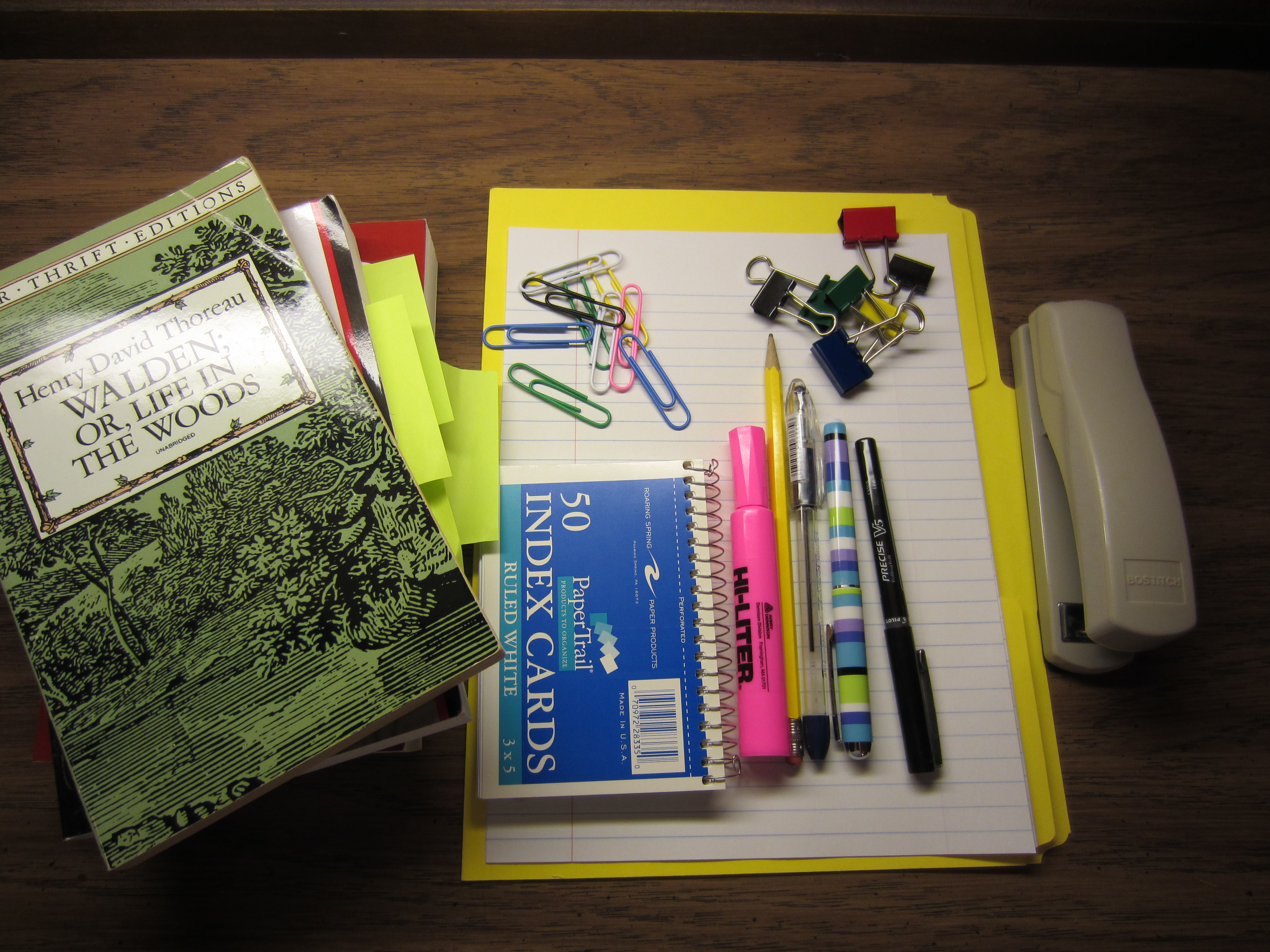
Low-tech tools
USA Today‘s College Blog just posted my article on the benefits of going low-tech in college! In it, I explain why ditching your laptop may be good for your GPA. There were a bunch of things I didn’t get to include in the article, though, so here’s some more advice about how to avoid the pitfalls of technology in the classroom.

The benefits of paper
Research conducted by Betsy Sparrow, an assistant professor of psychology at Columbia University, and published last year in the journal Science has identified three new realities about how we process information in the Internet age. First, her experiments showed that when we don’t know the answer to a question, we now think about where we can find the nearest Web connection instead of the subject of the question itself. . . . A second revelation: when we expect to be able to find information again later on, we don’t remember it as well as when we think it might become unavailable. . . . The researchers’ final observation: the expectation that we’ll be able to locate information down the line leads us to form a memory not of the fact itself but of where we’ll be able to find it.”
Scary stuff. You can’t have an intelligent conversation if you have to look something up on your computer every 20 seconds. We must use technology with restraint, both in school and in our post-graduate lives.
Give yourself the gift of great grades. Order your copy of The Secrets of Top Students today!
 Stefanie Weisman