Facebook Depression: Is It A Real Diagnosis? (Guest Post)

Tara Heath is a journalist who lives in California. She loves to write about health and wellness and parenting. She knows there are many dangers that come with social media and wants to help share her tips and thoughts on staying healthy and safe.

Almost everybody with access to a computer knows about the social media site Facebook. If you’re a parent, chances are your children use it, and more than likely, you use it yourself.

While social media sites are basically part of the culture for anybody under the age of 40, they tend to have more of an impact on high school and college-age teens. They are the ones most likely to be regularly active on Facebook, and they’re also the ones most likely to visit the site more than 10 times per day according to a study conducted by the American Academy of Pediatrics.

Unfortunately, this relatively new technology may be taking a toll on some teens and young adults in the form of something controversially known as Facebook depression.

signs

What is Facebook Depression?

Facebook depression is a relatively new term designed specifically to reference feelings of depression and anxiety that many teens feel due to social media sites, much like the depression teens experience on the playground when they aren’t accepted by their peers. Only, in the digital age, Facebook depression relates more to friend requests and friends unfollowing them on the web than face to face interaction.

In some cases, teens may do things that could be considered risky in order to feel accepted, and then brag about their activities. This has led some researchers to believe that kids who don’t feel accepted on social media sites may be more likely to engage in risk-taking activities like doing drugs or having unsafe sex. Some teens even engage in self-destructive behavior like posting pornographic images of themselves or sending them to others at their school in a misguided attempt to be accepted.

Is Facebook Depression Real?

Facebook depression might sound like a strange term to some parents who may not understand the role social media really has in their child’s life. However, 22-percent of teens check their Facebook profile and information 10 times or more per day and 77-percent have cellular devices capable of giving them this access no matter where they are.

That’s why Facebook depression is a real thing. However, it may not really be any different than the feelings commonly associated with not being accepted by peers – the same feelings children had on the playground long before tools like social media sites were available.

depression

With social media becoming more and more a part of the culture each day, it’s important that parents realize how it can negatively affect their children. The internet can be an excellent tool for children to learn and grow emotionally, but it can also be problematic if parents ignore its growing role.

As a general rule, you should be monitoring your child’s Facebook account until they are older teens – children under 13 likely shouldn’t have their own Facebook account at all. By being vigilant as a parent you can make sure your children stay safe and don’t experience any of the depression that can come with sites like Facebook.


Give your child the gift of great grades.  Order a copy of The Secrets of Top Students today!


Secrets of Top Students Kindle Sale Update

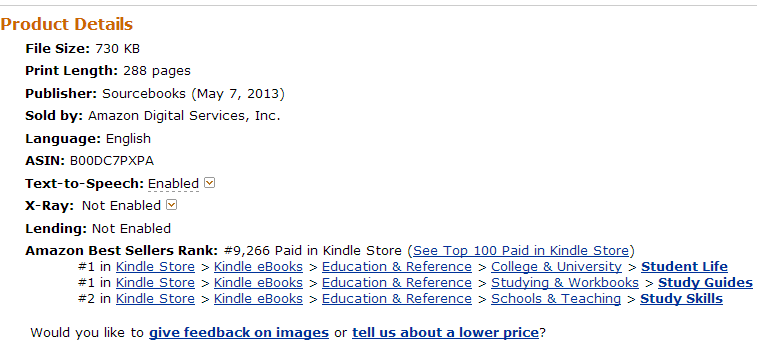
The Secrets of Top Students Kindle edition is currently the number 1 book in the Student Life and Study Guides categories on Amazon, and number 2 in Study Skills! Thank you for making this sale a success. Remember that you can still get your copy for $2.99 until May 11th!

The Secrets of Top Students on Amazon

The Secrets of Top Students on Amazon

The Secrets of Top Students Special Offer

For a limited time, you can buy the Kindle edition of The Secrets of Top Students for $2.99! Act now – this offer won’t last long. Give yourself – or your kids – the gift of great grades in high school and college.

The Secrets of Top Students: Special Sale!

The Secrets of Top Students: Special Sale!

Here’s what people have been saying about the book:

Praise for The Secrets of Top Students

“An insightful guide for high achievers—and those aspiring to such status—from an authoritative source, Stefanie Weisman, a Columbia University graduate and former valedictorian of Stuyvesant High School, two of the best schools in America. Stefanie Weisman’s book about the secrets of academic success is all the more amazing, given the learning disabilities that she overcame to become the ultimate academic overachiever. As a graduate of Stuyvesant High School myself, as well as a Phi Beta Kappa graduate of Brown University, I believe students can find happiness and achieve great things at any number of schools, and Stefanie Weisman offers hard-fought wisdom about how to get there.”
Alec Klein, Northwestern University professor, bestselling author and award-winning journalist

“Although the target audience is high school and college students, the book is a must-read for students in middle school and up, teachers, parents, and guidance counselors as 21st-century students learn to excel in the new educational landscape in which they find themselves.”
Tammy Turner, Centennial High School, Frisco, TX; School Library Journal, July 2013 issue

“We wish we had Stefanie Weisman’s new book . . . when we were in school, but our loss is your child’s gain as this book goes beyond advising how to test better; it’s loaded with strategies on how to get the most out of school in a healthy, well-rounded way that will continue to serve your scholar well throughout their life.”
Lisa J. Curtis, Brooklyn Family Magazine, August 2013 issue

“A student who followed even half of the suggestions in this book could come away from college with both a greater understanding of the material and a significantly higher G.P.A.”
Dr. Mindy Marks, Associate Professor of Economics at Washington University, St. Louis, and Co-Author of “Leisure College, USA: The Decline in Student Study Time”

“This is perhaps the best and most pragmatic guide to academic success I have read that is relevant to today’s students. One thing that sets this book apart is that it provides special information for students interested in science, technology, engineering and mathematics, aka STEM subjects.”
Stuart Nachbar, President of Educated Quest, www.EducatedQuest.com

“Undergraduates who want to excel in college will find a helpful resource in this book.”
Joseph Adegboyega-Edun, Counselor/College Adviser, Walter Johnson High School, Bethesda (MD)

Headed to College? Don’t Become a Victim of Identity Theft (Guest Post)

If you’re going to college, you have lots of things on your mind: choosing the right classes, getting good grades, finding a place to live, making friends, etc.  You’re probably not thinking about identity theft, but according to the U.S. Department of Justice, about one out of 20 college age people will be a victim of identity theft. Losing everything that you own is not the college education that you are trying to get.

Colleges Give You Plastic

There was a time when the only purpose of a college ID card was to get you a discount at amusement parks. Now most college finances go through the student ID card. Often they are linked to a bank account and serve as a debit or credit card. Because all of the account information is linked, one slip can mean losing everything. Scambusters.org cites carelessness with financial aid information as one of the top reasons that students fall victim to identity fraud.

One of the ways to protect your credit is to never give your financial aid PIN to friends. With PIN information, a clever thief can get all of your other specific account information, including your Social Security number and residency data. The funds can also be diverted into the perpetrator’s account.

Continue reading

The Many Ways Students Can Make Money From Unwanted Items (Guest Post)

By Maja Tisma. 

Maja is a Graphic Designer with a passion for Frugal Living. She wants to help people to make their money go as far as possible, and does so with her website DailyProof.

As a student, it’s often difficult to fit any kind of employment around your studies. Even if you find a way, trying to make ends meet can seem pretty much impossible! Everyone knows that getting a job while at college or university can help your employability afterwards, but practicalities surrounding actually getting your degree must come first. How, then, should you best make some money to actually maintain your standard of living and get by?

First if all, it’s a good idea to get yourself into a habit of reading blogs and websites dedicated to the practice of frugal living. There are some great tips out there, and most aren’t at all time consuming. Not only are they great for providing you with ways to make money, websites such as Daily Proof and even your typical Social Networking sites can help you actually save money, too. From coupons to budgeting, there’s no point in shying away and looking a gift horse in the mouth.

Still stuck? Here’s a breakdown of the best ways to gain from stuff you already have:

Ebay/Amazon

Now, these ones are a bit of a given, but it just goes to show that tried and tested methods really work! Whether you’ve got some old clothes flung at the bottom of your wardrobe, or some antiques handed down through the generations that you really see no use for, these websites could indeed be your saving grace. If you don’t really have anything sale-worthy, get customizing! There’s a new trend surrounding upcycling, and it’s a fantastic way to make something shiny and new out of old stuff. It’s environmentally friendly as well, because it’s basically just a glam form of traditional recycling.

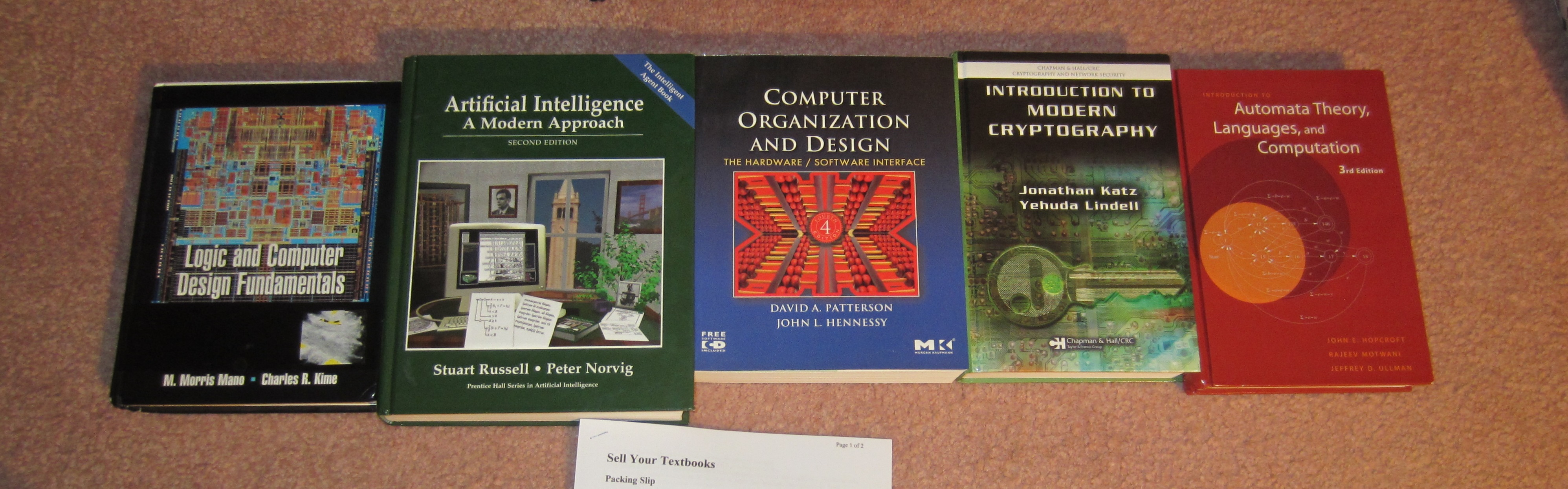
These are some books sold by the editor of this site for over $100!

These are some books sold by the editor of this site for over $100!

De-Cluttering Sites & Stores

Following on from the standard sites mentioned above, there are some great sites out there which actually take the hassle out even more (if that’s possible!) from selling on your junk. Just go to sites like De-Cluttr, enter the barcode or specifics of the items you want to shift, and you’ll be given a price. And that’s it! No auctions, no waiting around for someone to commit to a purchase. You’ll be invited to send off your items (from gadgets and CDs, to DVDs and clothes), and once they’ve been vetted, they’ll pay out. On the same level are businesses such as Cash4Clothes, who pay out to recycle your stuff for you, by taking your clothes to places in need. You won’t get much for them, but it’s better than them just sitting there collecting dust, right?

College Groups/ At College

If your college is on Facebook, it’s likely that there will be a group dedicated to the students. Find people taking your classes and see whether they’d like to buy your books from you once you’re done. Not only will you make a little back from your investment, you’ll win some brownie points in helping out some of the younger students.

‘The Old Fashioned Way’

Have a yard sale! It may not seem very 21st Century, but sometimes, the oldies know best. As the warmer weather approaches, it’s the perfect time to gather some friends and set up shop (literally) for the day. Be prepared for hagglers – set your prices a little higher than you actually hope for, but not so high that you have them running for the hills. Make some posters and flyers and pepper them around the neighborhood, and you’re good to go!

Swap Shop

This is a trend that has been sweeping campuses the last few years. A ‘Swap Shop’ might not make you any money per se, but it’s a brilliant way to gain some new essentials just by using the ones you no longer want. Think of it as a giant hand-me-down extravaganza; whether it’s just between your circle of friends, or even spread to a larger audience. Why not charge everyone $3 to enter, have everyone bring 3 good items of clothing that they no longer have use for, and give everyone a ticket to be used in exchange for someone else’s clothes that they do want? The admission can be put to charity or a society event, so not only will you gain a new wardrobe for next to nothing, the rewards can be reaped elsewhere as well.

There are an abundance of ways that you can make a little extra cash while you’re studying – you just have to get creative!


Want to improve your GPA?  Order your copy of The Secrets of Top Students today!


Landing a Dream Job in Wildlife Tourism (Guest Post)

By Dianna Terry. Dianna is a marine biology PhD candidate working for an ocean conservancy organization.

Kneeling in roadside sand to identify a lion’s pugmark, interpreting a humpback’s tail-slap for a ship full of camera-wielding whale-watchers, collecting a blood sample from an ailing goose in a marshland refuge—a career in the wildlife-tourism industry is often rife with adventure. For anyone who loves animals and wild ecosystems, it can be a deeply fulfilling dream job.

wildlife careers

Do you love animals? Consider a career in wildlife tourism.

Wildlife tourism, though, covers a broad spectrum of specific careers. You could become a safari guide for a travel company, which might be the job that most automatically comes to mind. But you might also be a field researcher, studying populations of wild animals in national parks and other protected lands that attract wildlife-watchers in droves. Maybe you’ll don a doctor’s coat to ensure a population of endangered animals is secure against devastating disease—including those potentially transmitted by humans in ecotourism situations. Perhaps you’ll tackle another aspect of the field by regulating industry practices with an eye toward sustainability through a group such as the International Ecotourism Society.

Zoological parks also often fall under the umbrella, and not only because the animals on display serve as educational ambassadors for their wild brethren: Many leading zoos are also heavily involved in conservation work. The Milwaukee County Zoo, for example, has long tended one of North America’s biggest colonies of captive bonobos, and works to secure wild populations of these rare great apes in equatorial Africa, according to BonoboConservation.com.

Education

Pursuing an academic track in biological sciences gives you a comprehensive, technical understanding of how animals are put together and how they function in relation to their environment. Mastering these fundamentals of physiology and ecology is crucial to many aspects of conservation work.

To some, wildlife biology or zoology might appear “softer” academic routes than physics or chemistry: A trotting wolf, after all, seems easier to understand than the invisible latticework of an organic compound or the complicated equations accounting for the behavior of the universe. But biologists familiarize themselves with many levels of ecological organization and process, from an animal’s physiological requirements to its larger-scale interactions with other species, the seasonal and long-term patterns of its movements in the context of different habitats, and its response and susceptibility to climatic fluctuations.

Beyond a wildlife-biology or ecology program, a degree or certificate in veterinary studies can also usher you into ecotourism work by giving you the tools to diagnose and treat diseases affecting wild or captive animals. For example, the Veterinary Technician Program through PennFoster.edu exposes you to everything from basic tenets of biology and medical mathematics to intensive courses on animal anatomy and nutrition. When assessing potential veterinary curriculums, keep an eye out for accreditation by institutions such as the American Veterinary Medical Association.

An undergraduate degree or certification in wildlife ecology, conservation biology, or some related field may be sufficient to land professional work in wildlife tourism—particularly when combined with plenty of practical experience. However, further education is often mandatory for high-level research and managerial positions, as NationalZoo.si.edu explains.

Interning and Volunteering

As with any line of study, volunteering or interning can be enormously beneficial. Beyond making you more attractive to a hiring committee, it provides a better sense of exactly what kind of position and what area of focus most interests you. Jobs working with charismatic megafauna like elephants and tigers can be highly competitive; volunteering as a data-cruncher or field assistant gives you a taste of the drama while also improving your resume.

Inquire with zoos, wildlife refuges, veterinary clinics, national parks, ecotourism companies, and other organizations to find out about volunteer and internship opportunities. If you’re lucky and committed, you might even land yourself a direct job opportunity out of the deal.


To land your dream job, you’ve got to have a strong GPA.  Order your copy of The Secrets of Top Students today!

Deciding to Become a Teacher (Guest Post)

By Fiona Mayberry.  Fiona loves teaching others, and loves that the internet allows her to reach different people every week. She currently writes about education policies and degree certification processes.

If you’re in high school or college right now, you’re probably putting a lot of thought into what you want to do with your life. It’s possible that the most influential people in your life have been teachers, which might inspire you to become a teacher yourself. Before you commit to that career path though, there are a few things to consider:

Source of Motivation

If you want to become a teacher to change people’s lives, that’s wonderful. Just know that you won’t feel like you’re making an impact every day. If you’re inspired by seeing small improvements in a student’s work, or knowing you made someone’s day better, then you’ll be fine. If, however, you expect to see large results quickly, you might go through long periods of time where you feel frustrated. It’s important to know yourself and have realistic expectations.

Hours

Some people are attracted to the teaching profession because they like the idea of working the same schedule every day. 7-3 Monday through Friday seems pretty cushy, and the idea of summer breaks is appealing as well. But teachers often have to take their work home to grade papers and create lesson plans. They also have after-school events such as staff meetings, parent conferences, and continual learning opportunities. You’ll work a lot more than just classroom hours. Also, depending on your financial situation, you might have to teach summer courses or find an additional source of income for vacation times. Keep all this in mind and know that class times are not going to be your only work times.

Do you have what it takes to be a teacher?

Do you have what it takes to be a teacher?

State Requirements

Every state has its own requirements for teaching certifications.  If you’re planning on moving, make sure you know the requirements for the state you’re considering. Certain areas require different tests and even prerequisite degrees and courses in order to take the certification tests. Classroom experience is also a qualification that varies state-to-state.

Likewise, states all have different laws when it comes to what is taught in the classroom. Look into how much input teachers in your target area have over what they teach. Look at the current proposed bills affecting education so that you know not only the current classroom atmosphere, but what it’s likely to be like in the future.

Once you take all these things into consideration, you will be more prepared to make an informed decision. Will a classroom environment allow you to thrive? Is teaching the way for you to fulfill your life goals? If so, start looking at online teacher communities, and talk with those in the field. The more you see of what teaching is actually like, the more prepared you will be to have a positive impact on student lives.


Want to improve your GPA?  Order a copy of The Secrets of Top Students today!

Building Healthy Lifestyle Habits in College (Guest Post)

By Dorothy Richardson
Parent, wellness coach, DIY guru

The college experience is formative not just in terms of education, but also in terms of lifestyle. As students move away from their childhood homes for the first time, they have complete control over every facet of their day. What they eat, when they sleep, how much they party, when (or if) they do their homework is all up to them. While this can be a great learning experience for young adults, it also presents potential downfalls if poor lifestyle habits are adopted. Those habits can carry on into adulthood and have negative effects on short and long-term health. With that in mind, college students should make a concerted effort to build healthy lifestyle habits while still in school. Here are four ways to preserve physical and mental health, both now and in the future.

Healthy Lifestyle Seamless Pattern

Establish a Regular Sleep Routine

A regular sleep schedule has numerous positive effects on a college student’s health. According to Scholarships.com, students who get 7 to 9 hours of sleep on a regular basis experience improved concentration and reduced fatigue. Those students may also experience a reduced appetite, which can help combat college weight gain. As the Centers for Disease Control and Prevention note, the ill-effects of poor sleep can be severe; teenagers and young adults may suffer from poor academic performances, depression and increased social difficulties.

Unchain Yourself and Get Active

College students can spend long stretches of time sitting in class and studying at their desk. But prolonged sitting can come with consequences. Sitting for long periods with poor posture can place excessive stress on the back, leading to muscular pain and even conditions like spinal stenosis. Students should take breaks throughout their study sessions to get up and get active. Students should also be mindful of how heavy backpacks, poor diets, excessive screen time and other variables can affect their back health, according to Laser Spine Wellness. For tips and features on back health, check out online videos and resources offered by Laser Spine Institute on their Youtube channel.

Avoid Excessive Drinking

Drinking is a common pastime among college students, but it can have damaging consequences both while in college and years into the future. For one, excessive binge drinking can cause damage to the liver and other organs. Heavy drinkers face an increased risk of alcoholism, and it increases the risk of both alcohol poisoning and sexually transmitted diseases and other problems compounded by poor decision making, according to the CDC. And new research coming out of Harvard University suggests excessive drinking during the college years can actually increase an individual’s risk of developing Alzheimer’s later in life, while moderate drinking (up to 3 drinks nightly) can reduce this risk.

When Stress and Sadness Overwhelm, Seek Professional Help

Maintaining mental health can be a serious challenge for many college students. High stress, fluctuating moods, homesickness and depression can all create challenging obstacles to overcome. Fortunately, many colleges and universities offer free or low-cost mental health services to students in need. Students should take advantage of these services to mitigate the negative affects of their mental health conditions. By seeking out professional help, students can develop coping skills that will help them manage their current problems and even give them the tools to handle similar situations in the future.


Learn how to get great grades and stay healthy with The Secrets of Top Students.  Order your copy today!

8 Deep Study Tips for Math Students (Guest Post)

By Harry Red.  Harry is a developer and math fanatic who helps students at exammastery.com

Deep study is a rare commodity. It’s what happens when you’re studying at your peak ability. Mathematics definitely requires lots of deep study. But it doesn’t really come naturally to us. With some practice though, you can train yourself to fall into deep study mode more easily.

question-glass

1. Make a dent

Ever spent a whole day avoiding the actual hard work you wanted to do? Ended up doing busywork instead?

Everyone’s done that.

Fortunately there’s a way out of it: ignore things that are trivial but urgent (chores etc.) for a while, and make a dent in that difficult, non-urgent thing you’re somehow avoiding. Make some small amount of progress on it.

It doesn’t have to be big. It may take several attempts. It may be just a vague, uncertain feeling of having understood the subject a tiny bit better. But it can release a lot of anxiety – conscious or otherwise – and give you some energy and insight so that you can later nail the thing completely.

In math, small insights can make a really big difference towards understanding some larger concept. A single, apt diagram, a carefully remembered assumption, or an unwritten, abstract and seemingly trivial equation or mathematical fact can be enough to set your mind on a marathon to finally connect all those little dents that you made when you last studied the subject.

2. Jump around when working on questions

At least two bad things happen when you’re neck-deep in math: tunnel vision and myopia. Not seeing other parts of a question, and focusing too much on the minutiae of just one aspect of it.

Both waste time and increase your risk of failure.

So next time you find yourself stuck in tunnel vision or math myopia, stop yourself. Feel free to jump around. Go back to the question and pick out key words or concepts. See if you can quickly verify given results. (Trig identities are usually a good target for this.) Recall definitions – maybe write them down.

The point is to engage with the material at varying levels of breadth and intensity. Actively avoid the thing you were working on: it brought you into tunnel vision, so you want to get as far away from it as possible.

This can save you both study- and exam-time. Both are extremely valuable.

3. Change your views on proofs using the ‘scaffold’ method

Writing a mathematical proof can be much like constructing a building.

First, you need a construction plan, or at least a rough idea of where to begin. Then comes some scaffolding and preparation. Then the actual construction – putting things in place so they’ll stay there when the scaffolding is removed.

Suppose you’re asked to prove something in an exam. You understand clearly what you’re asked to prove, you’ve broken down the problem into smaller parts as best you can, and you’ve got a few ideas of how to get from one thing to another and then to something that is at least close to what you’re asked to show. However, something is still stopping you from actually writing down the proof, because you’re not sure you’ve got the details figured out correctly.

Cases like these are where the scaffold method is most useful. The idea is this: write the scaffolds in, then do the actual construction work.

That is, don’t worry too much about the intermediate steps and their mathematical rigour for the moment. Instead, write down what you are able to write down; for instance, any intermediate steps, leaving some free lines between them. This will set the problem out more clearly in your mind, and may even trigger memories of similar proofs that you’ve worked through during revision.

4. Don’t neglect boring stuff

As strange as it may sound, you need to be aware of how bored you are while you’re studying.

When you’re in the ‘bored’ mode, you’re just trying to get by. It’s likely that you’ll miss very important things if you just coast through a part of your subject without conjuring up actual interest for it.

You need to prevent this. Monitor your boredom levels (only you can do that accurately), and take a break whenever they spike. (When I say ‘monitor’ here, I don’t mean make lists and charts. Just use your subjective judgement.)

Taking a break in such situations is effective because everyone’s level of enthusiasm for something drops once they’ve spent a long time expending mental energy on it. Enthusiasm is replenished with rest and time spent doing more enjoyable or relaxing activities.

So take that break. You will lose a bit of study time, but as long as your time-management is not too far off you won’t lose anything important. Try not to think of this as lost study time. A difficult, less interesting subject is best studied with a fresh mind, not an exhausted, interest-starved one that will make all the wrong connections at the worst possible time.

Sound obvious? Maybe so. You should be taking breaks anyway. But monitoring your boredom levels is a good way of measuring a lot of things in one go. Boredom is complicated. Taking that extra break because your boredom indicator goes critical will help you avoid missing important bits of your subject.

5. Watch out for behaviour deemed ‘interesting’

Sometimes you’ll get questions like this:

a) Investigate the function f(x), particularly its properties with regard to |some topic on the course|. (4 marks)

b) Draw suitable conclusions from this. (2 marks)

I call this a professorial question – it’s asking you something in a roundabout way. These questions might explicitly ask you for ‘interesting’ behaviour, or they might just instruct you to ‘draw suitable conclusions’ from some mathematical argument. In a lot of cases, what they’re really asking you to do is to link the question to ‘interesting’ behaviour that you’ve previously studied in your course. Physics exams are especially prone to this.

It’s like you almost need to know what to do in advance.

The trick is to identify ‘interesting’ special behaviour before the exam starts.

Whenever your lecturer, teacher or textbook goes on about so-called interesting behaviour, pay extra attention. You may be looking at something that is more exam-relevant than you think.

However, it’s not always easy to spot when this is happening. Sometimes it’s obvious. Sometimes you can smell interesting behaviour when one part of a course links in to a much larger field.

For instance, in a course on algebra you may be told that there’s no general algebraic solution for any polynomial of fifth degree or greater, and to get usable numbers out of such equations, we usually need to develop numerical techniques for solving these, which in turn is a huge topic in mathematics.

6. Start with a long attention span

Mathematics contains a lot of information. Simply reading it will take up much of your mental bandwidth.

You’ll need to have a big enough attention span to process everything and avoid missing important bits. The tiniest detail can make all the difference.

But nowadays, it’s hard to start anything with a long attention span. So you’ll likely need to spend (read: waste) time trying to adjust your attention span.

Here’s what you can do. Before you start a difficult exercise, go read a slightly heady but non-math text for 15 minutes. Then start that exercise.

You’ll find that your attention span has expanded a bit.

The reason why I’d recommend reading a non-math book is that you don’t want to exhaust the math faculty of your brain. See what kind of books will work best for you.

Best part? Over time, you can read entire books like this. I’ve read The Book of Five Rings, The Art of War and most of Carl Sagan’s Cosmos using only this method.

7. Return to neutral + leave study hooks for tomorrow

It’s hard to get motivated to do a long, hard math study session.

Here’s what you do. Keep an eye out for interesting topics or problems that you’ve just encountered near the end of a study session. Then, don’t study them. Restrain yourself and leave those topics or exercises for the next session.

That gives you an incentive to get back into the material even if you are distracted and don’t start your next study session when you intended to.

There’s a passive variation on this – call it returning to neutral. That is, don’t leave a tangled mess of study notes on your desk after a long session, because when you come back to it in the morning you’ll lose at least some motivation in cleaning that mess up.

8. Use hard exercises

Pick a few hard exercises on your course. Make sure they’re likely to be relevant for your exam. Struggle with them.

When you’ve solved them, memorize some of the key insights that led you to solve the problem. That’s right: memorize them.

Why spend time on even more memorization? The reason is that math exams often reuse the same kinds of problems. So if you already to know how to solve them at a basic level, you’ll have a real advantage in the exam.

But even if those hard problems don’t turn up in the exam, they provide some of the best teaching you’ll ever get. By definition, they’re going to be weird in some way. And understanding weird things improves your mind.

More math study tips on www.exammastery.com


Learn how to succeed in math and other subjects.  Order your copy of The Secrets of Top Students today!