
Source: Top10OnlineColleges.org
Give yourself the gift of great grades. Order your copy of The Secrets of Top Students today!
Source: Top10OnlineColleges.org
Give yourself the gift of great grades. Order your copy of The Secrets of Top Students today!
If you are looking for a viable career path that will provide both a reliable income and a tiny carbon footprint, you may want to consider entering the green-collar job sector. Not only are these jobs part of a growth industry, but they will help you sleep at night, knowing that you’re doing your part to protect planet earth and the many creatures that live here.

Here are five growing green careers that you may wish to investigate.
1. Forester
If you want to blend a love of physical outdoor work with an aptitude for biology, this may be the perfect career choice. The modern forestry industry involves restoring and conserving forests, transitioning to faster growing species, studying the effects of deforestation on the environment, and actual harvesting. Most foresters require a degree in forestry or environmental studies. And, no. You don’t have to look good in plaid.
2. Solar Power Installers
The whole world seems to be jumping onboard the solar power wagon, causing a great demand for people to work in this field. This job involves installing rooftop solar panels or water heaters. If you love working with your hands, have a construction background, and want to enter a growth industry, this could be ideal. And don’t worry about having to move to the Mojave. Anywhere there’s sunshine, there’s bound to be a solar power installation job waiting for you.
3. Conservation Biologist
If your quest is to save the planet, this career path strives to do exactly that. The Conservation Biologist’s job description is to protect the earth’s ecosystems and protect its biodiversity. With positions available in research, teaching, Government agencies, and nonprofits, this field offers a vast array of possibilities. So, if you love nature and have a degree in Biology, this could be the ideal career choice. You may be the one to save the dwindling bumble bee, or halt the attack of the Asian Carp.
4. Recycler
If you were in charge of your school’s recycling program, are the master of composting, or love to find ways to repurpose refuse, a career in recycling may be your perfect fit. With garbage disposal fees mounting and landfill sites exploding at the seams, recycling is a viable and green alternative to the traditional dump. And jobs in this industry are on the rise with openings for a plethora of educational backgrounds. Whether you want to manage a department in a recycle centre, work the sorting lines, or operate heavy equipment on the landfill site, this industry offers a wide array of green jobs that will help make your corner of the planet a better place.
5. Urban Planner
Urban planners typically work for municipal governments, which makes them attractive to someone looking for greater job security and an opportunity to affect positive change on your local community. Urban planners deal with a variety of areas including mass transit and other transportation concerns, emergency planning, dealing with urban sprawl, and building layouts–ensuring that someone who works in this area will never get bored. If you love constructing computer-generated cities and possess a degree in Urban or Regional Planning, this is your chance to put those skills to use–and help your town decrease the size of its carbon footprint.
If you are intrigued by the idea of entering a growth industry and doing work that you can be proud of, one of these green jobs may prove to be your dream career. So swap your collar of white or blue for one that’s green–and love what you do.
How “green” is your job? Does decreasing your carbon footprint matter to you? Why or why not?
Image courtesy of photos.com.
Kimberley Laws is a freelance writer, avid blogger, and former Education Coordinator at her local recycling plant. She has written on a vast array of topics including WordPress plugins, financial software, social media marketing, and online reputation management. Follow her at kimberleylaws.com.
To get a green career, it helps to get great grades. Order your copy of The Secrets of Top Students today!
It’s no surprise that college students are one of the largest customer bases for storage facilities everywhere. As an undergrad, the roof over your head is temporary at best (assuming you’re not living at home). It’s not uncommon to be in a different building every year, and since you’re only in classes for nine months out of the year there is an awkward hiatus where you don’t know what to do with your stuff in between moves (and sometimes even when you’re settled, space can be a precious commodity). Storage units are great way to keep your stuff safe and near campus during the summer months, but it pays to know what you’re getting into.

How will you store your stuff this year? (Photo by hoosadork via Flickr)
What Size?
Storage unit facilities offer different sizes, but a typical one will have a range of units to choose from. The smallest are called “lockers” and are typically about 5’x5’. As a college student, you’ll most likely want to lease a 5’x5’, 5’x10’, or 10’x10’ at the max. Here is a breakdown of what you can expect to fit in these units, so you can better plan your storage needs.
Saving Money
Blah, blah, blah, (insert overused broke college student joke here). Everyone knows college students have little to no money, and while “discount storage units” are never a good idea, there are still some ways to save money. Other than looking out for promotional offers from facilities throughout the year, your best bet is to find some friends and split the cost of a unit. If you follow this route, make sure that you go in with people you can trust and that the facility allows multiple names on the lease, or figure out who will be responsible for the lease. Also be sure that everyone has a copy of the key.
Lock it Down!
Some facilities offer electronic or cylinder locks with the units. These are the best available, but most of the time you are required to provide your own lock. It is tempting to spend $5 and throw on a cheap combination lock, but you get what you pay for when it comes to security and these are easily broken or picked. Your best bet is to purchase a disc lock. These are very hard to cut or break and they offer pick resistant tumblers. As mentioned above, if you are sharing a unit make sure that everyone who needs a key has one!
Storage units are a great way to keep your stuff organized and safe while you leave campus for the summer, and they can be affordable when you team up with friends.
Jenn Young is freelance writer working with Uncle Bob’s. She is passionate about beautifying her home and she currently writes on anything and everything related to storage and organization!
Want to improve your grades? Order your copy of The Secrets of Top Students today!
Alexandra Harmening is a recently graduated writer who loves avocados and is currently living 365 Days of Pride and Prejudice.
While trying to squeeze my undergraduate degree into three years, things often seemed more than a little bit hectic. I frequently informed professors that I was working on discovering how to be in two places at once. But that one never really panned out.
Sometimes it is hard to keep your sanity as a student. From homework to internships to some semblance of a social life squeezed in between, the undergrad years brim with busyness. Fortunately, there are four healthy habits that can help students survive school and still succeed, even without a time machine.

The author giving her graduation speech.
1. Jumpstart Projects
One of the only ways that I made it through school with my grades intact was starting papers and projects as soon as they were assigned. For my senior these this meant breaking ground on research six months early. For end of the semester papers, this typically meant checking out resources from the library during the first or second week of school.
Working ahead is probably the inverse of a common collegiate plague called procrastination. Where procrastinating leaves you sleepless and stressed for the last month of school, completing projects ahead provides time for editing, sleeping every night, meeting to consult your professor, time to print out the paper and freedom from stress during finals week. (In fact, finals week used to be my favorite because by then everything was almost wrapped up—well, except for exams. Sound crazy? I dare you to try it.)
2. Sleep
“There’ll be time to sleep when we graduate,” friends and I would tease as we typed furiously. Unfortunately, sleep is easily overlooked in the long list of assignments to check off during the day. But most of the time, it is easier to pause in the middle of a project, go to sleep and wake up with a fresh brain and new ideas in the morning.
Complex brain functions such as updating working memory, planning, attention, sense of time, dealing with novel situations and verbal fluency are dramatically affected by sleep-deprivation because the brain is forced to overwork, notes Jim Horne, PhD, who directed a sleep research laboratory at England’s Loughborough University.
“Sleep deprivation is bad for your brain when you are trying to do high-level [thinking] tasks” confirms University of California, San Diego researcher and author Dr. J. Christian Gillin. And sleep deprivation “may have serious consequences both on performance and on the way your brain functions.”
The lesson here: sleep is probably more valuable than we give it credit for being as college students. And in some cases, the key to success on that test tomorrow morning might actually be crashing on your pillow rather than enduring a caffeine induced all-nighter.
3. Know When to Say No
The trickiest thing about college for me was all of the amazing opportunities that sprang up each and every week. I wanted to grab them all in case it was the last time anyone ever asked me to be on the library committee or go on a hike or play in the pit orchestra for the spring musical or work as a part-time tutor or join student government or go out for coffee or—you get the picture. But one of the greatest life lessons that you can start learning while still in school is when and how to say, “No.”
Not to sound like a homework Nazi because it really is important to work towards a balanced life with fun activities and breaks, but there are too many possibilities to answer yes to them all. Unless, of course, you have a time machine.
Identifying your goals for coming to college is a realistic way to begin checking your list of commitments and deciding what are valuable priorities and what can actually be cut. This might be painful, and it doesn’t mean that you can’t ever be involved in amazing and enriching extracurriculars. It just means that you can’t be a member of every single school club or work three and a half jobs while taking 18 units.
4. After a Hard Day of Writing, It’s Good to Write Some More
When you’ve spent the last seven hours writing, memorizing, reading and then writing some more, it is great to relax with a little more writing. Yes, that does sound crazy, but if you are a writer, then you probably know what I mean.
The idea here is to make time for your passion because sometimes, in the midst of pursuing a degree in the subject you love, it becomes easy to forget why it matters and what there is to like about it.
For me, this manifested itself in scribbling out thoughts for my own blog once a week called My Year with Elizabeth Bennet. It was a great way for me to unwind and process while remembering why I was majoring in English.
Now, an engineering major might feel that sitting down to write is one of the most stressful activities I could suggest. But taking an afternoon to pull apart a VW Bug and then reassemble it on the roof of the dorm building might sound amazing. Finding a creative outlet, one that won’t be graded by your professor at the end, is a positive way to unwind and rest. It’s any kind of practical return to your first love that you can invent.
There is probably no one formula for success that any student at any school can download to automatically work. But remembering the basics or sleep, planning ahead, setting priorities and returning to your interests will hopefully help you to find an efficient balance for your college years. And maybe after graduation, you will have developed the skills to start building that time machine.
Give yourself the gift of great grades. Order your copy of The Secrets of Top Students today!
What a busy week it’s been! I had my first official book talk and signing for The Secrets of Top Students at the Columbia University bookstore, which was a lot of fun. Thank you to everyone who attended!

My first book signing!
The next day I flew up to Toronto to join my publisher, Sourcebooks, for the 69th national conference for NACAC (National Association for College Admission Counseling). I met a lot of great people there. I must say, college admission counselors are an amazing group. They really care about helping students and giving them the best education possible.

Metro Toronto Convention Centre, where the NACAC conference took place. Love the woodpeckers!
I was also extremely fortunate to take part in the 30th anniversary of The Fiske Guide to Colleges, where I got to meet the man himself – Edward (Ted) Fiske. It’s really an amazing accomplishment. Sourcebooks honored him with a champagne toast and gave away several stacks of his books, which were gone in two minutes flat!

The champagne toast – Congrats to Ted Fiske for an amazing 30 years!
Tomorrow I’m giving a talk at the Stuyvesant Parents’ Association. Back-to-School is a busy but exciting time!
By Jessica Socheski
After the pressure of SATs, advanced placement classes and university applications, many students are excited to start a new life in college and experience living in a dorm. But for college freshmen who want to do well in school, maintaining an active social life on campus might seem next to impossible.

Maintain your grades and your social life!
Fortunately, there are a few steps to college success that might just allow you to hang out with friends on Friday night instead of holing up in your room with your chemistry text. For students who care about their grades but are still hoping to enjoy the typical college experience, here’s how to succeed in college academically without giving up on your social life.
Plan Ahead
One of the most common failings of college students is neglecting to set up a plan. In what is often dismissed as harmless procrastination, a surprising number of students tend to do readings at the last minute or wait until the night before to complete an assignment.
But if you want to be free to go out with your friends, it is imperative that you do your work ahead of time! For example, if you have a break after class, pull out the textbook and finish the reading for the next class, right there and then. Being efficient is key to freeing up time to socialize.
Actively review deadlines and make certain you know when your assignments are due. When a project is on the syllabus, break the large tasks down into smaller pieces. Don’t be afraid to start work on your final assignment after the very first class session!
You can also look for ways to streamline and multitask whenever possible. For example, bring your laptop to the laundry room and keep typing that paper between loads.
Be Present in Class
A letter to future college students which appeared in the NY Times blog warns, “when you realize that there’s no detention or punishment for missing classes, when you discover that the professor’s lecture notes are online,” it will become much easier to habitually skip class.
Many students choose to cut classes on a regular basis because they need to study for an exam, want to hang out with friends or simply can’t hear the alarm telling them that their 8 a.m. starts in 15 minutes.
But class time is really some of the most important hours you will spend during college. Professors are experts in their fields, and the time you have to learn from them is valuable. Studying for the test later is much easier if you’re already familiar with the subject from lectures. Finally, you are probably paying thousands of dollars to be in this class – so you might as well get your money’s worth!
Engage in Homework Time
In addition to using the classroom to succeed and planning ahead rather than studying later, find an optimal place to work – and then get cracking! If you are studying at a school with a tempting campus, such as South University Palm Beach, you should probably do your reading at the library instead of a sandy beach. Your studying will be much quicker and more effective without a distracting environment. And when you’re finished, you can hop over to the oceanfront to enjoy a well-deserved break.
With these strategies for effective and more efficient study time, you can get the most out of your college experience both academically and socially!
Image from www.womansday.com
For more tips on how to rule in school, order your copy of The Secrets of Top Students today!
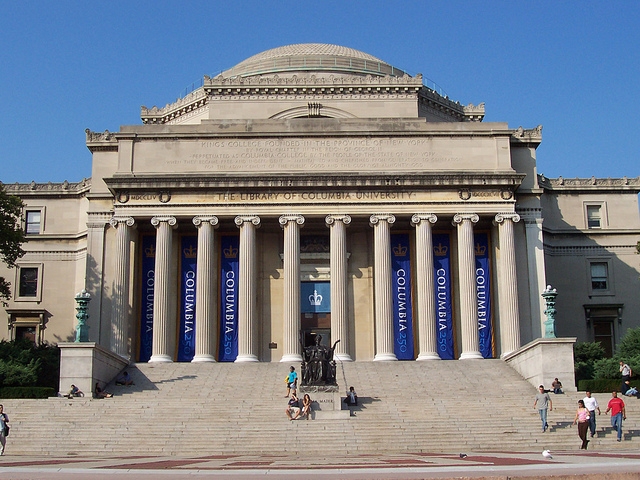
Photo of Columbia University, courtesy of InSapphoWeTrust via Flickr
I’m excited to announce that I’m doing a book signing for The Secrets of Top Students at the Columbia University Bookstore on Thursday, September 19, at 6 pm. I’ll also be sharing some of my top study tips for high school and college students! This is a great event for parents and students in the NYC area.
The Columbia University Bookstore is located at 2922 Broadway, Lerner Hall (114th St.), New York, NY 10027. Hope to see you there!
Will Bankovich, freelance blogger for Study2U.com and full-time dad, wants to be Bill Cunningham when he “grows up”.
My three-year-old is crying, the cat just barfed on the carpet, spaghetti is bubbling over onto the stove and, in the midst of all this, I’m on the phone with a shady mechanic trying to get quotes on a new alternator so I can make it to work this week. The last thing on my mind is “Gee, I should really go back to college”. But maybe it should be.

Are you a single parent thinking about going back to school? (Photo courtesy of Kevin Cawley via Flickr)
A 2010 National Poverty Center press release reports that over 31% of families headed by single individuals were under the national poverty line. This is by far the poorest sub-group in the country, without factoring in ethnicity. Naturally, this statistic leaves out some vital factors: assistance such as food stamps, Medicare/Medicaid, employer-provided insurance and other subsidies/social services. Including, most importantly, that life with low-to-modest wages does not equal a deprived life for you and your kids. Small budgets can lead to creativity. You can be penniless and still build a life of love.
However. When you’re trying to take care of your family, higher learning equals higher earning. The statistics on this are well-known facts. Those in possession of a college degree are making more money. Fortunately, there are many, many resources out there for non-traditional students. I saw an article not too long ago focused on “the best fields of study for single parents”. Nonsense, I say! The best area of study for anyone is whichever career they want to go into. Period.
Distance learning is obviously a popular option for those with priorities at home. Online courses cover basically every area of study, are beamed right into your living room and tend to be cheaper than most standard colleges and universities. You work at your own pace and can probably make your kid a sandwich while you’re taking a test, or work full-time, squeezing classwork into your own spare moments. And forget the commute! You can earn credits in your robe and slippers.
With all the talk of student loans crushing the millennial generation, you’d think financial assistance would be a tough nut to crack. If this is your first foray into academia, Pell Grants are your new best friend (they can only be used towards a first degree). Pell Grants can be combined with other types of funds, and there are no restrictions on the number of scholarships you can apply for. If there’s any money left over the refund goes to you, to help out with other expenses.
The last thing to consider is the example you’re setting for your kids. Afraid they’ll see you pulling out your hair trying to juggle your job, a brand new course-load, being a good parent and well…life in general? Rest assured, you’re illustrating the importance of education to those kiddos. Not just school, but life-long learning and the pursuit of passions. And that’s just about the most important trait you could hope to instill.
No matter what type of student you are, The Secrets of Top Students can help you succeed. Order your copy today!
While a lot of people work best in complete silence, there are many who prefer some form of background noise or stimulation in order to concentrate.
If you’re a college or graduate student who puts in long hours of studying, listening to music that you enjoy can help pass the time and allow you to concentrate on your work without getting bored.
Depending on your personality and the way your brain functions, there’s a high probability that certain types of music will help you pay attention and improve your study sessions.
The question is: What type of music will do that?

It’s obvious that certain musical genres are just plain distracting, emotionally charged, and not designed for concentration or relaxing. But there’s also a lot of music that can help you relax, focus, and be great accompaniment to a long study session.
While everyone’s different, here’s what I recommend for studying and concentration:
1. Lite jazz — Any kind of jazz will do, but vocal artists like Ella Fitzgerald or Sammy Davis Jr. are great for relaxing and focusing on your work. If you’re looking for something a little more upbeat, jazz fusion will have more of a pop sound and syncopated rhythm.
2. Classical — Classical music of any kind is a fantastic study companion. Not only does it sharpen your brain, but it’s easy to listen to and doesn’t distract you from other thoughts. If you were hoping for something a little more interesting than the average classical recording, try something like Perpetual Motion by Bela Fleck. He does a bunch of classical numbers on that album with a banjo.
3. Varied instrumental — Hearing other words can compete for your thoughts and make it harder for you to read or think through your own words. That means that instrumental tunes of most varieties are going to be better options for your study time.
Even heavier guitar stuff from Joe Satriani or Eric Johnson can make great studying tracks. Something more subtle, like an instrumental jazz or blues record, is also great for relaxing and concentrating.
4. Funk — Again, lots of instrumental options here, and a little more upbeat. Perhaps it’s not the most calm and soothing style of music, but it is smooth and can be a relaxing sound, even when you’re trying to concentrate on something else.
Helping you Relax
Music is helpful during a study session because it can help you relax, and while some people’s minds perform better with silence, music can be used as a tool to increase the length of time you’re able to focus on something.
If you want to try the music mentioned above, here are some sites where you can stream songs without having to pay for them.
1. Grooveshark — A form of social media for music lovers, Grooveshark allows you to search for music, create playlists, save them and then listen to them whenever you want. They’ve got just about every artist on the planet to choose from.
2. Arena — It’s similar to Grooveshark, but Arena puts more emphasis on the news and community aspect of streaming music. Arena also boosts the highest payout to artists per stream. You can search for music and make playlists.
3. Pandora — Pandora is designed to help you find new music that you’re more likely to enjoy, by letting you create stations based on artists that you already like. Once you select an artist, Pandora will play music similar to that artist. It’s not as “selective” as your other two options, but it will run on its own without the need to create a playlist; just select the initial band and you’re good to go.
Marcela De Vivo is a freelance writer and online marketing professional in the Los Angeles area. When she is trying to power through a long day at work, she enjoys creating a playlist to get her through. Follow her on Twitter today!
For more tips on how to study and much more, order your copy of The Secrets of Top Students today!
A lot of my articles have been popping up on the internet recently, and I wanted to share some of them here.
1. What Motivates Top Students? Getting Into the Heads of High Achievers, HackCollege.
What I learned about academic success, from my own experience as well as from my survey of forty-five of the best students in the country.
2. Struggling to be heard: What it’s like to be a student who stutters, USA Today College.
An account of my struggle with stuttering in high school and college, how I overcame it, and what to do if you stutter or meet a person who stutters.
3. I Got the Highest GPA at an Ivy, But Not Because I’m Smarter Than Everyone Else, Your Teen for Parents.
Some surprising facts about top students and how they got that way.
My book, The Secrets of Top Students, has also received some great reviews lately. I was especially thrilled with this one from the School Library Journal: “…the book is a must-read for students in middle school and up, teachers, parents, and guidance counselors as 21st-century students learn to excel in the new educational landscape in which they find themselves.”
On a completely separate note, a funny article I wrote a few months ago, The Top 6 Reasons You Should Date a Pilot, has been Liked over 14,000 times on Facebook!
 Stefanie Weisman