Preparing for an Opportunity to Teach English Abroad (Guest Post)

Jeremiah Jordan is a teacher-turned-entrepreneur who blogs about business solutions.

When you teach English to a citizen or a child in a developing country, you can actually increase that person’s earning power by an average of 25 percent, according to The Guardian. In fact, your volunteer teaching efforts might actually make the difference between that person barely scraping by for the rest of his life or having a job with a promising future. While it’s almost certain that you could make more money teaching English in a first-world country like Japan or South Korea, the satisfaction that you’ve actually made the planet a little better by teaching in a developing nation may be worth more than cash to you.

Children and education, teacher reading book to young students

Program Options

Unlike many other volunteer efforts that can be completed in a one, two or three-week time frame, English teachers are typically asked to make a commitment of a semester — about two months — to a year or more. For example, WorldTeach has teaching opportunities of various lengths, including year-long positions in India and Costa Rica, six-month-long semester positions in Ecuador and Namibia, as well as eight-week-long summer positions in China and Morocco, according to WorldTeach.org.

Preparing for Your Trip

Being away for the length of time required by most teaching jobs takes quite a bit of pre-trip organization. Unlike shorter volunteer trips where you can just ask a neighbor to take your mail in for a week, being away for several months means taking care of the following:

  • If you rent or own a home and will be going away for several months or more, decide whether or not you want to sub-let your abode. If not, you will have to arrange for someone to keep an eye on your place. In addition, you may have to make special arrangements to pay your mortgage or rent, such as setting up automatic payments from your bank account, as TransitionsAbroad.com recommends.
  • Have your mail stopped or picked up by a trusted relative or neighbor who can open it and inform you of any important information that may require your action.
  • Oxford Seminars recommends appointing your power of attorney to someone you trust in the United States. You never know when you might need someone in America working on your behalf to transfer funds or to represent you in a legal matter.
  • Set up an account with an identity theft or credit fraud protection company. If you are living halfway around the world from your home and you suddenly learn that you have become a victim of identity theft, it may be next to impossible to try to unravel the mess on your own, especially in a developing nation where phone calls could cost you a fortune. Having LifeLock protection can save you a lot of grief in the long run.
  • Determine how you are going to handle any prescription medication that you take on a regular basis. Will you be able to get them through the mail or get a supply that will last you for your entire trip? You may need to speak with both your physician and your insurance company to see how best to handle this situation.
  • TeachAway.com suggests getting health insurance that will cover any of your medical needs abroad.
  • Do your homework on the country that you will be living in and do your best to be culturally aware. For example, if you are a woman who will be living in a conservative Islamic nation, try not to walk around in a top that shows too much cleavage or is too tight.

Want to improve your grades?  Order your copy of The Secrets of Top Students today!

The Secrets of Top Students Book Signing

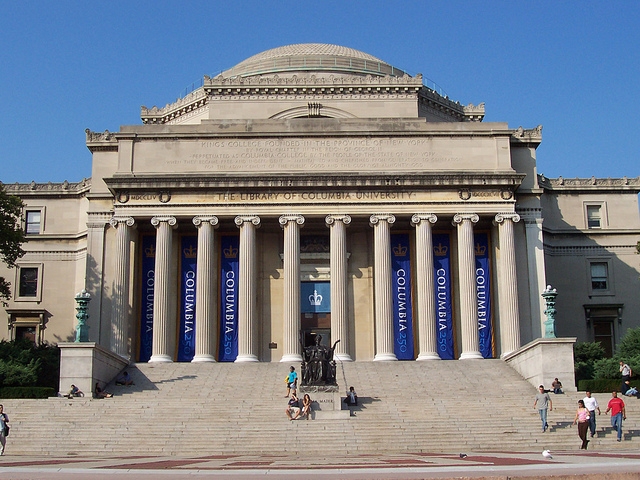
Photo of Columbia University, courtesy of InSapphoWeTrust via Flickr

Photo of Columbia University, courtesy of InSapphoWeTrust via Flickr

I’m excited to announce that I’m doing a book signing for The Secrets of Top Students at the Columbia University Bookstore on Thursday, September 19, at 6 pm. I’ll also be sharing some of my top study tips for high school and college students!  This is a great event for parents and students in the NYC area.

The Columbia University Bookstore is located at 2922 Broadway, Lerner Hall (114th St.), New York, NY 10027. Hope to see you there!

SAT vs. ACT – Which One Should You Take?

Navigating the maze of requirements needed just to apply to college can be overwhelming and daunting. Between keeping your GPA up, writing the perfect college essay, acing the interview, and finding time for all your extracurricular activities, you barely have time to figure out and prepare for the standardized tests most colleges and universities require. Prospective college students are faced with two options: the ACT and the SAT. Standardized testing is painful enough once through—why take two unless it’s necessary? Especially when each test costs between $30 and $50—and most people take the test more than once. All you have to do is figure out which one is right for you.

This infographic by BenchPrep gives you a great overview of the major differences between the two standardized tests. If you’re applying to schools along the East or West coast, the SAT might be a better option. Does science comes naturally to you, but you struggle with writing under pressure? Better stick with the ACT. Regardless of which test you pick, make the most of each test by ensuring that you are mentally and physically prepared. Be sure to get plenty of rest the night before (no cramming!) and eat a protein packed breakfast to provide fuel for the marathon of a test. And relax—no matter how important the test seems, it is only one component of a complete picture that the college sees.
By Marcela De Vivo

BenchPrepSAT


No matter which test you take, The Secrets of Top Students can help you succeed in college.  Order your copy today!

Summer 2013 Update

A lot of my articles have been popping up on the internet recently, and I wanted to share some of them here.

1. What Motivates Top Students? Getting Into the Heads of High Achievers, HackCollege.
What I learned about academic success, from my own experience as well as from my survey of forty-five of the best students in the country.

2. Struggling to be heard: What it’s like to be a student who stutters, USA Today College.
An account of my struggle with stuttering in high school and college, how I overcame it, and what to do if you stutter or meet a person who stutters.

3. I Got the Highest GPA at an Ivy, But Not Because I’m Smarter Than Everyone Else, Your Teen for Parents.
Some surprising facts about top students and how they got that way.

My book, The Secrets of Top Students, has also received some great reviews lately. I was especially thrilled with this one from the School Library Journal: “…the book is a must-read for students in middle school and up, teachers, parents, and guidance counselors as 21st-century students learn to excel in the new educational landscape in which they find themselves.”

On a completely separate note, a funny article I wrote a few months ago, The Top 6 Reasons You Should Date a Pilot, has been Liked over 14,000 times on Facebook!

How Stuyvesant Influenced My Writing Career

On Sunday, June 23, I was honored to participate in the “Writer’s Block” event at the Stuyvesant High School all-class reunion, along with eight other writers who are Stuy alumni: Richard (R.B.) Bernstein, Robert Timberg, Joe Dorinson, Peter Wortsman, Eugene Schlanger, Rebecca Pawel, Richard Herschlag, and Becky Cooper. They asked us to talk about things like the road to publication and the impact Stuyvesant has had on our writing careers. I thought I would include the questions that were asked, along with a summary of my answers.

The Secrets of Top Students

The Secrets of Top Students

(1) Tell us a little bit about your work (most recent or favorite) and what inspired you to write the book? Include why you choose the genre you did.

I just came out with my first book, The Secrets of Top Students. It’s an advice book for high school and college students on how to succeed in school. I was inspired to write this book because I felt like I had so much to share with other students. I’ve been a top student all my life – I was valedictorian of Stuy, class of ’99. I graduated from Columbia with the highest GPA in my class. I also have experience in a wide range of subjects – I have a B.A. in History, an M.A. in Art History, and a B.S. in Computer Science. Over the years I developed lots of techniques that helped me excel in school, and it just felt natural for me to write this book and share those techniques.

(2) What is your writing practice?

I just write whenever I can. My mind is usually the clearest in the morning, so I’m most productive then. I usually write at home, but I write outside whenever I can. I’m a pretty slow writer. I write a few pages, and then I spend a lot of time editing. Some days I’m much more productive than others.

(3) Describe the road to publication, from idea to release.

This idea started when I was getting my last degree, a B.S. in Computer Science from Columbia. I started writing down all the techniques that I was using, and all the things that my classmates were doing wrong – things like cramming for tests, not taking enough notes, not managing their time well, not asking for clarification, etc. After I graduated I wrote the first three chapters, did a lot of research, and surveyed forty-five other top students to get their insight into what it takes to be a top student. These people are Rhodes scholars, Goldwater scholars, Fulbright recipients, students at top law and medical schools, and even a National Spelling Bee winner. A few months later I got an agent, Coleen O’Shea, and she helped me find a publisher/ get a book contract. It then took me a few more months to finish the book, which came out in May. The whole process, from idea to publication, took 4 or 5 years – but the idea was gestating for a long time.

(4) Describe how you went about finding an agent and how you went about finding a publisher or decided to self-publish?

I got a book called The Writer’s Market, which has a great listing of literary agents. I sent query letters to agents who accepted non-fiction books, and luckily I got one! She helped me work on my platform and create a book proposal. Then she submitted my proposal to a couple of publishers. I had phone interviews with a few of them, and Sourcebooks gave me a contract! I was really happy because Sourcebooks has a great education division. They publish books like The Fiske Guide to Colleges and Gruber’s Test Prep series.

(5) Was there a Stuyvesant Muse? Describe whether attending Stuyvesant High School had an impact on your writing endeavors.

I wouldn’t be here today without Stuyvesant. I learned how to be a great student here. Stuyvesant has such high standards, and the student body is so talented, that I had to develop powerful techniques to succeed. I’m sure many of you will agree with me that college was relatively easy compared to Stuyvesant. And of course, being valedictorian of Stuyvesant has a certain cachet that helped me get a book contract in the first place.

I’m not sure if I would use the term muse, but I was really inspired by Dr. Nikol, who taught AP European History. He was a great story-teller and made history come alive, as they say. I remember I did pretty poorly on the first few tests in his class because they were so detailed, and I had to readjust/ refine my study habits. He was one of the most demanding teachers I had here, but I learned so much. He was a big part of the reason why I specialized in medieval European History at Columbia. I still have a love of history, and that’s why I’m writing a historical fiction novel set on Crete during the time of the Minoans, which is currently a finalist in the James Jones First Novel Contest.

A book review that warmed an author’s heart

Every once in a while, someone says something about my book that makes all the hard work I put into it worthwhile, and makes me feel like I truly accomplished something. I received such a review today, from someone called Stew Mulligan. I was so excited about it, I had to reprint it on my blog. The original review can be found here. Thank you Stew Mulligan, wherever you are!

The author and her book

The author and her book

“The Secrets of Top Students, by Stefanie Weisman, is a great book!

As a Stuyvesant High School alumnus, I know what it means to be that school’s valedictorian. Stuyvesant is not just any high school. It is a school that if you become a doctor you are considered an underachiever. They expect you to at least become head of a department in a major hospital or medical school. Stuyvesant graduate David Axelrod, is ONLY an advisor to the President; Stuyvesantian Eric Holder, is US Attorney General: not bad, but not a Supreme Court Justice. It’s where if you get 800 on your math SAT nobody lifts an eye. But in all seriousness, this is a school of really, really smart kids and, as such, I am awed by Stefanie’s academic accomplishments — not only the Stuyvesant valedictorian but she also graduated with the highest GPA from Columbia College. That’s like being the baseball Rookie of the Year and then following up by winning the MVP and Triple Crown. Stefanie knows how to hit academia’s fast ball, curve and knuckleball, and all for homeruns.

As a rule, if you want to learn something well, it is a good idea to learn from the best, and Stefanie Weisman’s Secrets of Top Students is now THE SOURCE on how to maneuver through the obstacle course of higher education. I guarantee that this book will not disappoint.

If school, in general, and tests, term papers and the like, in particular, give you anxiety attacks, then this book is definitely the relaxant. By all rights, Stefanie should never have become valedictorian. In fact, she probably should have been mediocre at best, since she has a certain learning disability. But by putting excuses aside, she learned how to use her strengths to overcome her weaknesses, by developing a relatively simple system of studying. In Secrets of Top Students she conveys her system, no longer secrets, in a clear and concise manner. And, I might add, with a particularly droll and somewhat self-effacing sense of humor. In other words, she explains how to walk the walk, how to traverse through the killing fields of the classrooms with the least possible pain and suffering. She explains how to avoid being an academic casualty or also-ran and to get through it all, knowing you did the best you can, while actualizing your potential.

This is not a textbook. But it tells how to penetrate the textbooks. This is not a lecture, but it tells how to absorb and retain what the lecturer is “trying” to expound. Being smart is not enough. You have to know how to learn. This book shows how to do it in an efficient and intelligent manner. Stefanie’s prose is concise and easy to follow and the book develops in a logical manner. (It ends with a chapter on “How to Take a Test”, by the way, since test taking is where the rubber meets the road.) The use of well placed bullet points and bold font help to highlight the most important concepts. At the same time, the book makes clear that there are individual differences, and that students have to make adjustments in their own studying methods that work best for them. Nevertheless, these basic concepts are still applicable, to different degrees and with different emphasis, to all types of learners.

Nor does the book sugar-coat the reality. It tells it like it is, which is to say that the most important thing in becoming a good, or a great student, is commitment and a willingness to work hard, damn hard. There is no easy way. There is only a EASIER WAY, a SMARTER WAY. This book is the roadmap.

I guess my only complaint, after reading this book, is that it was published 40 odd years too late. If only there had been a Stefanie Weisman to write such a book for us baby boomers, to help us get through the morass known as education, like a machete in a rain forest, who knows what grades I would have gotten. But today, 2013, if you are a young person wanting to maximize your potential in school, or if you are a parent of a student and would like to see your child rise to the top, take my advice and go out and purchase this book ASAP.”

The Best Birthday Present Ever

My copies are here!

My copies are here!


Today is my birthday, but more importantly – for me, at least – it’s also the official release date of my book, The Secrets of Top Students: Tips, Tools, and Techniques for Acing High School and College! As a birthday gift from my publisher, I got fifty free copies of my book – which I now have to distribute to influential people, I suppose. (Anybody in the media or education want a copy?) But it’s such a cool feeling to hold my own book in my hands. It’s kind of like holding your baby for the first time.

It’s also been a crash course in marketing and publicity for me. I’ve already had some mentions in the press (for example, in the New York Post and the IMT Career Journal). And I’m lining up talks and at least one book signing. It’s pretty exciting, and a bit overwhelming!

I’m in the process of making a nice-looking flyer for my book, but for now, here it is in draft form:

Pssst!
Want to get better grades?

Then get The Secrets of Top Students:
Tips, Tools, and Techniques for Acing High School and College

Written by Stefanie Weisman,
Valedictorian of Stuyvesant High School
Highest GPA, Columbia University

With insight from 45 of the best students in the country

Includes:
• How to take killer notes, improve reading comprehension, and write amazing papers
• How to get and stay motivated
• 50 Grade A test-taking tips
• Three game-changing learning techniques
• The mind-body connection
• And much, much more

“An insightful guide for high achievers—and those aspiring to such status—from an authoritative source.” –Alec Klein, Northwestern University professor, bestselling author and award-winning journalist

Available at Amazon, Barnes & Noble, and other fine booksellers.
Published by Sourcebooks, Inc. ISBN: 9781402280795

The Survival Guide — 3 Tips for AP Test Takers (Guest Post)

Guest Post by Robert Boyd
Rob is the guy you want on your Trivial Pursuit team: He knows a little bit about a lot of things.

You can ace the AP!

You can ace the AP!

Heading north toward the mountains, I packed my bags and piled into a bus with many of my closest friends. We would be spending the weekend at a campsite complete with fire pits, eight-inch-high ping- pong tables and a large mess hall, but this wasn’t a typical camping trip. This was calculus camp: a two-and-a-half day cram session filled with derivatives, functions and integrals and our final review before taking the AP test.

Math never came easy to me, but I passed the calculus AP test, largely because of that marathon study weekend. Maybe it was the mountain air, but more likely the collaborative spirit and valuable practice led to success. You don’t have to get out of town to pass AP tests. Keep these three resources in mind to achieve high scores.

Prep Courses & Apps

A growing number of students are taking AP tests, and test prep providers have responded with an array of courses. In 2011, 903,630 graduates had taken at least one AP exam, compared to 431,573 graduates ten years earlier, according to Collegeboard.org. Students have few excuses to be unprepared. A variety of online and in-person prep courses accommodate students of all levels.

Benchprep.com, for example, offers subject-specific virtual courses that offer hundreds of test questions, dozens of flashcards and multiple mini-tests. Best of all, these courses are available on both computer and mobile platforms, so test prep can take place anytime, anywhere. Some additional test prep apps are available here.

No matter how convenient, however, digital courses can’t compete with live, in-person training. Personal tutoring with a teacher or experienced tutor is invaluable when it comes to tackling difficult concepts.

Study Groups

Long study sessions can get monotonous and frustrating, especially when you’re trying to unpack a new concept. One of the easiest ways to avoid academic burnout and learn efficiently is to study in groups. By learning AP material with other test takers, you’ll be able use each other’s strengths. For some great tips on how to study efficiently in groups, check out Casact.org and infoplease.com.

In a nutshell, here are some rules to follow when working in groups:

  • Don’t let the group get too large. Aim for no more than five or six people.
  • Have an agenda for each meeting and stick to it!
  • Designate someone to be the leader for each meeting.
  • Don’t be afraid to ask questions! That’s why you’re there.

Practice Tests

Knowing the concepts is one thing, but conditioning yourself for the pressures of an actual exam is an entirely separate battle. The best way to prepare for test conditions is by putting yourself under the gun with a practice test. Find some free test prep material at Collegeboard.com, or buy previous versions of AP tests for $25. Stay within the time guidelines, use the right pencil and of course, no peeking at your notes.

Taking timed tests will push your ability to think under pressure. With all this preparation, you’ll have college credit in the bag. Still feeling unprepared? Try a camping trip instead. It worked for me.


Want to improve your grades?   Order your copy of The Secrets of Top Students today!

Listing of High School & College Websites

So, I’ve been doing some marketing research for my upcoming book The Secrets of Top Students – formerly called The Valedictorian’s Guide – and I compiled a list of websites (and some print media) related to high school and college. This list is far from comprehensive, but I thought some people might find it useful. I categorized them as follows:

  1. College / General Education News & Advice
  2. College Admission Advice & Consultants
  3. Websites for Parents of High School/ College Students
  4. SAT Prep
  5. Scholarship/ Financial Aid Websites
  6. College Life Advice
  7. Websites for Online Education and Adults Going Back to School
  8. Miscellaneous
  9. Magazines & Newspapers for Students and Parents

Do you have a favorite education website not mentioned here?  Feel free to leave a reply below.

College / General Education News & Advice

http://www.usatodayeducate.com/staging/ [college advice, news]

http://www.collegeconfidential.com/ [college advice, forums]

http://www.studentadvisor.com/ [college advice, news]

http://www.huffingtonpost.com/news/college-admissions [college advice, news]

http://www.usnews.com/education [advice, rankings]

http://www.campusgrotto.com/ [college news, advice]

http://themash.com/ [advice for Chicago teens]

http://edudemic.com/ [articles about education, learning]

http://www.huffingtonpost.com/education/ [education news]

http://www.uloop.com/ [news and classifies for college students]

http://www.nextgenjournal.com/ [news for college students]

http://www.huffingtonpost.com/college/ [college news]

http://www.washingtonpost.com/blogs/campus-overload [college news]

http://www.ivygateblog.com/ [Ivy League news]

http://www.educationnation.com/ [from NBC News]

http://www.schoolbook.org/ [NYC school news]

http://campusbasement.com/ [college news]

http://learning.blogs.nytimes.com/ [articles for teachers, students]

http://chronicle.com/ [academics discuss education]


College Admission Advice & Consultants
(Note: many of these sites also have blogs on education issues)

http://www.student.com/ [admissions, college advice]

https://bigfuture.collegeboard.org/ [college planning, SAT prep]

http://talk.collegetocareers.com/ [admissions advice, forums]

www.schools.com [admissions advice, news]

http://myfootpath.com/ [advice for admissions, careers]

http://www.collegeview.com/index.jsp [admissions advice]

http://thechoice.blogs.nytimes.com/ [college admissions blog]

http://sbuchris.blogspot.com/ [admissions advice]

http://collegeapps.about.com/ [Allen Grove’s About.com college apps site]

http://blog.admissionpossible.com/ [admissions advice]

http://www.crandleconsulting.com/ [college consulting]

http://cc4therestofus.com/ [admissions counseling website]

http://www.sugarlandsat.com/ [admissions counseling website]

http://www.collegebasics.com/ [admissions advice]

http://www.nextstepu.com/ [admissions advice]

http://www.nhheaf.org/index.asp [admissions advice]

http://www.siaknight.com/ [college coach]

http://kerrigancollegeplanning.com/ [college consultant]

http://www.millereduconsulting.com/ [college consultant]

https://www.collegeadvisorycenter.com/ [college consultants]

http://internationalcollegecounselors.com/ [admissions counseling]

http://www.braintrack.com/ [admissions advice]

http://collegetidbits.com/wordpress/college-planning-blog/ [college planning]

http://usdegreesearch.com/ [school search/ consultants]

http://www.collegemapper.com/ [college consultants]

http://collegediscoveries.com/ [college consultant]

http://admissionado.com/ [college consultants]

http://www.collegeprimers.com/ [college consultants]

http://www.emersonec.com/ [college consultant]

http://www.collegesmartadvising.com/ [college consultant]

http://www.askjohnaboutcollege.com/askjohnaboutcollege/Ask_John_About_College.html [college consultant]

http://collegeconnection.yolasite.com/ [college consultants]

http://greatcollegeadvice.com/ [college consultants]

http://www.lucenteducation.com/ [college consultants]

http://www.collegebound.net/blog/ [college consultants]

http://www.collegiategateway.com/ [college consulting]

http://admissionsadvice.com/ [college consultant]


Websites for Parents of High School/ College Students

http://www.collegeparents.org/ [advice for parents]

https://www.teenlife.com/ [advice for parents of teens]

http://www.smartcollegevisit.com/ [help for visiting colleges]

http://www.yourcollegekid.com/ [advice for parents]

http://www.collegeparentcentral.com/ [advice for parents]

http://collegetipsforparents.org/

http://parentingteens.about.com/ [About.com site for parents of teens]

http://www.universityparent.com/

http://www.pta.org/ [national PTA]


SAT Prep

http://www.directhitseducation.com/ [SAT prep]

http://www.testrocker.com/ [SAT prep]

http://freetestprep.com/default.php [SAT prep]

http://www.scorebusters.com/ [SAT prep]


Scholarship/ Financial Aid Websites

http://www.scholarships360.org/ [scholarship help]

http://cheapscholar.org/ [financial advice for college]

http://how2winscholarships.com/

http://www.collegexpress.com/ [college scholarships and advice]


College Life Advice

http://www.hercampus.com/ [college, life advice for women]

http://www.mymajors.com/ [advice for choosing a major]

http://www.internqueen.com/ [for students in need of internships]

http://universitychic.com/ [advice for college women]

http://blog.campussplash.com/ [advice about colleges, college life]

http://collegelifestyles.org/ [lifestyle tips for college women]

http://talknerdy2me.org/campus-geek [college life blog]

http://www.collegecures.com/ [college life]

http://www.survivingcollege.com/ [college advice]

http://www.campustalkblog.com/ [college, learning advice]

http://www.hackcollege.com/ [college advice]

http://www.honestcollege.com/ [college and tech advice]

http://www.collegesurfing.com/blog/ [college advice]

http://www.universitylanguage.com/ [college advice]


Websites for Online Education and Adults Going Back to School

http://www.onlinedegrees.com/ [advice for online education]

http://www.back2college.com/ [advice for students returning to college]

http://www.backtolearn.com/ [advice for adults going back to school]

http://www.onlinecollege.org/blog/ [advice for online degrees]


Miscellaneous

http://www.usatodayeducate.com/staging/index.php/campus-newspapers-a-comprehensive-resource [a map with links to college newspapers]

http://academictips.org/ [academic advice]

http://community.simplek12.com/scripts/student/home.asp#cat0 [website, blog for teachers]

http://www.the21stcenturyteacher.com/ [site for teachers]

http://www.imfirst.org/ [advice for first generation college students]

http://highschoolmediator.com/ [high school ed expert]

http://ericsheninger.com/esheninger?sid=28 [education admin/ expert]

https://getschooled.com/ [site for high school students]

http://www.edtrust.org/ [advocacy for education]

http://www.edutopia.org/blogs [advice for educators]

http://www.verizonwireless.com/wcms/consumer/products/education-bundle.html [education tools and apps]


Magazines & Newspapers for Students and Parents

Girl’s Life [magazine for teen girls, http://www.girlslife.com/%5D

Justine [magazine for teen girls, http://www.justinemagazine.com/%5D

Seventeen Magazine

Working Mother Magazine [http://www.workingmother.com/]

Your Teen Magazine [http://yourteenmag.com/]

Education Update [NYC newspaper and website, www.EducationUpdate.com]

Manhattan Family [Newspaper and website, mostly for parents of younger kids but some stuff relating to teens, www.NYParenting.com]


Give your child the gift of great grades.  Order a copy of The Secrets of Top Students today!

Re: The Imaginary Teacher Shortage

There was an interesting opinion piece in The Wall Street Journal  today: “The Imaginary Teacher Shortage” by Jay Greene. Both Obama and Romney think we need more teachers, but as Greene notes:

For decades we have tried to boost academic outcomes by hiring more teachers, and we have essentially nothing to show for it. In 1970, public schools employed 2.06 million teachers, or one for every 22.3 students, according to the U.S. Department of Education’s Digest of Education Statistics. In 2012, we have 3.27 million teachers, one for every 15.2 students. Yet math and reading scores for 17-year-olds have remained virtually unchanged since 1970, according to the U.S. Department of Education’s National Assessment of Educational Progress.

That study Greene refers to can be found here. Interestingly, while scores for high school students haven’t changed, scores for nine- and thirteen-year-olds have improved. It’s also worth noting that the pupil to teacher ratio depends on what kind of school we’re talking about. According to the National Center for Education Statistics, “the public school pupil/teacher ratio was 15.4 in 2009. By comparison, the pupil/teacher ratio for private schools was estimated at 12.5 in 2009. The average class size in 2007–08 was 20.0 pupils for public elementary schools and 23.4 pupils for public secondary schools.”

While I agree that hiring more teachers isn’t necessarily the solution to our education problem, I disagree with Greene’s proposed alternative: using more technology in classrooms to allow for “more individualized instruction with many fewer teachers.” I don’t think that letting young students sit for hours in front of a computer screen, with teachers serving merely as “tutors, problem-solvers, and behavior managers,” is the answer. What do you think?


Want to improve your grades?   Order your copy of The Secrets of Top Students today!