A Week in Provence

The following is a summary of my trip that may prove useful to other tourists. Plus it has pretty pictures! 🙂

Saturday – Got into Nice and slept for a looong time.  When we got up it was dark out.  We stopped at the Monoprix supermarket below our hotel and got some cheese, a baguette, and cookies.  I was surprised at how well-lit the city was at night.  There were a lot of people around and it felt very safe.  We walked down to the Promenade des Anglais and ate our food, which was simple and delicious.  There were people sitting on the beach at night.   They also had statues lit up in pastel colors in one of the squares.

Nice at night

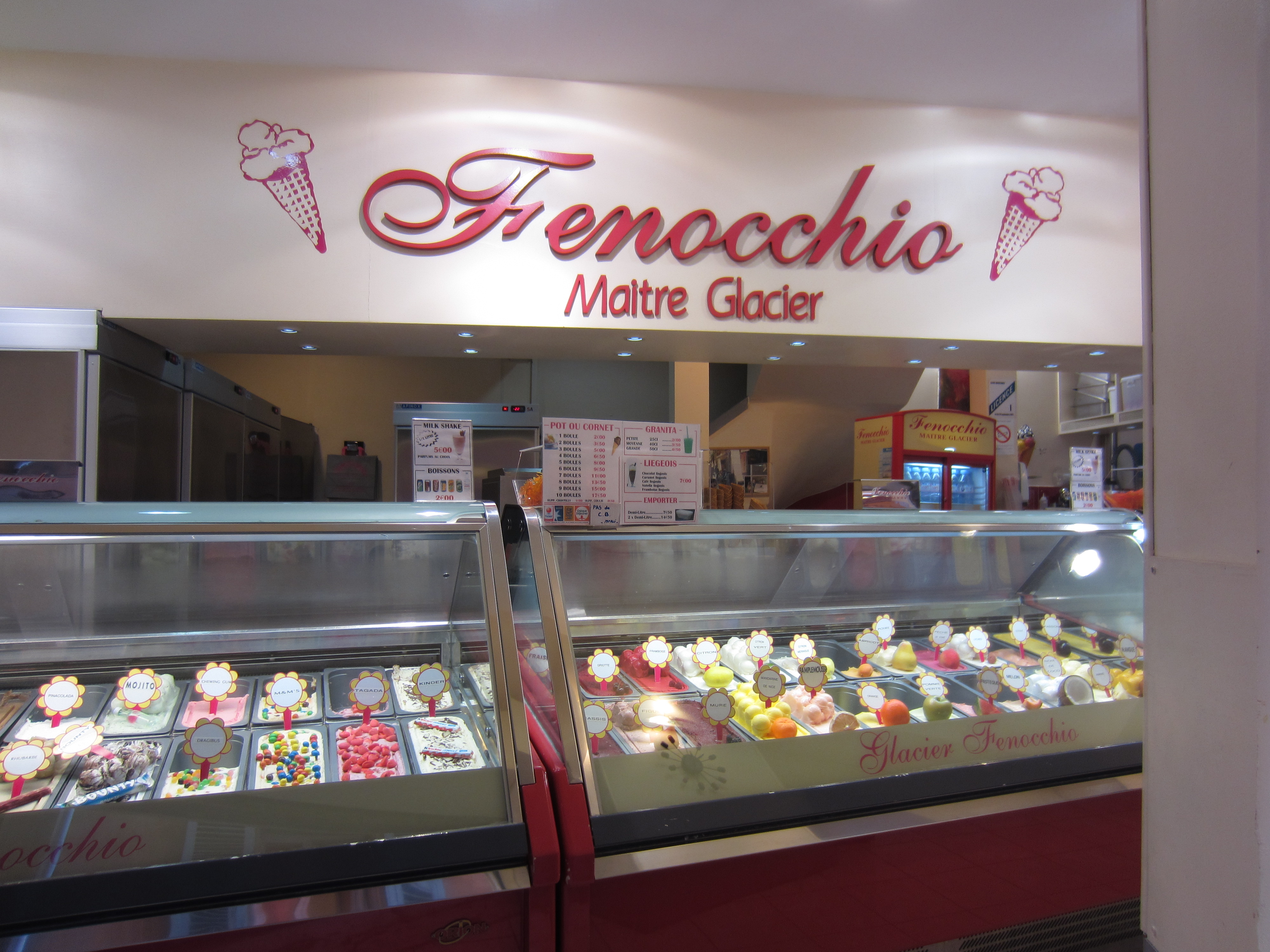
Sunday – Walked over to the flower/ produce market at the Cours Saleya.  It was really quite charming.  They had tons of lavender products, fresh produce, mushrooms, cheeses, candied fruits, olives, and of course flowers.  We went into the old town and came across the Fenocchio gelato place, which has an amazing variety of flavors.  I got fig, which was pretty good.
The old town was gorgeous and I loved the mosaic tiling on the dome of the cathedral.

Nice cathedral

There was an old woman singing Edith Piaf songs in one of the squares.  I hadn’t expected to like Nice so much.  We walked down to the beach and were surprised by how rocky it was.  All the stones were perfectly smooth from erosion.

After this we went back to the hotel and got ready to go to Monaco.  We thought we would need to dress up to get into the casino, but it turns out that really wasn’t necessary.  We took a train to Monaco, though we had trouble getting tickets because the machine didn’t accept large bills.  We walked up to the Exotic Garden, which is more accurately a cactus and succulent garden, and saw incredible views of the city.  Most of the museums, gardens and buses were free that day.  We also took a tour of a cave at the bottom of the gardens, which was a big mistake.  The group was huge and it took forever to walk down to the bottom of the cave, and then we had to walk all the way back up.  All this to see a few stalactites and stalagmites.

When we got out of the cave the weather had taken a turn for the worse.  We got on a very crowded bus which took us down to the water and then we walked in the rain to get to the Maritime museum, which had interesting models of ships.  After this closed we took another bus which dropped us off near the Monte Carlo casino.  It was so rainy and dark that we wound up eating in an Italian restaurant in a very upscale mall, which was actually pretty good.

We walked a short way to the casino.  It was a beautiful building, but we were surprised at how small and quiet the main rooms were – not like Las Vegas at all, or a James Bond flick for that matter.  There were some slot machines in front and only four or five tables open to the public.   They had private rooms in the back but you had to pay extra to get in there.  We watched a roulette game for a few minutes and left.

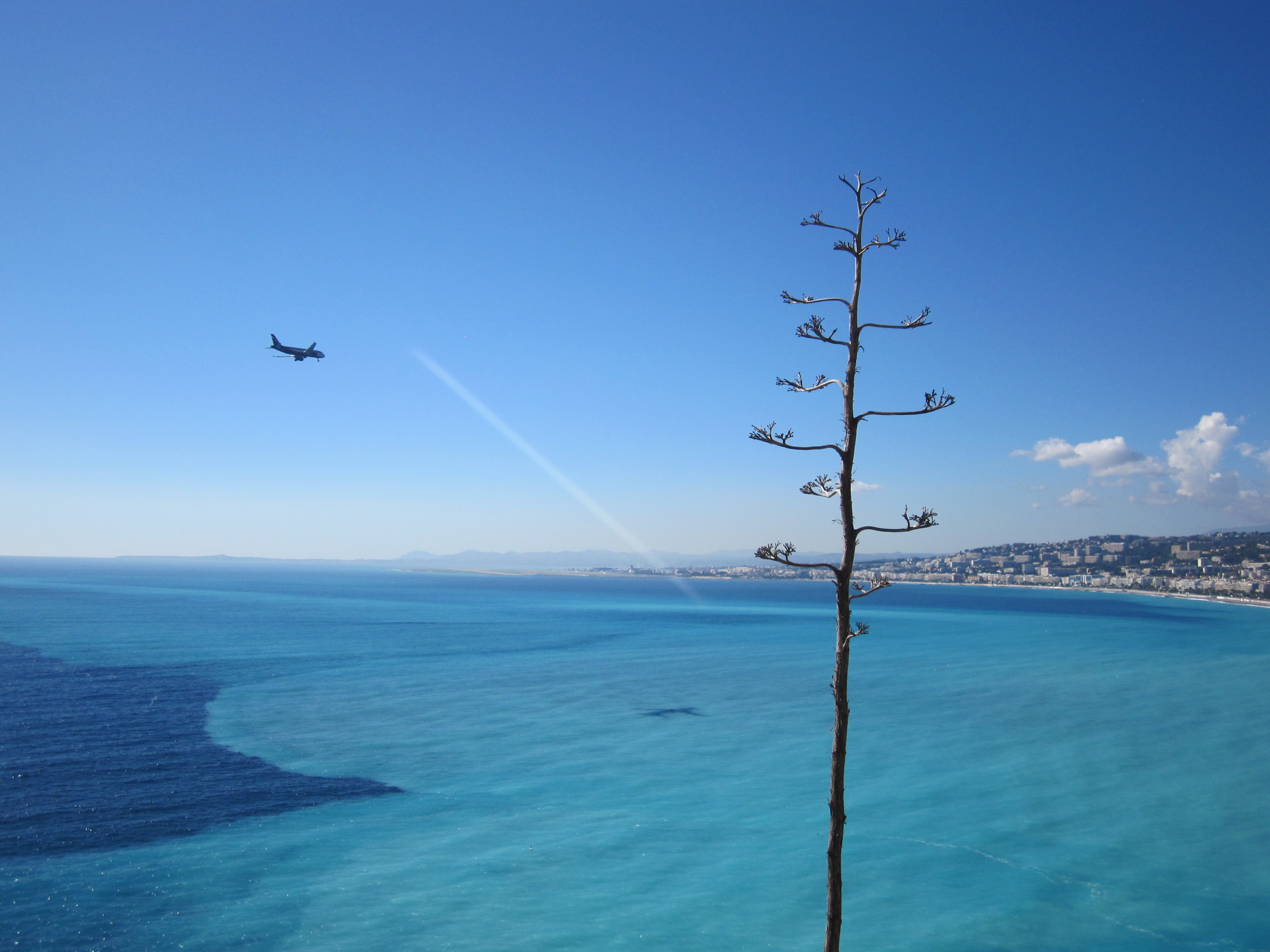
Monday – Went to a pastry shop near Garibaldi square and got an amazing lemon tart and Napoleon (they call it a mille feuille, though Rob called it a Napoleon just to see what the lady would do – she just kind of smiled).  Then we walked to the Colline du Chateau, which has incredible views of Nice.  The water was all different colors – aquamarine, dark blue, etc.  We could see the planes landing at the airport.
Also went to the Jewish cemetery, where they had the remains of Holocaust victims.   Saw the ruins of the fortress and a medieval church, and a waterfall cascading over part of the fort.  Then we walked down to Cours Saleya, where they have a flea market on Mondays.

Took the shuttle back to the airport and got a rental car from Sixt.  It was a stick shift, and though Rob had driven one once, he basically had to relearn everything.  We could barely pull out of the parking lot, and we kept stalling – it was a little scary.  It took about ten minutes just to figure out how to go in reverse.  Rob was practically a pro by the end of the trip, though.  I was the navigator and always told him where to turn on the traffic circles.

We decided to drive to Grasse, the perfume capital of the world, since it seemed like a quick trip we could do before going to our next hotel.  We decided not to do the perfume museum since we could go to some of the perfume factories for free.  Went to the Fragonard and Molinard factories – couldn’t see too much of the actual process, but the Fragonard shop was very busy.  Before we left town we stopped in a bakery and got a croissant and a Tropezienne – I had never had a Tropezienne before and it was AMAZING.
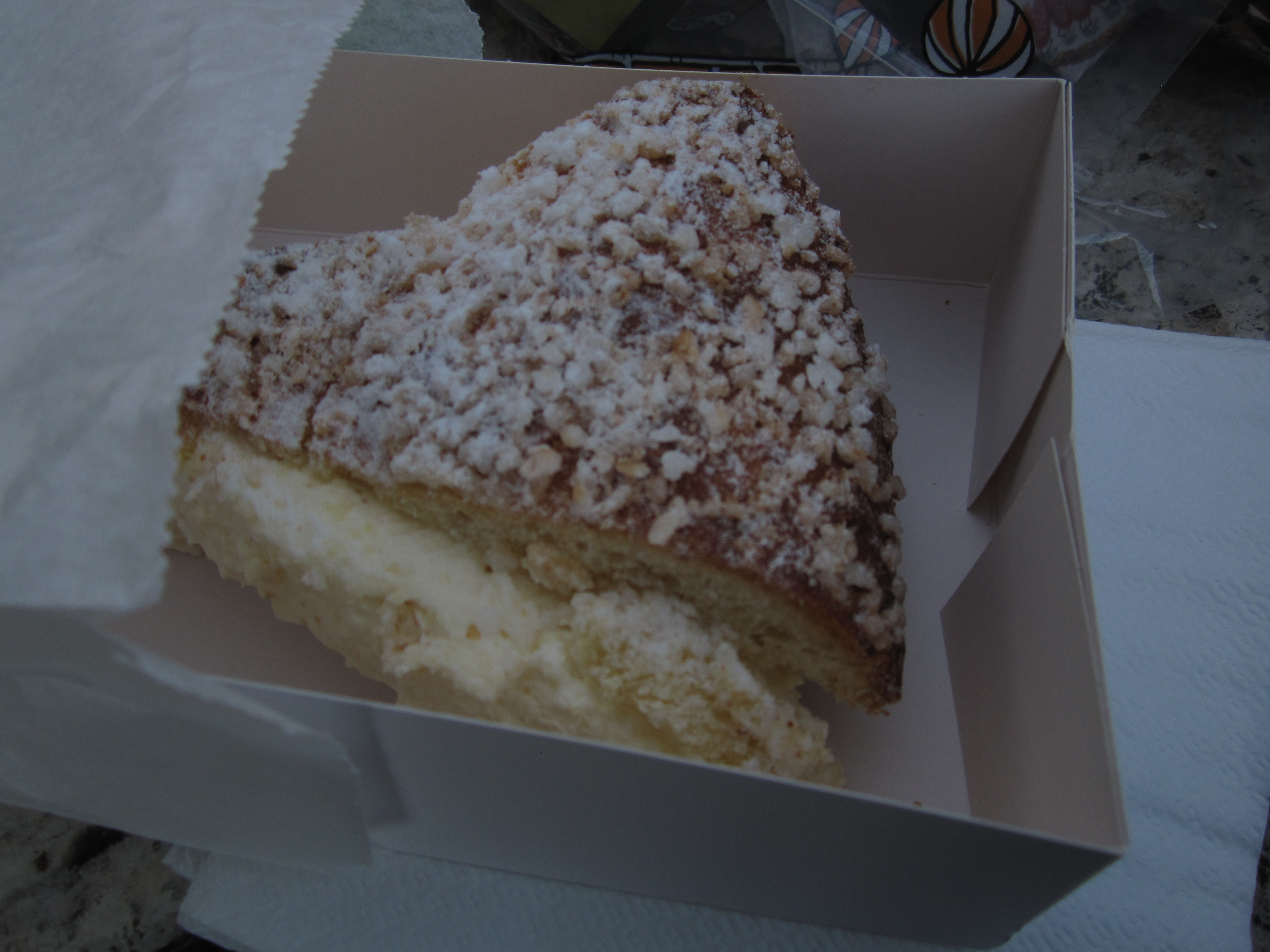
Tropezienne – the best pastry in the world!

We took the road towards Draguignan on the way back to the highway.  It took us forever to get to there – the road was so curvy and dark.  We were afraid we’d be too late for our next hotel to let us in.  Finally we got to the auto-route and drove straight to St. Remy de Provence.  The Canto Cigalo hotel was a little bit outside of town on a country road.  We checked into our room which was quite nice – everything had cicada decorations, as Canto Cigalo means song of the cicada.  Then we went out in search of a restaurant.

Tuesday – Drove to Arles in the morning.  We parked near the medieval walls and went into the old town.  Got a duck and crudite sandwich from a shop, then walked to the square where they have an obelisk from the old Roman circus.  Saw the western portal of the church of St. Trophime, which was very impressive.  Went into the cloister of St. Trophime, which was under renovation and didn’t wow us.  Later on we went into the church itself, which was dark and narrow.  The western façade is by far the most interesting thing.
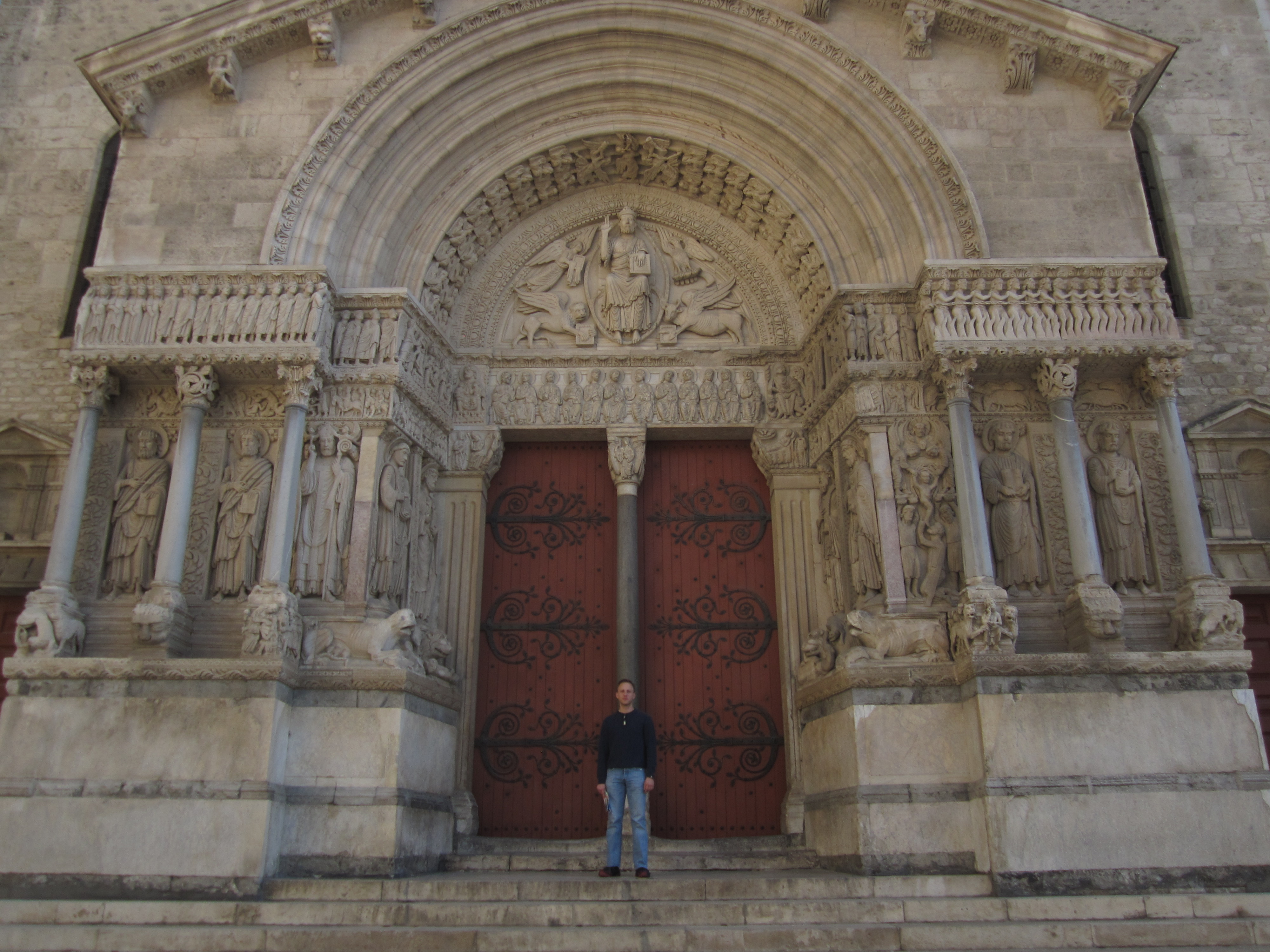
St. Trophime portal

Afterwards we went to the Arles ampitheater, which is still in use.  It’s in very good condition, made of beautiful white stone, and used to serve as a fortress for medieval houses built inside.  They have bullfights here but in the Arlesien ones they don’t kill the bull.  After this we went to the nearby Roman theater, which is much less intact.

We walked through the old town to the Espace van Gogh, where the mentally ill painter was hospitalized.  They were planting flowers in the garden inside.  As we left Arles we passed Place Lamartine, where van Gogh’s yellow house used to be.  There’s just a plaque there now – it’s not a very nice part of the city.

We decided to drive around the French countryside and stop at whatever looked interesting.  We found some great stuff this way.  First we went to Montmajour Abbey, a huge structure which we had seen from a distance on our way to Arles.  This was a massive Benedictine abbey with a necropolis with tombs cut into stone – I lay down in one.  I’ve never seen a necropolis like that before.  We climbed up the tower and had an incredible view of the countryside, including some Camargue white horses.
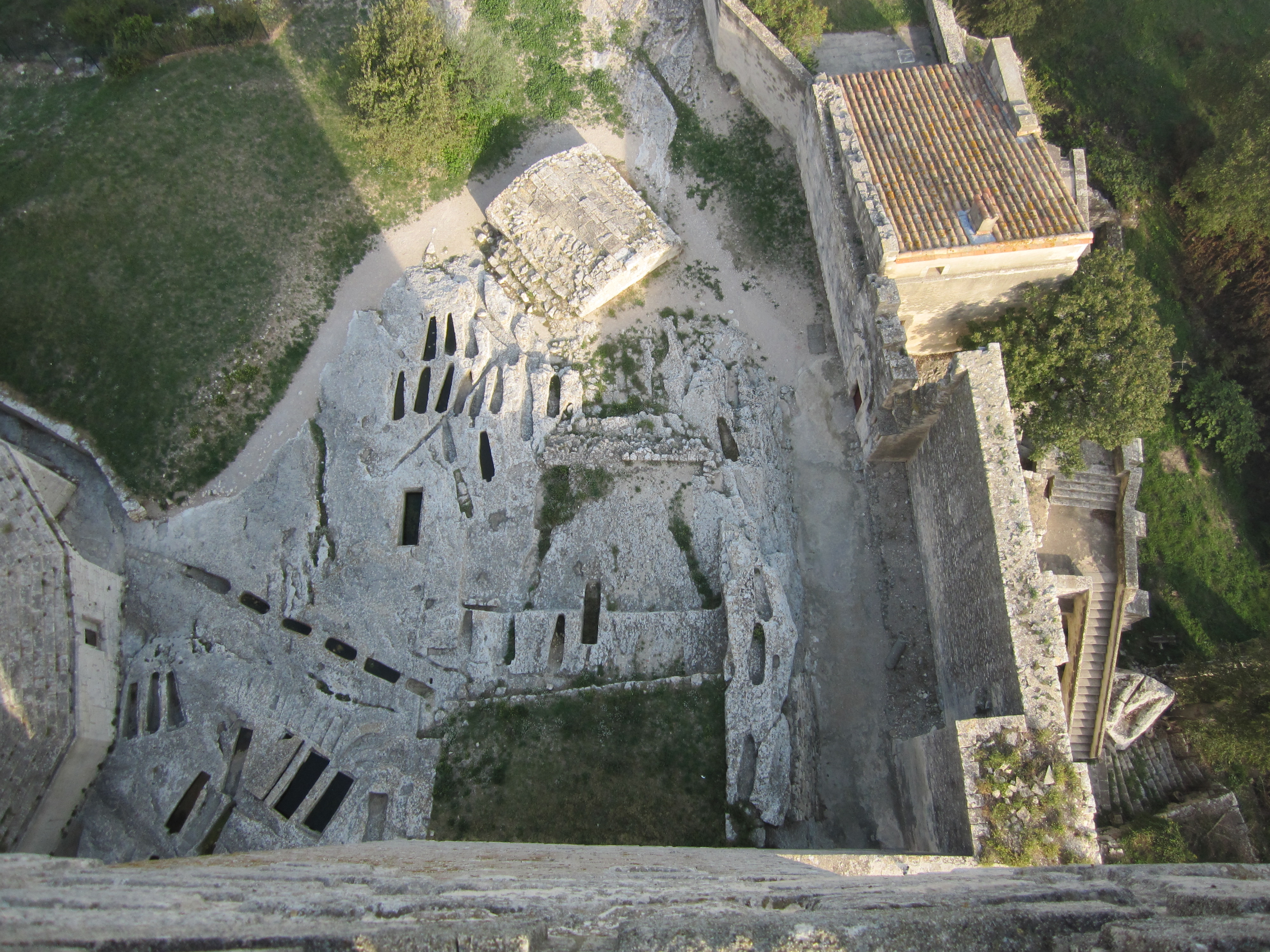
Montmajour Abbey necropolis, as seen from the tower

After this we followed signs for a Roman aqueduct, which turned out to be the Barbegal aqueduct and mill (there weren’t any descriptions so I found this out later).  We could climb on top of the ruins, and there was a beautiful open field at the end where we heard cows mooing and sheep baaing.

We kept driving aimlessly after this and came upon some gorgeous rock formations.  It turned out we were headed towards the hilltop town of Les Baux de Provence without realizing it.  We got here after all the tourists had left, so it was empty and quiet.  The town was so amazing and unexpected – it was a whole medieval city on the side of a cliff.  The view was incredible.  We found out later that there was a ‘dead city’ here too – actually the destroyed chateau – but it was closed when we got there.  The ‘live city’ seemed very small and empty, but there were a few restaurants still open.
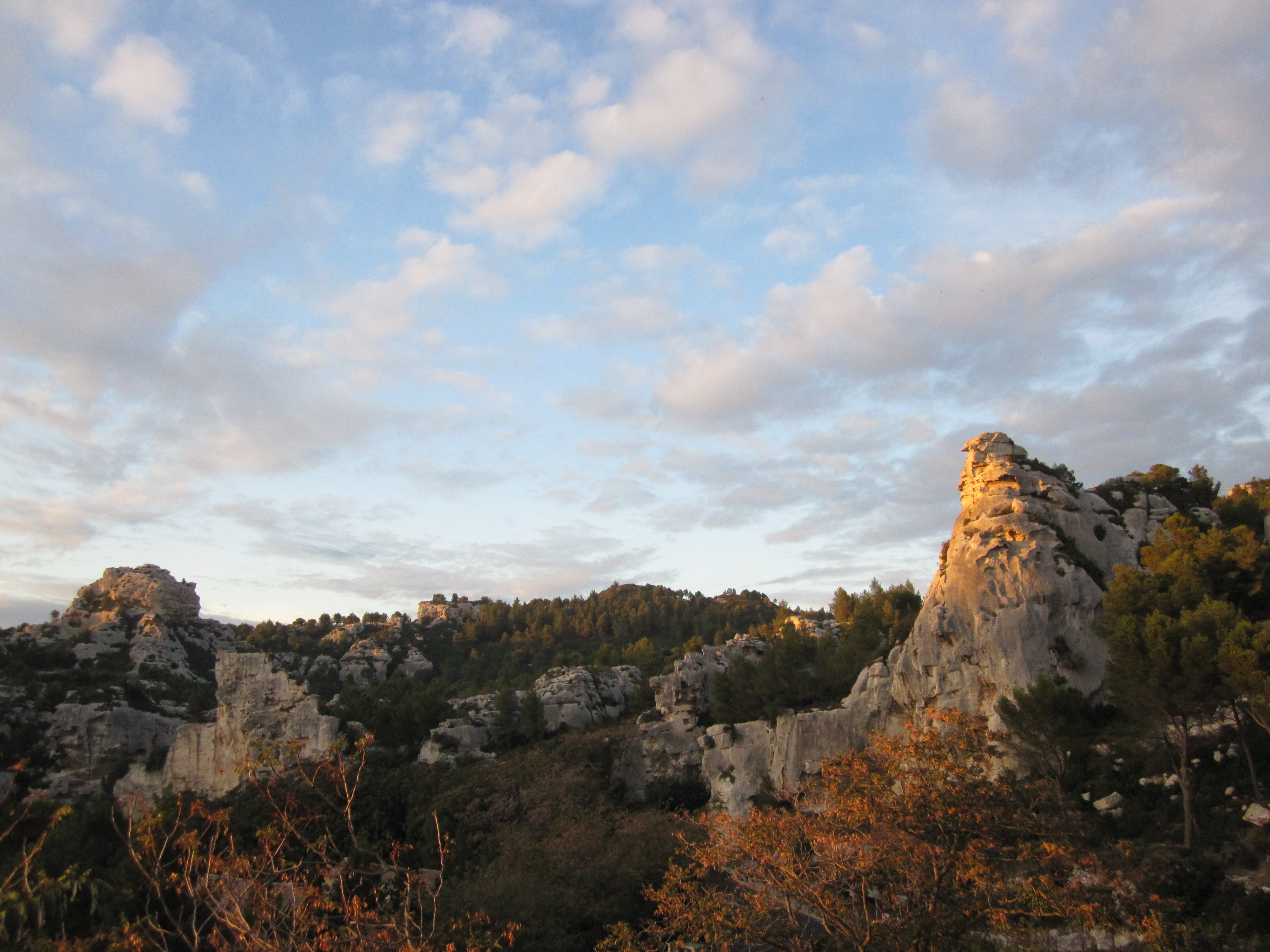
View from Les Baux

Wednesday – I found out they had a market in St. Remy on Wednesdays so I walked into town.  The market was very cute and had all kinds of goods, though I think I liked Nice’s market better.  There were stalls in a number of streets and squares throughout St. Remy.

Next we drove to some local sights in St. Remy.  First up was St. Paul de Mausole, the insane asylum where van Gogh stayed, which is in a very beautiful Romanesque abbey.  We saw van Gogh’s reconstructed room, some old metal tubs from the asylum, the cloister, and the beautiful garden where van Gogh painted some of his most famous works.  There were some persimmon (I think) trees dropping their fruit in the garden.  It must be even lovelier in the summer, when the lavender and irises are in bloom.  From here we walked to Les Antiques, two very well-preserved Roman structures (a triumphal arch and a mausoleum).  We also walked to the entrance to Glanum, the archaeological site of the Greco-Roman settlement, but didn’t want to take the time to go in.

Next we drove to Pont du Gard, one of the largest Roman aqueducts ever built.  It was pretty incredible.  Right next to it is a cave where they found Paleolithic remains.  We walked across the 18th-century bridge to the side where they have a museum and café.  I was starving and we got a Nutella crepe and a cheese crepe – so good!  I think in the summer you can walk across the top level of the aqueduct, but it was closed when we went.  The museum was extremely well done.  It was a multi-media experience with the sound of running water, Romans hammering and sawing, scenes from a Richard Burton movie showing how an aqueduct was made, etc.  We stayed there till it closed.  Then we walked down to the water level under the aqueduct – the river only flows under one of the arches now.  It’s a breathtaking sight.  The top level of the aqueduct is lit up at night.  Oh, and they have 1,000-year old olive trees transplanted from Spain growing nearby.
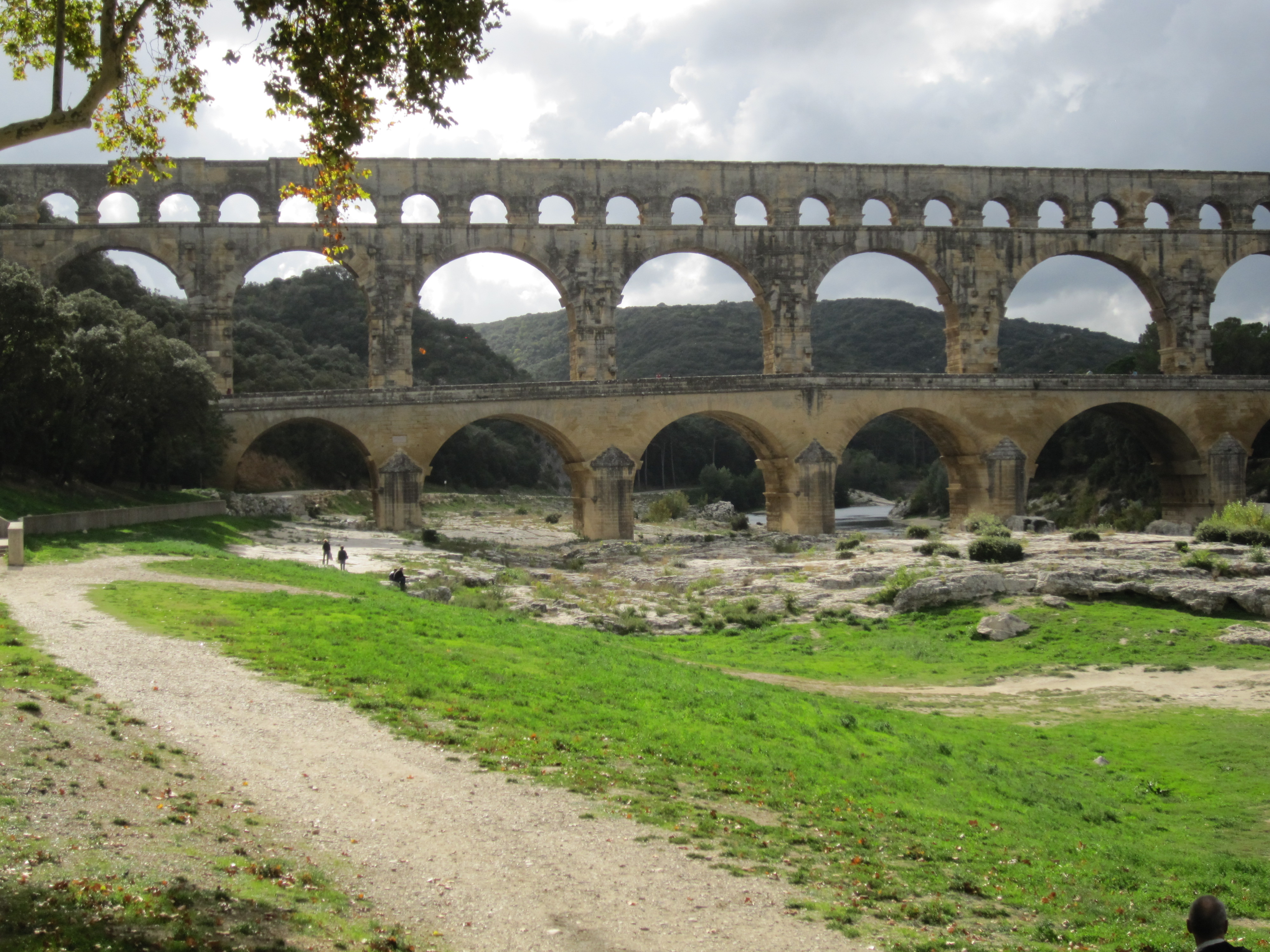
Pont du Gard

We planned to eat in one of the towns between Pont du Gard and St. Remy, but we couldn’t find anything.  We stopped in Tarascon, which has an amazing castle where you can still see the holes made by cannonballs, but we didn’t see any normal restaurants.  Went back to St. Remy and spent a long time deciding on a restaurant.  Eventually we went to Le Bistro des Alpilles.  We got there kind of late (at least, late for the St. Remy area – I think it was only after 9 pm) and they almost didn’t serve us, but finally they let us in.  I got the pot au feu (a kind of beef stew) which was very good, and a tarte tatin, which is like an apple pie only twice as delicious.

Thursday – Checked out of the hotel and drove to Avignon.  I was amazed by how intact the medieval walls are.  The old city was much larger, livelier and more impressive than I expected.  We could have easily spent a whole day just walking around.  We passed an ancient Templar chapel, then went to the Palais des Papes.  I was blown away by the immensity of the palace.  I had never been inside such a large, intact medieval structure before.  The audioguide was pretty good.  We got to see the huge dining hall and kitchen, the treasury with hidden compartments in the floor, and much more.  Most impressive were the pope’s private rooms, which are still decorated with medieval frescoes of bird cages and hunting scenes.  Unfortunately we couldn’t take pictures in there.  Those popes really knew how to live it up.

After this we went to the pont d’Avignon, or Pont St. Benezet, which we had paid extra for when we bought out tickets for the palace. I wasn’t familiar with the children’s song about this bridge, but it’s an interesting medieval structure with two chapels in the middle.  Oh, and it doesn’t go all the way across – half the bridge was washed away several centuries ago.
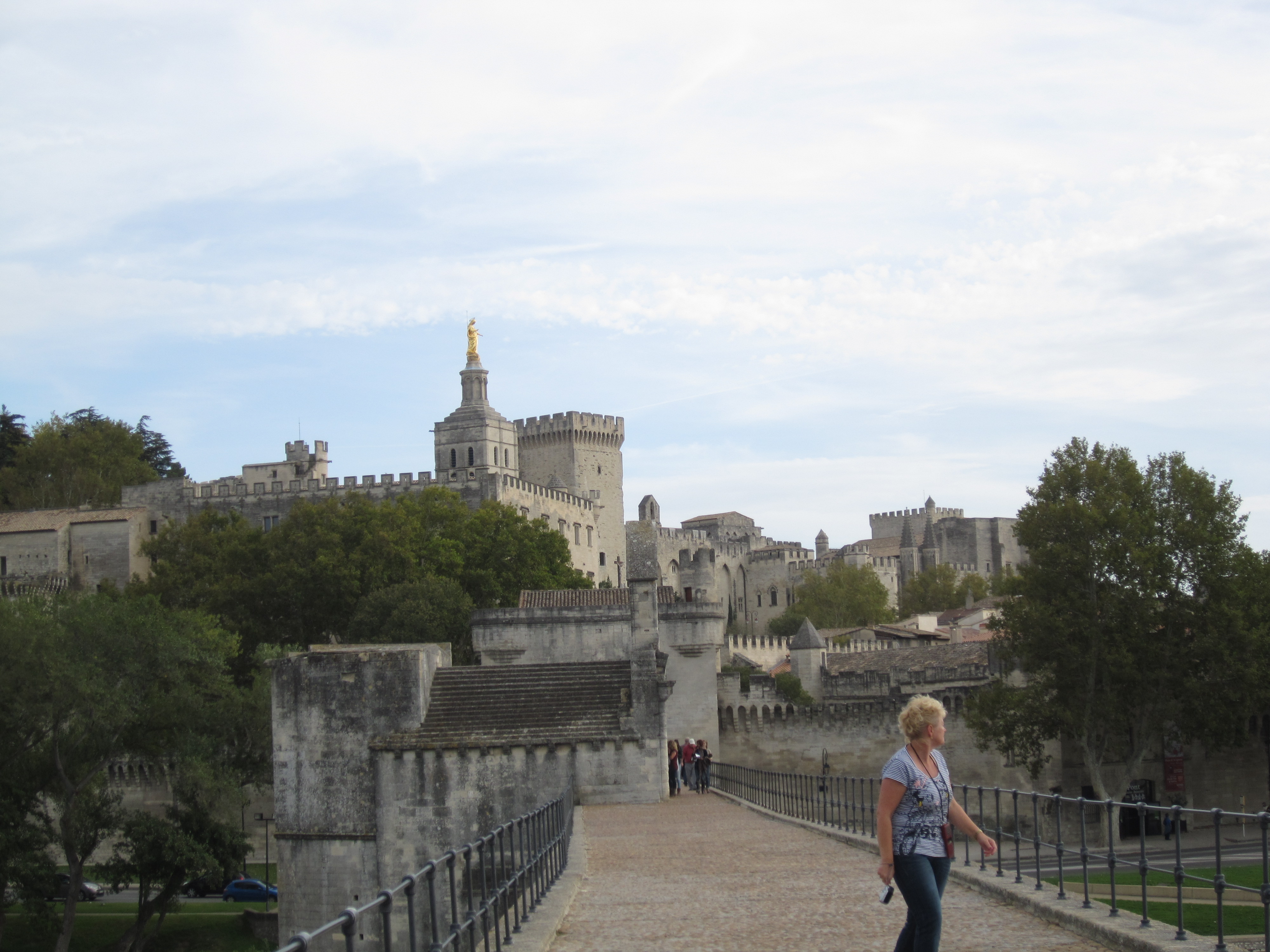
View of Avignon from Pont d’Avignon

Walked around the city a little more, then went back to our car – we didn’t want to arrive at our next hotel too late.  We thought we would find a cute restaurant in one of the towns between Avignon and our next hotel in Vence, but all the places we stopped in seemed practically deserted.  They had a few little bars or pizza places, that was it.  We literally looked for a restaurant for 2 ½ hours and were getting rather desperate.  Plus we needed gas, and let me just say that buying gas for a rental car in a foreign country is quite an ordeal.

Finally we got to Cannes, where we thought some places would be open late.  It was past 10 pm when we found Lou Souleou, a restaurant right on the beach, where a super friendly waiter told us their kitchen was still open!  Rob got frog legs for an appetizer, which I had never tried before – they were amazing!  Like miniature, extremely tender chicken wings.  It was one of the best dinners we had all trip.  Afterwards we drove along the water through Cannes and Antibes, saw some amazing hotels, and found our hotel in Vence.  It was pretty ugly, but it did the job.

Friday – We had wanted to check out Vence and St. Paul de Vence this morning, but there was no time.  We also didn’t get to see the Camargue National Park, which was on my list of things to do.  There’s so much to see in this area!  I definitely could have used a few weeks here.


Give your child the gift of great grades.  Order a copy of The Secrets of Top Students today!


Re: The Imaginary Teacher Shortage

There was an interesting opinion piece in The Wall Street Journal  today: “The Imaginary Teacher Shortage” by Jay Greene. Both Obama and Romney think we need more teachers, but as Greene notes:

For decades we have tried to boost academic outcomes by hiring more teachers, and we have essentially nothing to show for it. In 1970, public schools employed 2.06 million teachers, or one for every 22.3 students, according to the U.S. Department of Education’s Digest of Education Statistics. In 2012, we have 3.27 million teachers, one for every 15.2 students. Yet math and reading scores for 17-year-olds have remained virtually unchanged since 1970, according to the U.S. Department of Education’s National Assessment of Educational Progress.

That study Greene refers to can be found here. Interestingly, while scores for high school students haven’t changed, scores for nine- and thirteen-year-olds have improved. It’s also worth noting that the pupil to teacher ratio depends on what kind of school we’re talking about. According to the National Center for Education Statistics, “the public school pupil/teacher ratio was 15.4 in 2009. By comparison, the pupil/teacher ratio for private schools was estimated at 12.5 in 2009. The average class size in 2007–08 was 20.0 pupils for public elementary schools and 23.4 pupils for public secondary schools.”

While I agree that hiring more teachers isn’t necessarily the solution to our education problem, I disagree with Greene’s proposed alternative: using more technology in classrooms to allow for “more individualized instruction with many fewer teachers.” I don’t think that letting young students sit for hours in front of a computer screen, with teachers serving merely as “tutors, problem-solvers, and behavior managers,” is the answer. What do you think?


Want to improve your grades?   Order your copy of The Secrets of Top Students today!

Education News: Recommended Articles

From college rankings to kids sticking themselves with IVs to study longer, here are some education stories you might enjoy:

NPR story about How Children Succeed: Grit, Curiosity and the Hidden Power of Character, by Paul Tough. I love his name, by the way – very appropriate. This book sounds great and it speaks to all the things I’ve been saying recently. Academic achievement (and achievement in life) depends on hard work and perseverance, not talent and luck.

The College Rankings Racket, by Joe Nocera. Are college rankings really a racket? I think that’s going a little too far. Mr. Nocera’s article links to U.S. News‘s description of how they rank schools, and it sounds pretty legit to me. Sure, some kids place too much pressure on themselves to go to certain schools, but that doesn’t mean the rankings are pointless. What do you think?

Chinese students use IV amino acids to study for high-stakes tests, by Valerie Strauss. Apparently some high school students in China receive IV drips of amino acids so they can better prepare for the high-stakes college entrance exams. I feel sorry for these kids.

7 Questions to Ask Yourself When Choosing a Major. This is a great article for all you college students out there. The last question may be the most important: Is this what I want or what someone else wants?


Give yourself the gift of great grades.  Order your copy of The Secrets of Top Students today!

Book Photoshoot – or, how I learned to channel my inner model

It’s been ages since my last post.  I’ve been working on my manuscript nonstop for the past few weeks, and the last thing I wanted to do at the end of each day was sit down and write a blog post.  But now the manuscript’s DONE – give or take a few edits – and I am submitting it to my editor on Monday.  I can barely believe I’ve written a book!!!  (For more info about Rise to the Top: The Valedictorian’s Guide to High School and College, click here.)

One thing I did make time for during my busy writing days was THE PHOTOSHOOT.  My publisher, Sourcebooks Inc., needs some pictures for publicity purposes.  By coincidence, a very talented photographer I know, Christopher Angello, asked if he could take pictures of me.  Perfect timing!  I had a blast being a model for a day – it was almost as much fun as writing.  After four locations and five wardrobe changes, here are the results.  Of course, not all of them are appropriate for a book, but I love the way came out.  Hope you enjoy them!


Give yourself the gift of great grades.  Order your copy of The Secrets of Top Students today!

Will We Be Publishing Books Written in Digital English Someday? (Guest Post)

I’m excited to introduce my first guest blogger, Alexa Russell.  In this post, Alexa writes about nothing less than the future of the English language.  While we need to recognize the importance of Internet English, we should be wary of relying on it too much.  What’s your take on the issue?  Should we embrace the patois of the digital age, or fight to keep ‘proper’ English alive?  Should digital English become part of what you actually learn in English programs?  Without further ado, here’s Alexa.

The digital migration brings millions of new users to the Internet daily, with even more returning day after day to their favorite informational resource. Not only do these individuals access countless stores of knowledge held on websites and databases, they also contribute to the Internet by publishing in the form of Twitter and Facebook updates and blog posts. Many of these publication forms champion cursory writing, and in response many Internet users have found ways to express themselves through acronyms or shortened words.

This has spurred a huge debate about the current state of the English language. On the one hand, many believe that the rules of grammar serve as the best way to express yourself and be taken seriously. Others, however, believe that these rules hinder actual communication and force people to follow archaic rules that are inefficient for the digital age. The point of using abbreviations or removing vowels from words, after all, is to communicate more quickly.

A January 2012 feature article published by Wired Magazine illustrates why we should embrace this digital form of English. As the headline announces, “Its Tyme to Let Luce” with the rules of casual conversation. “English spelling is a terrible mess anyway,” writes Anne Trubek, “full of arbitrary contrivances and exceptions that outnumber rules. Why receipt but deceit? Water but daughter?”

Efforts to stem the digital corruption of English only get in the way, Trubek argues. Autocorrect software, which attempts to make sense out of misspelled words, both purposefully and not, often further complicates intended meanings by correcting to the wrong word.

Even colleges and universities, the bastions of proper English and, are beginning to embrace digital applications. A January 2012 piece published in the New York Times reports the attempts of Duke English professor Cathy Davidson to do away with the traditional term paper in favor of consistent posting to a class blog.

Although she finds that this outlet supports writers that rely on creativity in their prose, many feel that the rigid rules of proper grammar need to be respected, especially by college students. “Writing term papers is a dying art, but those who do write them have a dramatic leg up in terms of critical thinking, argumentation and the sort of expression required not only in college, but in the job market,” said Douglas Reeves, founder of the Leadership and Learning Center and a columnist for the American School Board Journal.

The youngest among us have incorporated digital forms of English so completely into our usage that it often finds its way into oral conversation. The Baltimore Sun published a May 2012 piece on different acronyms and abbreviations that parents should know in order to communicate with their children. Many of the more popular ones, like “YOLO” and “OOMF” are relatively new but are already being used by millions.

What the digital migration has allowed people to do is construct their own rules of conversation, apart from those held sacred by the old school of grammar. There’s no doubt that people will continue using these forms of speech, and postmodern writers have long been published advocates of English deconstruction. With the ease of publishing today, digital English will continue to take hold. However, those who don’t publish works that adhere to at least some standard rules of writing, may find that their audience dwindles when they can’t understand what they’re reading.


Give yourself the gift of great grades.  Order your copy of The Secrets of Top Students today!

Follow the yellow brick road – or, why I loved third grade

A couple of weeks ago I got this message through my blog:

I am trying to do a follow up on my students from PS 166 class 3-305.
I believe that I have found you. I am extremely proud of all your accomplishments. Please email me back with an update.
I would love to meet with you to discuss old times.

It was my third grade teacher! How cute is that?  Suddenly I felt like I was nine years old again, learning my multiplication tables and playing the recorder.  Third grade was a very good year…

So we met for lunch in the city the following week and reminisced about old times.  She looked the same except she had straight hair instead of the reddish curls I remember.  It was so weird to be sitting next to her as an adult!

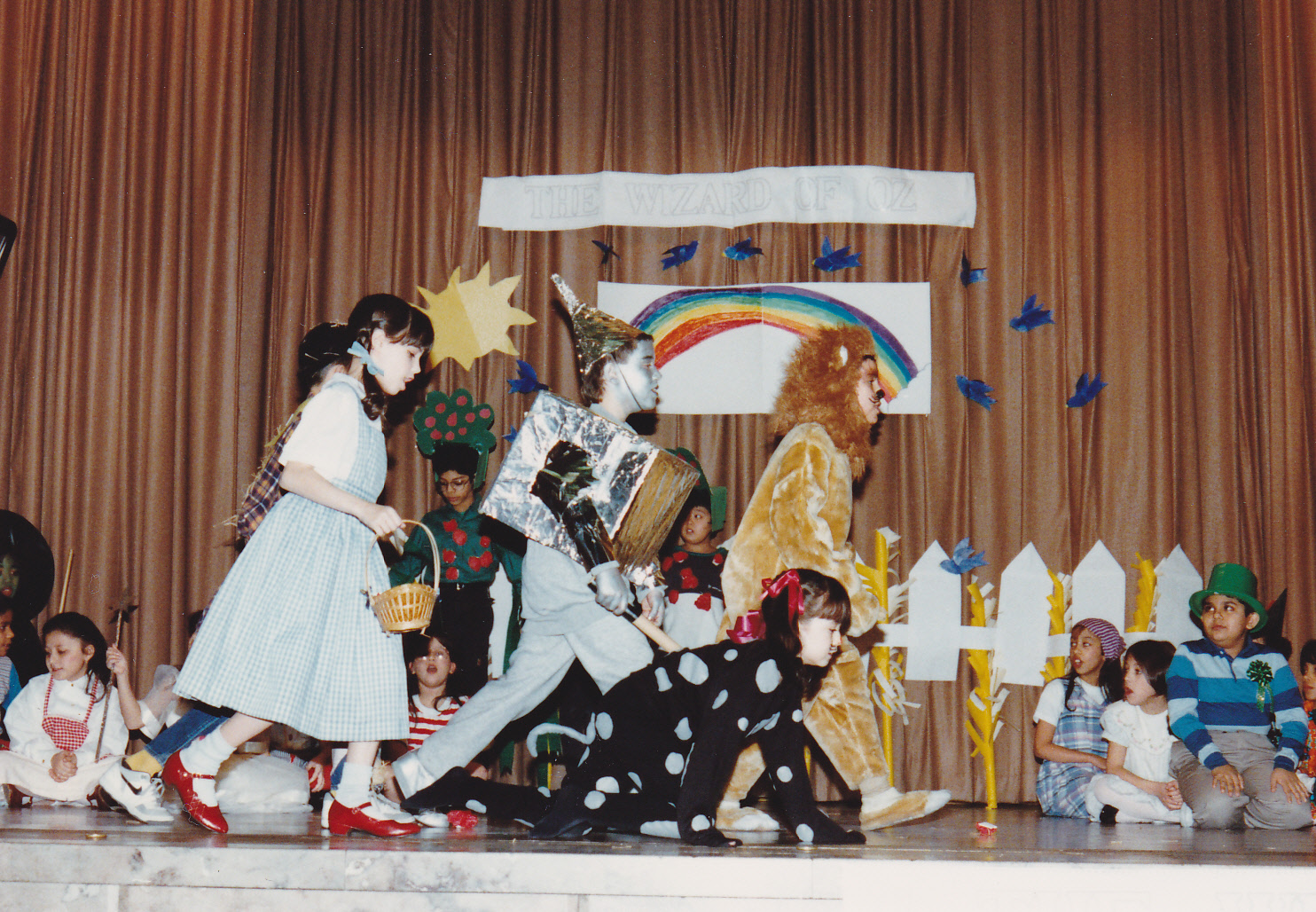
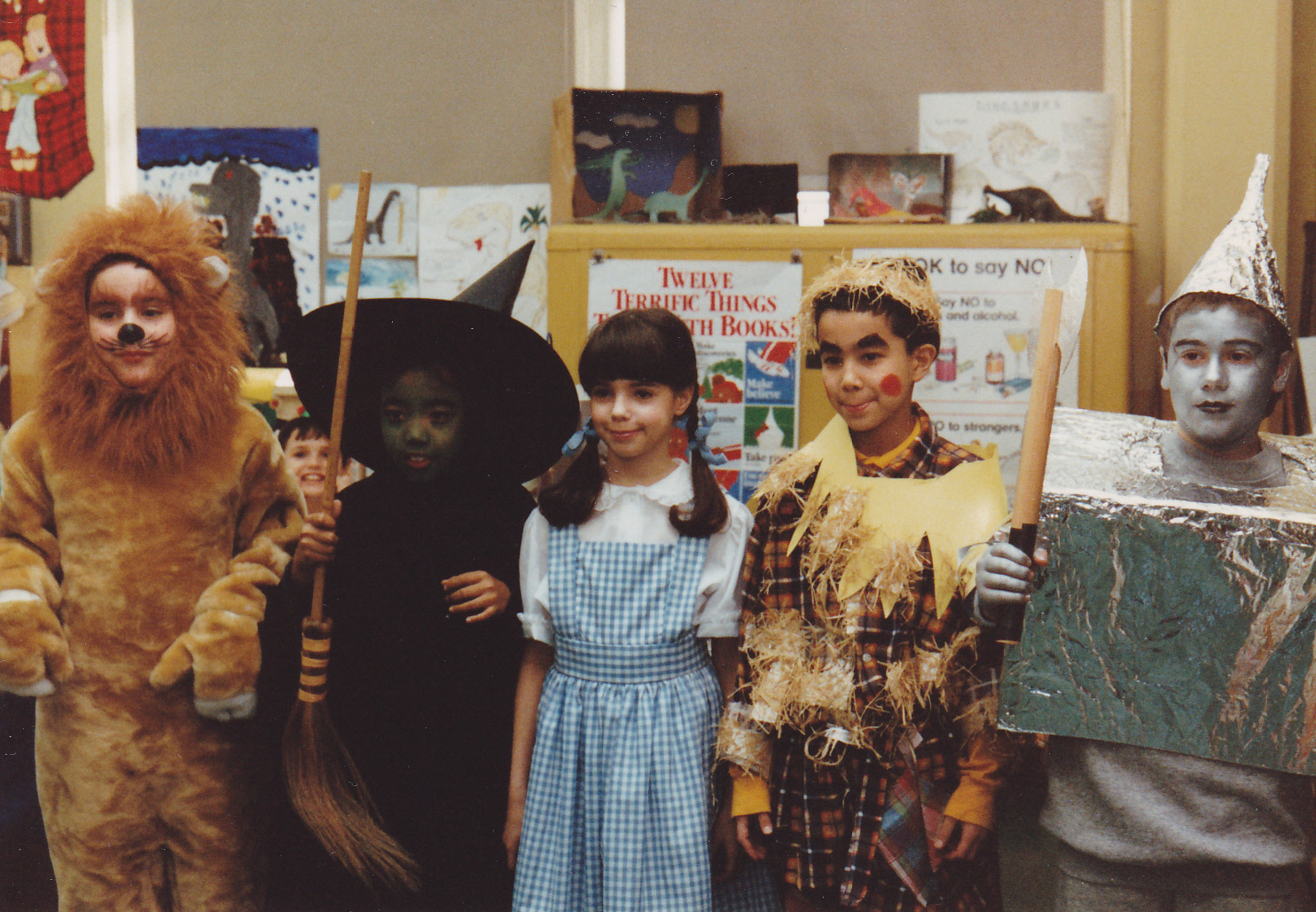
We had both brought pictures from the defining event of that year: the production of The Wizard of Oz we put on.  I played Dorothy. Actually, I was one of two Dorothies. My voice was too small and quiet to hold up for the entire show, so it was decided that another girl would play the lead for the second half.  I was “Dorothy #1.” 🙂

Follow the yellow brick road! I still have one of those paper corn stalks from the set in my closet. I am such a hoarder.

From left to right, Clint Borzoni, Armita (?), Stefanie Weisman, Danny Ho, Michael Petrocelli. I still remember their names! We had such amazing costumes. (I love the dinosaur dioramas in the background, too.)

Me as Dorothy, with the Lion and Tin Man in the background. I love the tree costumes!

We had really great costumes, most of them hand-made. My mother sewed this Dorothy costume from a pattern she got at the Five and Dime – can you believe it?

My former teacher said that it got harder and harder for her to put on plays like this as the pressure to teach for standardized tests mounted.  What a shame.  This was one of the defining moments of my childhood, and you can see how much love and care we put into this play.  More kids should be given this opportunity.

It’s official – I have a book contract!

I recently signed with Sourcebooks, Inc., and I couldn’t ask for a better publisher for my book, tentatively titled Rise to the Top: The Valedictorian’s Guide to Academic Success in High School and College.  My book will be in excellent company – Sourcebooks is also the publisher of Harlan Cohen’s The Naked Roommate (the #1 book on college life with over 125,000 copies sold), Christie Garton’s U Chic, the Fiske Guides, the Gruber Test Prep series, and much, much more. Check out their book list here.

It’s been a lifelong dream of mine to publish a book, and I hope this is the first of many. I’m thrilled to be able to share my study techniques with high school and college students across the country. None of this would have been possible without my wonderful agent, Coleen O’Shea, and my friends and family – thank you, thank you, thank you!!! I am in extreme writing mode right now, and I love it. To read more about my book (and to sign up for my book list and contest), please go here.

Picture of Stefanie Weisman

The Dura Europos Synagogue

My article on the Dura Europos synagogue has been published by Shofar: An Interdisciplinary Journal of Jewish Studies.  Dura Europos was an ancient Roman city in modern-day Syria, destroyed by the Sassanians in the third century CE.  It contained many houses of worship, including a synagogue that was covered in paintings of biblical scenes. These wall paintings are now in a museum in Damascus.

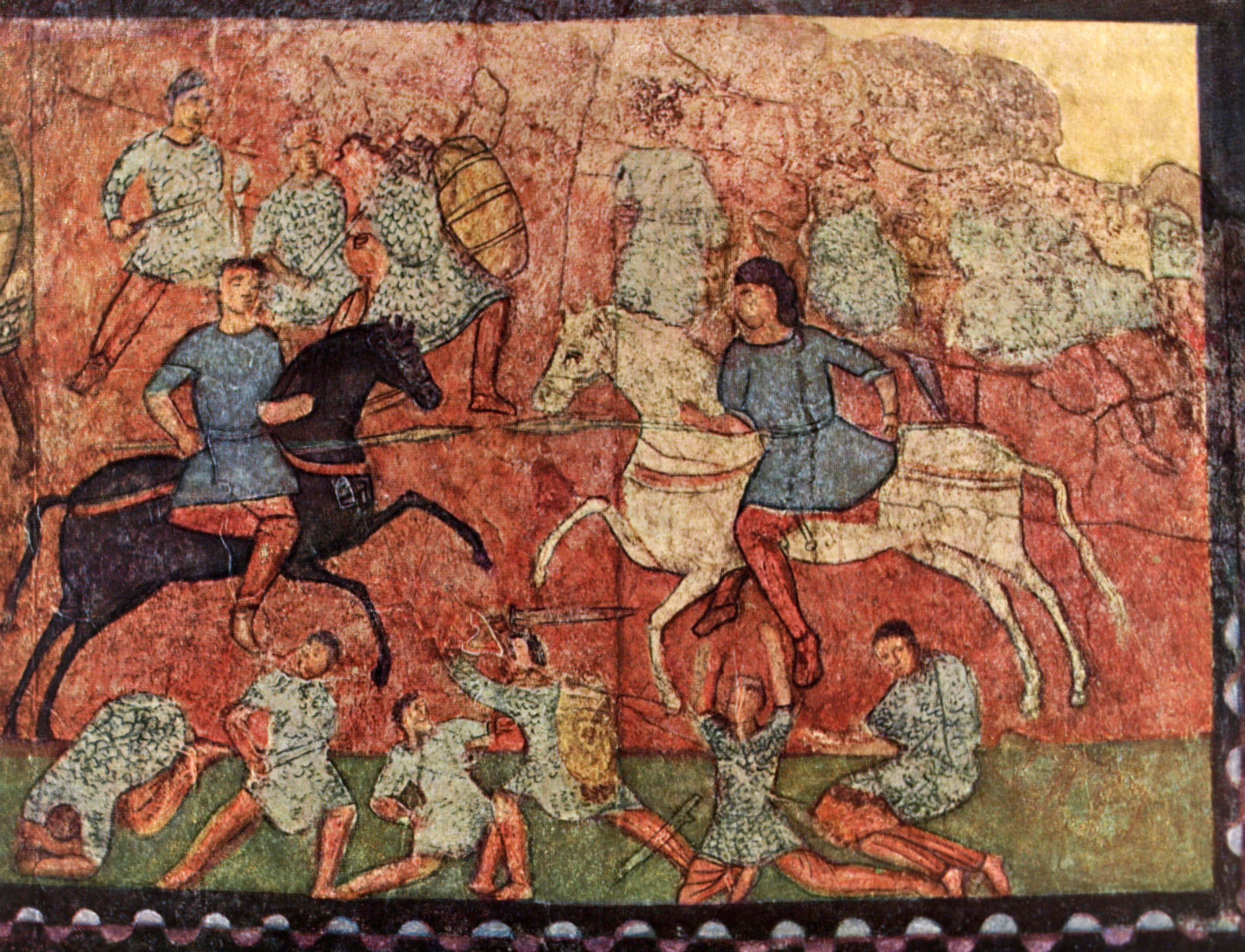
My article is about the inclusion of scenes of violence and warfare in the synagogue paintings. Dura Europos was the site of a Roman garrison and was located between two warring empires, so the Jews who lived there were probably familiar with such sights. Some of them may even have served in the army. Take a look at this bloody scene, the Battle of Eben-Ezer, from the Dura Europos synagogue.

Battle of Eben-Ezer, Dura Europos synagogue

The crux of my argument is this:

One issue regarding the wall paintings that has received little attention, however, is if and how the militarism of Dura-Europos influenced their iconography. Ben Zion Rosenfeld and Rivka Potchebutzky have examined the relationship between the Jewish community and the military garrison at Dura, but they are largely silent on the subject of art in the synagogue. In the surviving paintings, there is only one panel that clearly depicts a scene of war: that of the Battle of Eben-Ezer, described in Book I of Samuel. However, there are numerous images that refer to warfare indirectly, such as those showing men in armor, acts of violence, and scenes of carnage and destruction. The prevalence of such imagery could signify the Durene Jews’ awareness of the danger of living on the border between two powerful empires. They may have witnessed real-life carnage and likely heard tales of battles that took place close to home. They lived in close proximity to the garrison and probably saw soldiers on a daily basis. It is also possible that some of the Jews living in Dura were active participants in the Roman army. Scholars accept that other temples in the city, such as the mithraeum and the Temple of Bel, served the spiritual needs of Roman soldiers. But they rarely ask whether the synagogue could have served a similar purpose.


Want to improve your grades?   Order your copy of The Secrets of Top Students today!

What’s the point of a college education?

There have been a lot of articles questioning the value of a college education recently – particularly the value of a liberal arts education. Take, for example, Frank Bruni’s The Imperiled Promise of College and Michelle Singletary’s Not All College Majors Are Created Equal. These articles warn against choosing majors that tend to result in low-paying jobs (or no jobs at all). That’s why I was glad to read Alina Tugend’s article Vocation or Exploration? Pondering the Purpose of College, which argues that college students can and should study the humanities. As Ms. Tugend writes, the question is this: is the purpose of college to “ensure a good job after graduation,” or “to give students a broad and deep humanities education that teaches them how to think and write critically? Or can a college education do both?” I’m going with door number three.

In the article, Ms. Tugend notes that what students major in has a greater impact on their future earnings than in previous decades.

So does that mean I should urge our son to pursue a degree he doesn’t have any interest in because it may provide him with a higher-paying job — or any job, for that matter — after college?

No, Professor Carnevale said, because if you don’t like what you do, you won’t do it well. The point is that “young people now need to have a strategy,” he said. “If you major in art, realize you will have to get a master’s degree. The economic calculus has changed.”

I like that line – if you don’t like what you do, you won’t do it well.

When I was in college, my most rewarding classes were in the humanities. I specialized in medieval history and got an M.A. in Art History before I majored and got a job in Computer Science. Do I regret studying history and art history, where job options are extremely limited? Not in the least. I’m glad I have a background in the humanities – I think it makes me a more well-rounded, knowledgeable, appreciative person. (However, I’m lucky that I didn’t go into debt to get my degrees. If I did owe lots of money, perhaps I wouldn’t be so pro-liberal arts.) One of the best things about Columbia, my alma mater, is that it has a Core Curriculum. All undergrads, no matter what their major, are required to take classes like Literature Humanities and Contemporary Civilization, where they have literally hundreds of pages of reading each week on everything from Homer to Dante to Freud. This was probably the highlight of my academic career.

Lastly, I was quoted in a Crain’s New York Business article last week – Goodbye, ‘bamboo ceiling’ – Corporate barriers spur Asian-Americans to start fast-growing enterprises, by Emily Laermer.

When Stefanie Weisman was Stuyvesant’s valedictorian in 1999, she said, the school was about half Asian. She described her time there as ‘the most intense four years of my life’ because of its competitiveness.

‘The students there are bright and hardworking, partly because there are so many Asian-American students,” she said, citing the influence of ‘tiger parents.’ . . . .

It’s also possible that tiger parenting ultimately backfires. Ms. Weisman, who is writing a book about academic success, said that those who enjoy learning – rather than studying because their parents insist – tend to do better professionally.


Give yourself the gift of great grades.  Order your copy of The Secrets of Top Students today!