Last Day to Get The Secrets of Top Students for $2.99

Today is your last chance to get The Secrets of Top Students ebook for only $2.99!

This book includes tips and techniques that every student should know. For example:

  • What is the first thing you should do when taking a math test?
  • What is an often overlooked place for coming up with a thesis?
  • What music should you listen to while studying?
  • Why is it bad to be a perfectionist?
  • What are the good and bad types of motivation?
  • What foods should you eat to boost your brainpower?
  • How much do top students really study?
  • Should you bring your laptop to class?
  • What are three game-changing learning techniques?
  • And much, much more.
The Secrets of Top Students: Special Sale!

The Secrets of Top Students: Special Sale!

Here’s what people have been saying about the book:

Praise for The Secrets of Top Students

“An insightful guide for high achievers—and those aspiring to such status—from an authoritative source, Stefanie Weisman, a Columbia University graduate and former valedictorian of Stuyvesant High School, two of the best schools in America. Stefanie Weisman’s book about the secrets of academic success is all the more amazing, given the learning disabilities that she overcame to become the ultimate academic overachiever. As a graduate of Stuyvesant High School myself, as well as a Phi Beta Kappa graduate of Brown University, I believe students can find happiness and achieve great things at any number of schools, and Stefanie Weisman offers hard-fought wisdom about how to get there.”
Alec Klein, Northwestern University professor, bestselling author and award-winning journalist

“Although the target audience is high school and college students, the book is a must-read for students in middle school and up, teachers, parents, and guidance counselors as 21st-century students learn to excel in the new educational landscape in which they find themselves.”
Tammy Turner, Centennial High School, Frisco, TX; School Library Journal, July 2013 issue

“We wish we had Stefanie Weisman’s new book . . . when we were in school, but our loss is your child’s gain as this book goes beyond advising how to test better; it’s loaded with strategies on how to get the most out of school in a healthy, well-rounded way that will continue to serve your scholar well throughout their life.”
Lisa J. Curtis, Brooklyn Family Magazine, August 2013 issue

“A student who followed even half of the suggestions in this book could come away from college with both a greater understanding of the material and a significantly higher G.P.A.”
Dr. Mindy Marks, Associate Professor of Economics at Washington University, St. Louis, and Co-Author of “Leisure College, USA: The Decline in Student Study Time”

“This is perhaps the best and most pragmatic guide to academic success I have read that is relevant to today’s students. One thing that sets this book apart is that it provides special information for students interested in science, technology, engineering and mathematics, aka STEM subjects.”
Stuart Nachbar, President of Educated Quest, www.EducatedQuest.com

“Undergraduates who want to excel in college will find a helpful resource in this book.”
Joseph Adegboyega-Edun, Counselor/College Adviser, Walter Johnson High School, Bethesda (MD)
5 Careers for Introverts (Guest Post)

By Jep Barroga.  Jep is a freelance writer for a Malaysian personal finance portal, writing blog posts like the perks of working from home. If he’s not busy writing, you can find him reading articles from Cracked.com and listening to alternative music.

It’s not easy landing your dream job, especially if you’re the timid, shy type—or an introvert, so to speak. Unlike extroverts who have no problems mingling with other people and networking with fellow professionals, introverts are often not so adept at the social skills required to build bigger networks of their own, since most of them have reserved personalities.

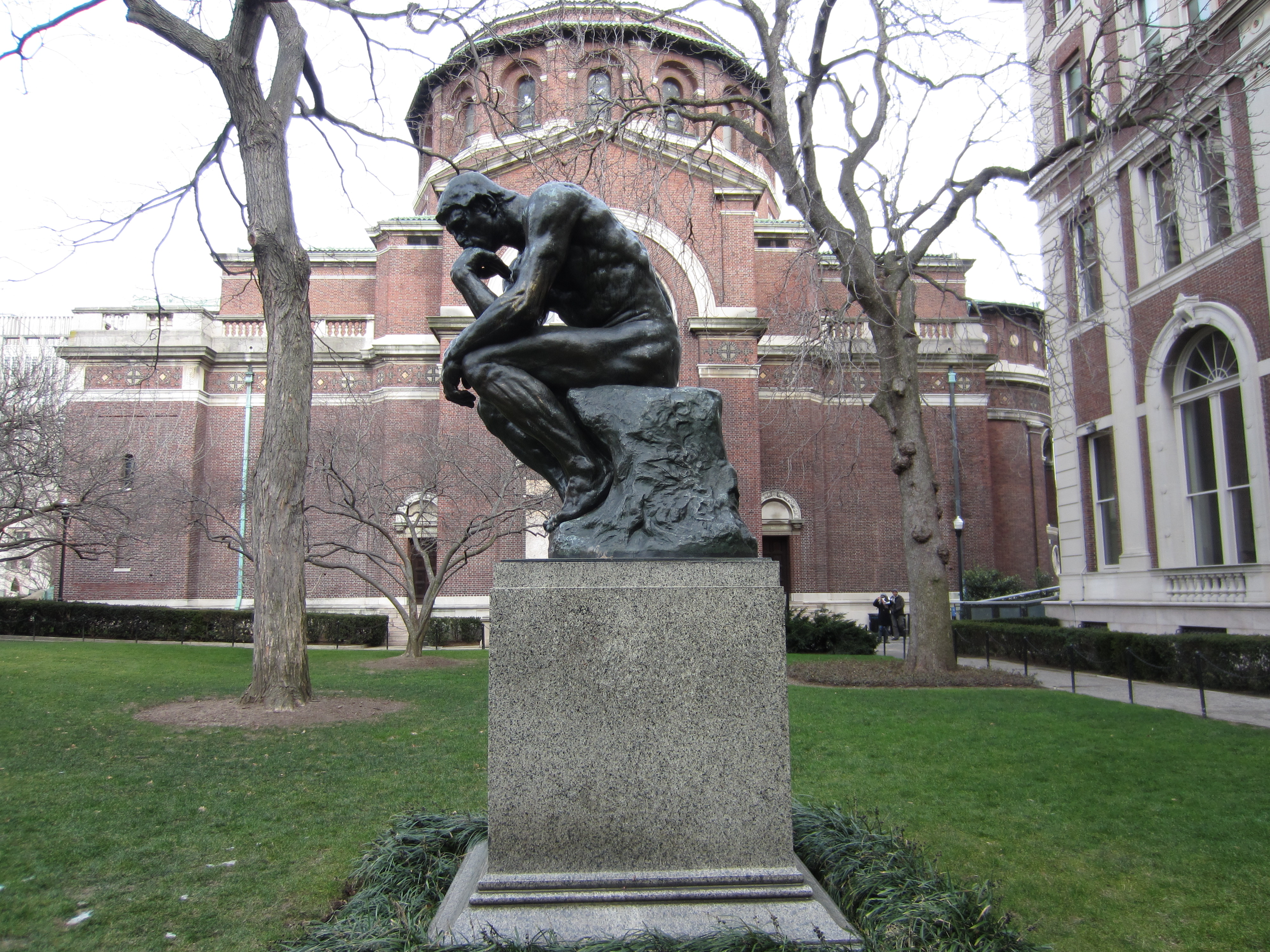
Sometimes it can be hard to be a solitary thinker.

Sometimes it can be hard to be a solitary thinker.

I’m an introvert myself and I’ve found my calling as a freelance writer and social media specialist, which allows me to work remotely for clients from anywhere around the world. There are lots of jobs that are best suited for your personality; jobs that can give you the stimulation you crave and allow you to hone your creativity. The following are some ideal careers for introverts:

If you love numbers

Financial Analyst
This job requires you to evaluate a wide scope of data related to business trends, stocks, bonds, and financial statements. Creating financial reports is also important in this type of work.

Accountant
Accountancy is perfect for introverts who have a passion for numbers. Accountants are mostly left alone in their own cubicles, at their computers, where they must evaluate and decode piles of documents. This type of job requires you to spend most of your time dealing with data and calculations. Most days, accountants do what they need to do with few distractions. Interaction with other people is minimal, although you’ll occasionally have to meet with clients or supervisors.

If you have a passion for the written word

Writer
This is one of the most popular types of job for introverts nowadays—particularly those who love to read and write. For people who have a passion for writing, being a website content or technical writer is ideal. This job may sometimes require you to be skilled at marketing. Some companies even offer telecommuting benefits as long as you’re able to meet deadlines.

If you love science

Medical Technician
This job is ideal for introverts who want to go into the medical field. It requires you to collect lab samples, analyze the records, and work behind the scenes to deal with laboratory processes, x-rays, and other test results. You may have to report to doctors, nurses and other professionals about the patient’s lab results, but you will spend most of your time in the laboratory.

If you love art

Graphic Designer
This is a skill-based career. This type of work requires you to spend hours at your desk and computer and formulate a cool image or infographics for clients. You can specialize in areas such as web design or web architecture, which will help you express your ideas digitally, if not on paper or canvas. The great thing about this job is that you only meet with clients and supervisors to have your submissions reviewed or to get feedback on your work.

“Choose a job you love, and you will never have to work a day in your life,” as the great Confucius said. The jobs mentioned are some ideal careers for introverts. However, if your passions lie elsewhere, you may try to improve your communication skills and minimize your timid traits so that it will be easier for you to get hired in the profession you want.


For a limited time, get The Secrets of Top Students ebook for $2.99!

Facebook Depression: Is It A Real Diagnosis? (Guest Post)

Tara Heath is a journalist who lives in California. She loves to write about health and wellness and parenting. She knows there are many dangers that come with social media and wants to help share her tips and thoughts on staying healthy and safe.

Almost everybody with access to a computer knows about the social media site Facebook. If you’re a parent, chances are your children use it, and more than likely, you use it yourself.

While social media sites are basically part of the culture for anybody under the age of 40, they tend to have more of an impact on high school and college-age teens. They are the ones most likely to be regularly active on Facebook, and they’re also the ones most likely to visit the site more than 10 times per day according to a study conducted by the American Academy of Pediatrics.

Unfortunately, this relatively new technology may be taking a toll on some teens and young adults in the form of something controversially known as Facebook depression.

signs

What is Facebook Depression?

Facebook depression is a relatively new term designed specifically to reference feelings of depression and anxiety that many teens feel due to social media sites, much like the depression teens experience on the playground when they aren’t accepted by their peers. Only, in the digital age, Facebook depression relates more to friend requests and friends unfollowing them on the web than face to face interaction.

In some cases, teens may do things that could be considered risky in order to feel accepted, and then brag about their activities. This has led some researchers to believe that kids who don’t feel accepted on social media sites may be more likely to engage in risk-taking activities like doing drugs or having unsafe sex. Some teens even engage in self-destructive behavior like posting pornographic images of themselves or sending them to others at their school in a misguided attempt to be accepted.

Is Facebook Depression Real?

Facebook depression might sound like a strange term to some parents who may not understand the role social media really has in their child’s life. However, 22-percent of teens check their Facebook profile and information 10 times or more per day and 77-percent have cellular devices capable of giving them this access no matter where they are.

That’s why Facebook depression is a real thing. However, it may not really be any different than the feelings commonly associated with not being accepted by peers – the same feelings children had on the playground long before tools like social media sites were available.

depression

With social media becoming more and more a part of the culture each day, it’s important that parents realize how it can negatively affect their children. The internet can be an excellent tool for children to learn and grow emotionally, but it can also be problematic if parents ignore its growing role.

As a general rule, you should be monitoring your child’s Facebook account until they are older teens – children under 13 likely shouldn’t have their own Facebook account at all. By being vigilant as a parent you can make sure your children stay safe and don’t experience any of the depression that can come with sites like Facebook.


Give your child the gift of great grades.  Order a copy of The Secrets of Top Students today!


The Secrets of Top Students Special Offer

For a limited time, you can buy the Kindle edition of The Secrets of Top Students for $2.99! Act now – this offer won’t last long. Give yourself – or your kids – the gift of great grades in high school and college.

The Secrets of Top Students: Special Sale!

The Secrets of Top Students: Special Sale!

Here’s what people have been saying about the book:

Praise for The Secrets of Top Students

“An insightful guide for high achievers—and those aspiring to such status—from an authoritative source, Stefanie Weisman, a Columbia University graduate and former valedictorian of Stuyvesant High School, two of the best schools in America. Stefanie Weisman’s book about the secrets of academic success is all the more amazing, given the learning disabilities that she overcame to become the ultimate academic overachiever. As a graduate of Stuyvesant High School myself, as well as a Phi Beta Kappa graduate of Brown University, I believe students can find happiness and achieve great things at any number of schools, and Stefanie Weisman offers hard-fought wisdom about how to get there.”
Alec Klein, Northwestern University professor, bestselling author and award-winning journalist

“Although the target audience is high school and college students, the book is a must-read for students in middle school and up, teachers, parents, and guidance counselors as 21st-century students learn to excel in the new educational landscape in which they find themselves.”
Tammy Turner, Centennial High School, Frisco, TX; School Library Journal, July 2013 issue

“We wish we had Stefanie Weisman’s new book . . . when we were in school, but our loss is your child’s gain as this book goes beyond advising how to test better; it’s loaded with strategies on how to get the most out of school in a healthy, well-rounded way that will continue to serve your scholar well throughout their life.”
Lisa J. Curtis, Brooklyn Family Magazine, August 2013 issue

“A student who followed even half of the suggestions in this book could come away from college with both a greater understanding of the material and a significantly higher G.P.A.”
Dr. Mindy Marks, Associate Professor of Economics at Washington University, St. Louis, and Co-Author of “Leisure College, USA: The Decline in Student Study Time”

“This is perhaps the best and most pragmatic guide to academic success I have read that is relevant to today’s students. One thing that sets this book apart is that it provides special information for students interested in science, technology, engineering and mathematics, aka STEM subjects.”
Stuart Nachbar, President of Educated Quest, www.EducatedQuest.com

“Undergraduates who want to excel in college will find a helpful resource in this book.”
Joseph Adegboyega-Edun, Counselor/College Adviser, Walter Johnson High School, Bethesda (MD)

Headed to College? Don’t Become a Victim of Identity Theft (Guest Post)

If you’re going to college, you have lots of things on your mind: choosing the right classes, getting good grades, finding a place to live, making friends, etc.  You’re probably not thinking about identity theft, but according to the U.S. Department of Justice, about one out of 20 college age people will be a victim of identity theft. Losing everything that you own is not the college education that you are trying to get.

Colleges Give You Plastic

There was a time when the only purpose of a college ID card was to get you a discount at amusement parks. Now most college finances go through the student ID card. Often they are linked to a bank account and serve as a debit or credit card. Because all of the account information is linked, one slip can mean losing everything. Scambusters.org cites carelessness with financial aid information as one of the top reasons that students fall victim to identity fraud.

One of the ways to protect your credit is to never give your financial aid PIN to friends. With PIN information, a clever thief can get all of your other specific account information, including your Social Security number and residency data. The funds can also be diverted into the perpetrator’s account.

Continue reading

The Top 4 Ways To Work On Your Career While Still In School (Guest Post)

By Alex Pejak.
Alex is an economist currently working on a few projects in Australia. She is passionate about market research and career development. She is also interested in topics related to project management and business IT.

As you study it’s always an excellent idea to keep the next step in mind. What will you do once you graduate? If you’re like most students, you’re planning to find a job and start a career. Yet we live in a very competitive economy and many students are finding that careers do not simply appear out of thin air upon graduation. The best jobs go to those who began preparing long before it came time to find one. To make sure you land the kind of position you’re hoping to get, it’s a good idea to start working on your career now, while you’re still in school.

In general, the most important and most effective ways of setting yourself up for post-graduation success involve building up your skills and experience in the field you’d like to work in. This gives you confidence in your choice of career, and shows employers that you’re ready. Also, the experience you gain during your studies will ensure you know the industry’s leaders, language, and trends, which will help you choose the best employer for you rather than finding yourself looking for the one with the largest career-fair booth.

1. Do The Best Job You Can  

The simplest method of setting yourself up for a smooth transition to the working world is simply putting in the effort during school. By being diligent, getting good grades, and participating both on and off campus, you start attracting fans and building up a network… people who will be eager to help you succeed later.

Sometimes, you may even find the organizations you volunteered at will want to hire you right out of school. Compared with sending out hundreds of CVs and sitting through dozens of interviews, this can be a highly appealing proposition.

In other cases, you’ll find your experiences mean that club leaders, peers, and professors will give you glowing references, and will help to mentor you as part of their own legacy. The resulting experiences will make for wonderful stories in job interviews, and your accomplishments will look excellent on your CV and in cover letters.

2. Intern or Volunteer In Your Time Off         

Often, the classic “student jobs” like bartending or retail have no connection to the career you want to pursue later. There are few better ways to explore an interesting-sounding career, on the other hand, than interning or volunteering in a related position. Make a point of spending your summers and breaks in positions, even if they’re unpaid, which have a connection to the career you want to pursue.

Since applying to internships is nearly identical to applying for a regular job — you’ll require a good quality CV and cover letter, and you may need to show language or computer certificates — the process will also provide valuable practice for the working world later.

3. Go Abroad    

Interning or volunteering abroad is a little more complicated, to be sure. However, expanding your horizons and learning to work in a different culture is always a valuable personal development experience and highly attractive to employers. Showing experience abroad on your CV will convey to potential employers that you can work well in nearly any situation, that you’re more well-rounded and balanced than most other candidates. This marks you as a candidate for leadership and management from day one.

Better still, going abroad is not as difficult as it sounds. While you will likely require translated copies of your CV, cover letter, references, certificates, and such, online translation makes this fast and easy. Additionally, once you’ve found a position in a foreign country, the firm will likely have resources to help you arrange a visa, accommodation, and the like.

4. Pick Your Classes Wisely   

Last but not least, though it may seem obvious to some, your choice of classes is an excellent way to work on your career as you study. You can use your classes as a way of learning about the current trends, major players, and language of the fields that interest you. Look at which classes have a practical application to your field of choice, and focus on those. Particularly in business classes, the materials you read may be the same things that shaped the management ideals of the companies you will go work for.

Conclusion

In many respects, the best ways of preparing yourself for a future career as you study are the simplest: put in as much work as you can, take every chance you get to gain hands-on experience in the field. The exception, studying or working abroad, is a little more involved but also one of the most rewarding. In fact, there’s a good argument to be made that going abroad is so beneficial because there are hurdles involved — most candidates you’ll be competing against won’t bother. Keep this principle in mind as you study, too. By looking for opportunities that most people can’t be bothered to take, it’s easy to give yourself a big advantage.

The first step to getting a good career is getting good grades in school.  The Secrets of Top Students can show you how!

The Many Ways Students Can Make Money From Unwanted Items (Guest Post)

By Maja Tisma. 

Maja is a Graphic Designer with a passion for Frugal Living. She wants to help people to make their money go as far as possible, and does so with her website DailyProof.

As a student, it’s often difficult to fit any kind of employment around your studies. Even if you find a way, trying to make ends meet can seem pretty much impossible! Everyone knows that getting a job while at college or university can help your employability afterwards, but practicalities surrounding actually getting your degree must come first. How, then, should you best make some money to actually maintain your standard of living and get by?

First if all, it’s a good idea to get yourself into a habit of reading blogs and websites dedicated to the practice of frugal living. There are some great tips out there, and most aren’t at all time consuming. Not only are they great for providing you with ways to make money, websites such as Daily Proof and even your typical Social Networking sites can help you actually save money, too. From coupons to budgeting, there’s no point in shying away and looking a gift horse in the mouth.

Still stuck? Here’s a breakdown of the best ways to gain from stuff you already have:

Ebay/Amazon

Now, these ones are a bit of a given, but it just goes to show that tried and tested methods really work! Whether you’ve got some old clothes flung at the bottom of your wardrobe, or some antiques handed down through the generations that you really see no use for, these websites could indeed be your saving grace. If you don’t really have anything sale-worthy, get customizing! There’s a new trend surrounding upcycling, and it’s a fantastic way to make something shiny and new out of old stuff. It’s environmentally friendly as well, because it’s basically just a glam form of traditional recycling.

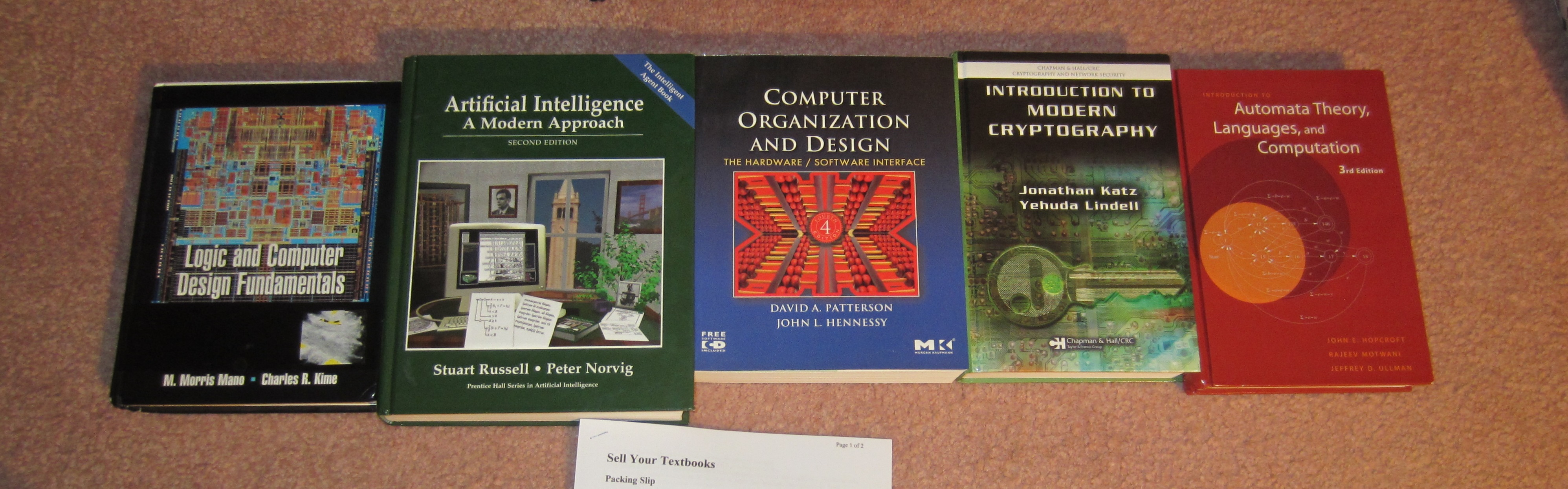
These are some books sold by the editor of this site for over $100!

These are some books sold by the editor of this site for over $100!

De-Cluttering Sites & Stores

Following on from the standard sites mentioned above, there are some great sites out there which actually take the hassle out even more (if that’s possible!) from selling on your junk. Just go to sites like De-Cluttr, enter the barcode or specifics of the items you want to shift, and you’ll be given a price. And that’s it! No auctions, no waiting around for someone to commit to a purchase. You’ll be invited to send off your items (from gadgets and CDs, to DVDs and clothes), and once they’ve been vetted, they’ll pay out. On the same level are businesses such as Cash4Clothes, who pay out to recycle your stuff for you, by taking your clothes to places in need. You won’t get much for them, but it’s better than them just sitting there collecting dust, right?

College Groups/ At College

If your college is on Facebook, it’s likely that there will be a group dedicated to the students. Find people taking your classes and see whether they’d like to buy your books from you once you’re done. Not only will you make a little back from your investment, you’ll win some brownie points in helping out some of the younger students.

‘The Old Fashioned Way’

Have a yard sale! It may not seem very 21st Century, but sometimes, the oldies know best. As the warmer weather approaches, it’s the perfect time to gather some friends and set up shop (literally) for the day. Be prepared for hagglers – set your prices a little higher than you actually hope for, but not so high that you have them running for the hills. Make some posters and flyers and pepper them around the neighborhood, and you’re good to go!

Swap Shop

This is a trend that has been sweeping campuses the last few years. A ‘Swap Shop’ might not make you any money per se, but it’s a brilliant way to gain some new essentials just by using the ones you no longer want. Think of it as a giant hand-me-down extravaganza; whether it’s just between your circle of friends, or even spread to a larger audience. Why not charge everyone $3 to enter, have everyone bring 3 good items of clothing that they no longer have use for, and give everyone a ticket to be used in exchange for someone else’s clothes that they do want? The admission can be put to charity or a society event, so not only will you gain a new wardrobe for next to nothing, the rewards can be reaped elsewhere as well.

There are an abundance of ways that you can make a little extra cash while you’re studying – you just have to get creative!


Want to improve your GPA?  Order your copy of The Secrets of Top Students today!


Landing a Dream Job in Wildlife Tourism (Guest Post)

By Dianna Terry. Dianna is a marine biology PhD candidate working for an ocean conservancy organization.

Kneeling in roadside sand to identify a lion’s pugmark, interpreting a humpback’s tail-slap for a ship full of camera-wielding whale-watchers, collecting a blood sample from an ailing goose in a marshland refuge—a career in the wildlife-tourism industry is often rife with adventure. For anyone who loves animals and wild ecosystems, it can be a deeply fulfilling dream job.

wildlife careers

Do you love animals? Consider a career in wildlife tourism.

Wildlife tourism, though, covers a broad spectrum of specific careers. You could become a safari guide for a travel company, which might be the job that most automatically comes to mind. But you might also be a field researcher, studying populations of wild animals in national parks and other protected lands that attract wildlife-watchers in droves. Maybe you’ll don a doctor’s coat to ensure a population of endangered animals is secure against devastating disease—including those potentially transmitted by humans in ecotourism situations. Perhaps you’ll tackle another aspect of the field by regulating industry practices with an eye toward sustainability through a group such as the International Ecotourism Society.

Zoological parks also often fall under the umbrella, and not only because the animals on display serve as educational ambassadors for their wild brethren: Many leading zoos are also heavily involved in conservation work. The Milwaukee County Zoo, for example, has long tended one of North America’s biggest colonies of captive bonobos, and works to secure wild populations of these rare great apes in equatorial Africa, according to BonoboConservation.com.

Education

Pursuing an academic track in biological sciences gives you a comprehensive, technical understanding of how animals are put together and how they function in relation to their environment. Mastering these fundamentals of physiology and ecology is crucial to many aspects of conservation work.

To some, wildlife biology or zoology might appear “softer” academic routes than physics or chemistry: A trotting wolf, after all, seems easier to understand than the invisible latticework of an organic compound or the complicated equations accounting for the behavior of the universe. But biologists familiarize themselves with many levels of ecological organization and process, from an animal’s physiological requirements to its larger-scale interactions with other species, the seasonal and long-term patterns of its movements in the context of different habitats, and its response and susceptibility to climatic fluctuations.

Beyond a wildlife-biology or ecology program, a degree or certificate in veterinary studies can also usher you into ecotourism work by giving you the tools to diagnose and treat diseases affecting wild or captive animals. For example, the Veterinary Technician Program through PennFoster.edu exposes you to everything from basic tenets of biology and medical mathematics to intensive courses on animal anatomy and nutrition. When assessing potential veterinary curriculums, keep an eye out for accreditation by institutions such as the American Veterinary Medical Association.

An undergraduate degree or certification in wildlife ecology, conservation biology, or some related field may be sufficient to land professional work in wildlife tourism—particularly when combined with plenty of practical experience. However, further education is often mandatory for high-level research and managerial positions, as NationalZoo.si.edu explains.

Interning and Volunteering

As with any line of study, volunteering or interning can be enormously beneficial. Beyond making you more attractive to a hiring committee, it provides a better sense of exactly what kind of position and what area of focus most interests you. Jobs working with charismatic megafauna like elephants and tigers can be highly competitive; volunteering as a data-cruncher or field assistant gives you a taste of the drama while also improving your resume.

Inquire with zoos, wildlife refuges, veterinary clinics, national parks, ecotourism companies, and other organizations to find out about volunteer and internship opportunities. If you’re lucky and committed, you might even land yourself a direct job opportunity out of the deal.


To land your dream job, you’ve got to have a strong GPA.  Order your copy of The Secrets of Top Students today!

Deciding to Become a Teacher (Guest Post)

By Fiona Mayberry.  Fiona loves teaching others, and loves that the internet allows her to reach different people every week. She currently writes about education policies and degree certification processes.

If you’re in high school or college right now, you’re probably putting a lot of thought into what you want to do with your life. It’s possible that the most influential people in your life have been teachers, which might inspire you to become a teacher yourself. Before you commit to that career path though, there are a few things to consider:

Source of Motivation

If you want to become a teacher to change people’s lives, that’s wonderful. Just know that you won’t feel like you’re making an impact every day. If you’re inspired by seeing small improvements in a student’s work, or knowing you made someone’s day better, then you’ll be fine. If, however, you expect to see large results quickly, you might go through long periods of time where you feel frustrated. It’s important to know yourself and have realistic expectations.

Hours

Some people are attracted to the teaching profession because they like the idea of working the same schedule every day. 7-3 Monday through Friday seems pretty cushy, and the idea of summer breaks is appealing as well. But teachers often have to take their work home to grade papers and create lesson plans. They also have after-school events such as staff meetings, parent conferences, and continual learning opportunities. You’ll work a lot more than just classroom hours. Also, depending on your financial situation, you might have to teach summer courses or find an additional source of income for vacation times. Keep all this in mind and know that class times are not going to be your only work times.

Do you have what it takes to be a teacher?

Do you have what it takes to be a teacher?

State Requirements

Every state has its own requirements for teaching certifications.  If you’re planning on moving, make sure you know the requirements for the state you’re considering. Certain areas require different tests and even prerequisite degrees and courses in order to take the certification tests. Classroom experience is also a qualification that varies state-to-state.

Likewise, states all have different laws when it comes to what is taught in the classroom. Look into how much input teachers in your target area have over what they teach. Look at the current proposed bills affecting education so that you know not only the current classroom atmosphere, but what it’s likely to be like in the future.

Once you take all these things into consideration, you will be more prepared to make an informed decision. Will a classroom environment allow you to thrive? Is teaching the way for you to fulfill your life goals? If so, start looking at online teacher communities, and talk with those in the field. The more you see of what teaching is actually like, the more prepared you will be to have a positive impact on student lives.


Want to improve your GPA?  Order a copy of The Secrets of Top Students today!