The summer is half over! Have you done your back-to-school shopping yet?
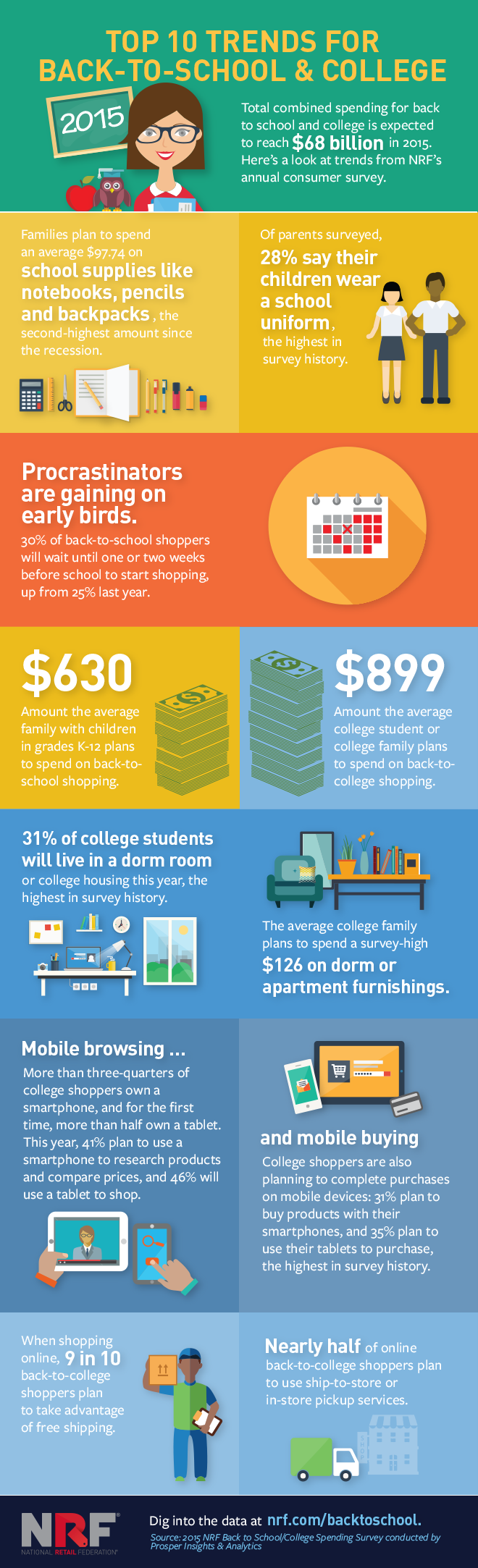
Source: National Retail Federation
Don’t forget to order your copy of The Secrets of Top Students for the new school year!
The summer is half over! Have you done your back-to-school shopping yet?
Source: National Retail Federation
Don’t forget to order your copy of The Secrets of Top Students for the new school year!
By Natalie Posdaljian
Keeping in touch as a college student is vital for maintaining relationships with family and friends, keeping them in the loop and weaving your home life with your college life. Reliable ways of keeping in touch, such as texts, emails and chatting on the phone, can get redundant and don’t always provide the best insight into your life as a college student. Instead, spice up how you keep in touch with your family back home.

Video chatting with a laptop isn’t new to the scene nor is it the most creative way to keep in touch. Expand your virtual horizons with the iPad Air 2, which is thin and light enough to take anywhere. Video chat with your family at a public park in your new town or while you enjoy a much needed caffeine fix at your favorite coffee shop. Or, your family can video chat you when they all get together for a birthday party or Sunday afternoon BBQ. Although you won’t get a bite of the cake, you can still chat with all your aunts, uncles, cousins and grandparents.
With the speed, efficiency and reliability of technology, it’s understandable why snail mail is a thing of the past. Yes, you have to handwrite your letter, buy a stamp, stop at the post office and wait a couple days for your mail to reach its destination, but that’s what makes snail mail fun. The feeling of checking the mailbox and finding something addressed to you that’s not a bill or advertisement is priceless. Sending snail mail to your family leaves them obliged to write you back, giving you something to look forward to in the mail. You also can throw in a copy of the A+ paper you wrote. Snail mail is especially great for grandparents, who typically appreciate handwritten letters the most.
A vlog (video blog) is a unique way to show others what a day in the life of a college student looks like. Whether you keep it private for your family to enjoy or you make it a public YouTube channel, vlogging is in. Model one of your vlogs off a cooking show, with a twist on ramen or PB&J sandwiches. Vlog a tour of your favorite spots on campus, such as where you get your morning coffee, restaurants you frequent, the gym and the library. Or keep it simple and just talk straight to the camera about school, your roommates, professors and anything else that’s on your mind.
There are so many ways you and your family can share your photos. If you’re looking to keeping it virtual, create a private album on Facebook and make all your family members contributors so everyone can swap photos. Or, use a photo sharing site like Flickr or Photobucket. Take it a step further by sharing developed photos (yes, people still develop photos). Throw just a few photos into that letter you’re sending, or use an app like Groovebook to upload all of your photos for just $2.99 (college budget approved) to send your family a keepsake photobook.
A private family Facebook group is great for quick life updates, such as acing that Calculus exam, or for sharing links to YouTube videos with each other. Having your family in one Facebook group creates a forum full of sharing, likes and comments between the people that matter the most to you. For those statuses or photos you can’t share with your entire following, a private group lets you share your silly selfies or embarrassing stories with those that will love you no matter what.
Author Bio: Destined to be an Armenian housewife perfecting her hummus recipe, Natalie Posdaljian instead chose a life of marine field biology and sriracha. Born and raised in southern California, her veins rush with salty seawater and sunshine no matter where she goes. When she’s not saving jellyfish from extinction, Natalie is dancing in the shower, knitting on a plane or swinging in her hammock.
Going to college? Give yourself the gift of good grades with The Secrets of Top Students!
By Adrienne Erin
Congratulations! You’ve finished high school. Now it’s time to head off to college. Isn’t it great to feel free? No parents and no boring home life. You’ll get to make new friends and have new experiences. And best of all, you’ll get to go to parties. What’s not to love?
It’s a given that you’re probably going to drink at least once in college. Chances are you’ve heard the pep talk about alcohol multiple times already, so you know what’s coming. But the point is: Sure, you can have fun, but it’s important to remember you’re in college to learn. Part of that learning is to gain a healthy perspective on drinking.
There’s a wrong and right way to drink. Which one will you choose?
This shouldn’t really need explanation, but people still abuse alcohol every day. Those who don’t drink responsibly can exhibit reckless behavior such as:
If you think you see someone drinking irresponsibly, do your best to stay away from them. Find some new people to hang out with, or leave the party.
If you’re underage, it’s obviously wrong to drink in the first place. But if you do choose to drink at a party, keep these tips in mind:
Make a plan for how you will get home.
This should be the first thing you think about when preparing for a night out. Know how you’re getting home well before the party.
There are a few ways to go about this. You can have a designated driver within your friend group. If there’s public transportation in your area, like buses or trains, use them. NEVER get into a car with anyone who has had too much to drink, and NEVER drive drunk – even if you’re just tipsy. You’ll pay for the consequences of those poor decisions for the rest of your life.
Pace yourself.
It takes a little while for the effect of alcohol to kick in. You might feel completely fine right after taking a shot, but remember that you’ll start to feel the effect a few minutes after.
Make sure to space out your drinking. Having a non-alcoholic drink in between, such as soda or water, helps keep you from going too fast. Aim to keep a one-to-one ratio with one glass of water for each glass of alcohol. For each alcohol beverage you have, drink a non-alcoholic beverage.
Keep in mind that safe, responsible drinking means no more than one drink in an hour.
For reference, one drink equals one 1.5 oz. shot of 40% alcohol, one 5 oz. glass of wine or one 12 oz. beer per hour.
Drink with people you know.
It’s a wise choice to stick with your friends while drinking. If you go alone, you could get into trouble and have no one to look out for you. Avoid drinking with people you don’t know that well or don’t trust. These people could potentially be dangerous, or they might run off somewhere else without telling you.
It’s also important to stay with friends who drink in moderation. Stay away from people who oppose not drinking as much, or encourage binge drinking.
Keep an eye on your drink too, especially if you’re with people you don’t know well. They might seem friendly, but they could sneak date rape drugs or something else dangerous into your drink.
Eat something before or during drinking.
If you drink on an empty stomach, you’ll feel the effects of alcohol quicker. You might also feel sicker. Eating before you go out will help you stay under your drinking limit.
Be sure to eat a meal rich in proteins and carbs. These help to absorb the alcohol.
Know your limits, and measures.
You are the most important person at the party! Your friends may keep a close watch over you, but you also have to take care of yourself. Part of this is knowing your limits. Listen to your body – it won’t take much to figure out how much is enough.
If it’s your first time out, drink at a steady pace to determine your alcohol tolerance. It also helps to drink with friends or people you know well so that you won’t get socially anxious and drink more than you can handle.
You can quantify your tolerance, as well. For example, it could be “three beers per night,” or “two glasses of wine in four hours.”
If you want a fun, harmless way to help you determine what an effect certain amounts of drinking could have on your body type, try this choose your own adventure game.
Know how to turn down a drink.
Drinking is supposed to be a social activity, not a place to show off how much you can stomach. There’s no need to keep up or even accept a drink in the first place.
When you don’t want to drink, decline with a polite excuse. A simple “No, thank you,” should do the trick, but if needed, you can add more. Try things like “I don’t drink,” “I have to drive home,” “I’m the designated driver,” or “I’m pacing myself.”
Choosing Not to Drink is Totally Okay
If you don’t like drinking to begin with, it doesn’t make you uncool in the slightest. You should applaud yourself for steering clear of a night that could negatively impact your health or your life. In fact, there are tons of other alternatives to a night of partying.
You can always stay in and have a fun-filled night with your friends. Watch movies, play video or board games or see what’s going on around campus. Or, check out this list.
College campuses usually have great alternatives to parties on weekends. These can include things like dances, paint parties, movies, social gatherings, speed dating or athletic intramural events.
Whichever you choose, know that there’s a right and wrong way to drink. When you go out, plan ahead of time and be alert. You’ll thank yourself after a long night of partying – and if you do things right, maybe you won’t feel so groggy the morning after, either.
By Brian Wilkins
Graduating from college means getting your first real job, buying your own medical insurance and, of course, getting your first real home. Whether you choose to live in an apartment or rent a house, you can prevent any major hurdles with the proper planning. These three tips will ensure the smoothest transition possible.

Your payment history and amounts owed on any credit cards and other revolving accounts make up 65 percent of your aggregate FICO score, according to myFICO. If you currently owe on your credit cards, you should prioritize paying them down, particularly if they are close to being maxed out. You also should consider getting a secured card because these types of accounts will minimize the hit your FICO score takes for opening new credit and protect you from potential default.
You need at least six months of on-time payment history to be considered “established” by the credit bureaus and most landlords. Keep in mind, move-in expenses can get pricey, particularly for places that require first and last month’s rent and a deposit. Therefore, now is the time to start saving.
Just like pictures of restaurant burgers always look better than the actual product, photos of apartments and homes advertised for rent look better than the actual property.
Don’t move into a place based solely on pictures. When visiting potential new homes, check for cracks in the floors walls, and inside kitchen cupboards. These are sure signs of pests like cockroaches or mice. Ask about the neighbors above you and next to you. The longer they’ve lived there, the better. Especially if you want a quiet place, avoid moving into a place with upstairs neighbors with kids or who have had noise violations. You also may want to request a unit on the top floor to avoid some of the noise.
Know your rights as a tenant. Every state has a tenant rights handbook that spells out the limits of landlord access to your place and their handling of maintenance issues.
Once you find and visit your new place and sign the papers, it’s time to prepare to move in. Call the local utility company to ensure power is on the day you move in. You also should call your Internet and cable provider ahead of time if you don’t want a delay in service.
Since this is your first place, you probably will need to build up your furniture over time. To start, determine the overall style you want your place to have. Smaller apartments can feel extremely cramped if you buy bulky furniture meant for a house, so you may want to take the floor plan or dimensions with you when buying furniture.
Pierre Josselin, a designer for the Ritz-Carlton Hotel, told fashion website Divine Caroline that first-time renters should splurge on one piece of furniture they love to be the staple of their new place. Whether this is a couch, armoire or something else, this centerpiece can then be complimented with less expensive furniture. A throw rug and new drapes may provide that touch of home and posh feel. Furthermore, think about adding a couple of indoor plants to add a little life to your new place.
The move to a first apartment doesn’t have to be stressful. Keep it simple, stay organized and everything else will take care of itself.
Brian Wilkins is an Arizona State University journalism grad who has worked as a radio broadcaster and banking industry professional. He is an independent journalist, blogger and small business owner who loves life. He lives off-the-grid and has not owned a TV in more than six years.
By Brian Wilkins
A report by The Institute for College Access & Success (TICAS) found that nearly 70 percent of 2013 college graduates had student loan debt averaging $28,400, up 2 percent from the 2012 average. Student loan payments are just one of the realities for college graduates entering the real world and trying to figure out the whole budgeting-your-life thing. Leader in the business of all-things personal finance, Intuit shares that transportation should account for no more than 10 percent of your net income, which might not seem like much (especially if you’re just out of college and making a not-so impressive salary), but you can still have a nice and reliable car if you exercise due diligence in the decision-making process.
The following tips will help guide you.

We all know car commercials; the best ones are those that advertise brand new sports cars with reasonable monthly payments you can actually afford. But after reading (or hearing) the fine print, you learn that the low payments are to lease the vehicle, not buy it. Well then, should you just lease?
Monthly payments are typically lower when leasing and the advantages don’t stop there if you’re the type of person who likes the idea of a new car every three years. This sounds great, especially since new vehicles depreciate in value as soon as you leave the lot (by 9 percent according to Edmunds). Then after one year of owning the vehicle, its market value drops to 81 percent. Thus buying a new car is a bad investment on the surface, right? Well, not in the long-run.
Owning a vehicle means no monthly payments and lower insurance premiums if you decide to switch from full coverage to liability. Modern cars, particularly Honda and Toyota models, are known to last well into the 250k mile range and even higher with proper maintenance. Leased vehicles also have mileage limits and, upon the end of the lease, you are responsible for any damage deemed excessive to normal wear-and-tear by the dealer.
The 2015 Auto Financing Report by personal finance social network WalletHub found that interest rates on both new and used cars are lower than they’ve been in several years. But not all loans and interest rates are created equal.
New cars provide peace of mind: you are the only owner, so no secrets as to where it’s been and, should something happen, you have a warranty to cover most major mechanical issues. Auto loans underwritten by the manufacturers had interest rates 35 percent below the average and financing via credit unions had rates 25 percent below the average. National and regional banks offered rates at or well-above average in most cases.
Used cars are, of course, less expensive and have already endured the bulk of value depreciation, which happens in the first few years on the road. Financing a used car is also much easier in most cases and much like student loans have income-based repayment plans, there are financing companies like DriveTime that offer customizable payment plans for all budgets. Used cars typically have lower insurance premiums and you may even be able to negotiate a used car warranty if you know your options.
If possible, purchase a certified preowned car that has been thoroughly inspected by the manufacturer. Some used cars companies offer third-party extended warranties, but make certain you thoroughly understand the terms before paying extra for it.
A subprime auto loan, those underwritten for customers with FICO scores of 650 or lower, is something to avoid altogether. To put it in perspective, a $20,000 four-year auto loan with a 3 percent prime rate will cost you only $1,248 in total interest. That same loan at an 18 percent (subprime) rate will cost you $8,200 in interest .
Obtain a copy of your credit reports from the three major bureaus. Your payment history and amounts owed on open accounts make up 65 percent of the aggregate FICO score. Pay down credit cards that are at or near the limit to quickly improve your score. It’s best to pay down/off the oldest accounts first, as length of credit is also factored into your score. A minimum credit score of 700 should be the goal before considering an auto loan at all.
The test drives and haggling with salesmen are the fun parts of buying or leasing a vehicle. Just heed all the aforementioned to get the best deal and make the right decision for what you need and what you can afford.
Brian Wilkins is an Arizona State University journalism grad who has worked as a radio broadcaster and banking industry professional. He is an independent journalist, blogger and small business owner who loves life. He lives off-the-grid and has not owned a TV in more than six years
Going to college? Order your copy of The Secrets of Top Students today!
By Alison Stanton
Valentine’s Day is the most expensive holiday after Christmas, the National Retail Federation reports. Love birds across the country will spend a collective—are you ready?—$18.6 billion on gifts for their special someones. That averages out to about $130 per person.
For high school and college students on a tight budget, spending $130 on their sweetie is simply not possible. Although there are no hard-and-fast rules to how much you should spend, the following tips can help you decide when you should splurge and when you should cut back.

So how’s it going? If you two argue more than you get along or are spending less time together, this might not be the time to present some huge and spendy gift. Have an honest talk with your boyfriend or girlfriend and discuss how you’ll celebrate it, if at all. Maybe in the interest of saving money, you’ll just treat it like a regular day. You could also decide to exchange nice cards and maybe a small fun gift like his favorite candy bar or her favorite blended coffee drink.
If you’ve been dating for a few short weeks, treat Valentine’s Day a bit more casually than if you have been going out for a few years. Again, an open and honest approach is the way to go with someone you haven’t known that long—simply say you aren’t sure how to deal with a day that expects you both to act like crazed lovey-doveys.
On the other hand, if you have been together a while and are in love, it’s appropriate to spend a bit more on Valentine’s Day. You don’t need to take out a loan or rack up a huge credit card bill, however. Ask some of your closest friends who are in similar relationships what they expect to spend and see if it correlates with your budget and gift ideas. If your girlfriend of two years has been dropping hints about how much she would love to receive flowers at work, you could certainly splurge a little on that. For example, FTD sells a variety of beautiful Valentine’s Day arrangements that are in the $40-$50 range. Other gift suggestions for couples who are in solid and loving relationships include dinner out at a favorite restaurant and then watching a movie together all snuggled up on the couch, a nice wallet or purse that your sweetie has had his or her eye on, or a pair of designer sunglasses.
Between classes, jobs and other responsibilities, it might be challenging to celebrate Valentine’s Day on Feb. 14. If you do decide to celebrate with your sweetie, figure out ahead of time when and where you’ll get together. Above all, try not to feel like you have to spend a certain amount just to get through the day—just be honest with yourself, your sweetheart and your wallet, and the day will go a lot smoother.
Alison Stanton has been a freelance writer for the past 14 years. Based in the Phoenix, Arizona area, Alison enjoys writing about a wide variety of topics, but especially loves meeting interesting people and telling their stories.
By Roxy Barnes
It’s been said before and it’s true. College will leave you with a lifetime of memories. But if you’re not careful it will leave you with nearly a lifetime of debt. That is why students should take advantage of the discounts available simply for being students.
And they are everywhere. Many of these discounts are often listed on your school’s site. But don’t limit your search to just that. By putting your Internet skills to work, you can find discounts on nearly everything you’ll need, and some you wouldn’t expect, like this student carpet cleaning discount.
But that’s not all. Let’s start with a big way to save money in school – scholarships.
 Scholarships
Paying for college is the top concern for the vast majority of college students. Many students may not realize this, but universities often have long lists of private scholarships from businesses and organizations listed somewhere on the financial aid section of their website.
Private scholarships come from every corner of the marketplace and often vary widely in their requirements for entering the scholarship contest. For example, this Halloween costume site offers a cash scholarship for designing a Facebook Cover image for their home page. If you’re more expressive in words, many businesses only require a 500 word essay (or less).
Most of these scholarships aren’t particular about what school you attend. So if your school doesn’t offer very many outside scholarships, check out the pages of some larger universities.
Books and Supplies
Way back in the day students had to buy all of their books from the university bookstore. You paid whatever price they charged and sold them back to the same store when you were done for next to nothing. Talk about buying from the company store – ouch! (Sometimes the good ole days were not so good.)
Now you have choices aplenty for buying your books and supplies. Online sites like Bookbyte.com open up the marketplace so you can shop around for the best deal. Don’t forget to check if your book is available as an eTextbook and save even more.
You probably already realize the savings you can get on software purchases with a student discount, but do some searching for student discounts on computers, tablets and other electronic devices.
Everything else
If there is a product or service that a student can use, you can bet some company is offering a discount on it. Businesses aren’t just doing this out of the goodness of their hearts, they are hoping to win your loyalty now and keep using them for years to come. So even if you don’t see a student discount advertised, don’t hesitate to ask if they have one. What’s the worst they can say?
Even storage companies are getting in on the game, offering student discounts on storage units over summer break. The list goes on, including companies like AmTrak, hotels, clothing stores, even credit cards offering discounted student rates.
If you think searching for student discounts on everything could turn into a time consuming obsession, there are a number of sites that are doing the searching for you. One of the more popular sites is Student Universe. They not only help you find deals on travel and lodging, but have categories of discounts ranging from clothing to food and health.
College is expensive. If you can use your student status to save a few dollars here and there, over the course of a college career the savings adds up. Don’t let that money go to waste. That way, when you look back on your college years, hopefully all you’ll have are great memories, not ones tempered by the specter of debt.
Going to college? Give yourself the gift of good grades with The Secrets of Top Students!
By Tess Pajaron
During the last few years, online learning has become a viable alternative to traditional learning environments. This modality of studying helps students to save both time and money on commuting, but prospective learners should remember that its specific nature radically differs from regular classroom learning styles. In order to make the most from their online courses, students must boast excellent time management skills, have clear study goals and stay organized throughout their period of study.
Since online learners bear much more responsibility over their learning process, they require a high level of motivation for completing their coursework. Here are 6 practical tips on how to stay motivated and enthusiastic when attending an online course.
 1. Choose your field well
There is nothing more important for staying motivated than following your passion, which you also consider significant to your life and career. When choosing an online course, consider your options carefully and go for those learning opportunities that will help you achieve the career you want. This awareness will help keep you on track – you will see your activities as a meaningful part of a larger whole.
2. Establish realistic goals
This is another important point that can significantly affect your attitude towards your studies. If you’ve always struggled with writing, don’t expect to create a great essay in a couple of hours. This way you’re just setting yourself up for failure, and it’s safe to assume that every failure will also negatively affect your motivation.
Be realistic, set reasonable goals for yourself in appropriate time frames. Once you accomplish them, you’ll immediately feel a sense of achievement. This feeling will keep you going, helping you realize your full potential over time.
3. Track your progress
Keep a journal or a calendar filled with small weekly and monthly goals. Make sure to closely track your progress by ticking off every accomplished task – seeing so many little goals achieved will boost your self-esteem and help you stay motivated, even when the amount of work starts to stress you out.
4. Talk about your learning materials
Don’t shy away from commenting on your study process. If this is a challenge, make sure to keep in touch with your instructor through a designated e-learning platform or simply by e-mail – you can share your insights and ask for additional resources.
It’s important to stay connected with your trainers and assessors as well as other students who are studying your course, or within your course area. Many online education providers now have specialized learning platforms that are designed to connect students with each other. Often, there are dedicated social media groups such as Facebook groups, Pinterest share boards and even blogs that are included as part of your online course. Make sure to keep in touch with your trainers through a designated e-learning platform or simply by e-mail – you can share your insights and ask for additional resources.
5. Think positively
Positive thinking is an important part of the whole motivational process. Feeling fatigue or stress can affect your perception of the class and the subject itself, making you miserable and unproductive. Try to think positively and talk with your instructor or other students. Their advice might help you through hard times. Remember to reserve some time for yourself once in a while – no one can be expected to manage all their daily tasks and education without a break.
6. Reward yourself
Consider all the work you’re doing – objectively speaking, you absolutely deserve to have your success acknowledged. When you accomplish one of your goals, be it a minor or major one, make sure to reward yourself with something that will make you happy. Each and every one of these rewards will help you stay motivated in the long run.
It’s safe to say that online education demands just as much self-discipline on the part of learners as traditional education settings. It does, however, bring immense benefits to both your personal and professional life – so choose your path, believe in yourself and stay on track. With enough self-conviction and motivation you’ll be able to reach your goals.
Tess Pajaron is a Community Manager at Open Colleges, an online learning provider based in Sydney, Australia. She has a background in Business Administration and Management.
For more tips on motivation and much more, order your copy of The Secrets of Top Students today!

Find more education infographics on e-Learning Infographics
Going to college? Give yourself the gift of good grades with The Secrets of Top Students!
Guest Post
You looked forward to the freedom that moving away to college represented, but you didn’t consider how many sacrifices you’d also have to make in the name of independence. Grocery shopping, laundry and taking care of your own auto maintenance were all things that you had completely taken for granted. While this newfound freedom is totally worth all of the extra responsibilities, there’s a learning curve to it all.
Here are the auto maintenance basics you need to know to prevent getting stranded on the roadside and keep your vehicle running well.

Taking your car to college? Here’s what you should know.
 Stefanie Weisman