The Survival Guide — 3 Tips for AP Test Takers (Guest Post)

Guest Post by Robert Boyd
Rob is the guy you want on your Trivial Pursuit team: He knows a little bit about a lot of things.

You can ace the AP!

You can ace the AP!

Heading north toward the mountains, I packed my bags and piled into a bus with many of my closest friends. We would be spending the weekend at a campsite complete with fire pits, eight-inch-high ping- pong tables and a large mess hall, but this wasn’t a typical camping trip. This was calculus camp: a two-and-a-half day cram session filled with derivatives, functions and integrals and our final review before taking the AP test.

Math never came easy to me, but I passed the calculus AP test, largely because of that marathon study weekend. Maybe it was the mountain air, but more likely the collaborative spirit and valuable practice led to success. You don’t have to get out of town to pass AP tests. Keep these three resources in mind to achieve high scores.

Prep Courses & Apps

A growing number of students are taking AP tests, and test prep providers have responded with an array of courses. In 2011, 903,630 graduates had taken at least one AP exam, compared to 431,573 graduates ten years earlier, according to Collegeboard.org. Students have few excuses to be unprepared. A variety of online and in-person prep courses accommodate students of all levels.

Benchprep.com, for example, offers subject-specific virtual courses that offer hundreds of test questions, dozens of flashcards and multiple mini-tests. Best of all, these courses are available on both computer and mobile platforms, so test prep can take place anytime, anywhere. Some additional test prep apps are available here.

No matter how convenient, however, digital courses can’t compete with live, in-person training. Personal tutoring with a teacher or experienced tutor is invaluable when it comes to tackling difficult concepts.

Study Groups

Long study sessions can get monotonous and frustrating, especially when you’re trying to unpack a new concept. One of the easiest ways to avoid academic burnout and learn efficiently is to study in groups. By learning AP material with other test takers, you’ll be able use each other’s strengths. For some great tips on how to study efficiently in groups, check out Casact.org and infoplease.com.

In a nutshell, here are some rules to follow when working in groups:

  • Don’t let the group get too large. Aim for no more than five or six people.
  • Have an agenda for each meeting and stick to it!
  • Designate someone to be the leader for each meeting.
  • Don’t be afraid to ask questions! That’s why you’re there.

Practice Tests

Knowing the concepts is one thing, but conditioning yourself for the pressures of an actual exam is an entirely separate battle. The best way to prepare for test conditions is by putting yourself under the gun with a practice test. Find some free test prep material at Collegeboard.com, or buy previous versions of AP tests for $25. Stay within the time guidelines, use the right pencil and of course, no peeking at your notes.

Taking timed tests will push your ability to think under pressure. With all this preparation, you’ll have college credit in the bag. Still feeling unprepared? Try a camping trip instead. It worked for me.


Want to improve your grades?   Order your copy of The Secrets of Top Students today!

P.S. 122 Gifted Program in Danger of Closing

Please click here for the continuation of this post.

P.S. 122 - The Mamie Fay School

P.S. 122 – The Mamie Fay School

It has come to my attention that one of my alma maters is in danger of closing. It’s The Academy for the Gifted and Talented at P.S. 122 in Astoria, Queens (aka The Mamie Fay School – I never did find out who Mamie Fay was), a program I attended from sixth to eighth grade. I loved this school and all the teachers and students were wonderful. I feel I got a great education without my parents having to spend a fortune on private school. We were taking Regents exams in the eighth grade. Plus, it prepared me extremely well for the rigors of Stuyvesant High School. I feel 122 was the best school I attended – better than my high school, my college, my elementary school, etc. It was such a supportive environment.

I don’t know why they’re planning on shutting it down, but apparently they are. I think it would be a great loss for the community. To support the program, please contact one of these representatives:

Councilman Peter Vallone : 718.274-4500 [this is the corrected number]
District Leader Costas Constantinides: costa4astoria@gmail.com
Assemblywoman Aravella Simotas: 718.545.3889
State Senator Michael Gianaris: 718.728.0960

3/2/13 Update: I’ve been told it’s extremely important to contact the following individuals:

Chancellor Dennis M. Walcott
(212) 374-0200
DMWalcott@schools.nyc.gov

Sandy Ferguson
Deputy Chief Executive for Admissions, Office of Student Enrollment
(212) 374-7636
SFergus@schools.nyc.gov

You can also sign this petition: www.ipetitions.com/petition/save-the-academy-at-ps-122/

There’s also a council meeting taking place on Feb. 21st:
“Please come to February 21st Community Council Meeting at P.S. 234 to voice your concern. P.S. 234 is located at 30-15 29th St, Astoria, 11102. Also, contact your local representatives and ask them to support one of the most successful schools in the state.”

3/2/13 Update: There’s an emergency meeting coming up on Wednesday, March 6. Below is the text from the flyer.

HELP SAVE OUR PRESTIGIOUS P.S.122!!!
Dear School District 30 Residents,
The Department of Education (DOE) is proposing drastic cuts to P.S. 122’s Talented and Gifted program known as “The Academy” and the addition of a zoned middle school program in the same building. The surge in enrollment and overcrowding that would result will take away resources from all P.S. 122 students.
The impact of these actions will be felt beyond the borders of P.S. 122, potentially also affecting local schools such as P.S. 85, I.S. 141, P.S. 150, P.S. 166 and P.S./I.S. 126 in an adverse way.
The impact of the DOE’s proposal will be felt beyond school walls. Many hard-working families have chosen to move to and even buy homes in School District 30 because of its successful schools. Damaging our schools will only serve to break apart our community and could potentially threaten real estate values of our respective neighborhoods.
Our community cannot sit by as our schools’ abilities to serve the needs of all our children are severely diminished. We need your help!
Please join us at the upcoming general community meeting to learn more about the DOE’s proposal, its potential impact, and how we can work to stop it.

Meeting Information
Location :
P.S. 122 (Auditorium)
21-21 Ditmars Blvd.
Astoria, NY 11105
(718) 721-6410

Date: Wednesday, March 6, 2013
Time: 6:30 P.M.

Together, let’s protect our schools and our community!


Give your child the gift of great grades.  Order a copy of The Secrets of Top Students today!

How to get rid of test anxiety

Do you do great on homework and essays, but freeze up on exams?  Do you have nightmares about the SAT?  Two recent articles in The New York Times and Time magazine address this common malady, and they have some interesting advice on how to bring your nerves under control.

Thinking about test anxiety.

Thinking about test anxiety.

Advice from the Time magazine article “Relax, It’s Only A Test,” by Annie Murphy Paul (Feb. 11, 2013)

1.  Engage in “expressive writing.”  Spend ten minutes before the exam writing about your thoughts and feelings.  This helps you cast off your anxiety and focus on the task at hand.

2.  Do a “values-affirmation exercise.”  Choose something that’s important to you – for example, music, family, religion, anything – and write about why it matters to you.  Research has found that minority and female students who did this improved their test-day performance.

3.  Write down positive statements, self-affirmations or mantras and keep them in a handy place.  The article describes how girls at the Laurel School in Ohio were given “special test-day pencil[s],” which were wrapped in pieces of paper that contained encouraging (and true) statements such as, “Girls get higher grades than boys.”

4.  Make sure you’ve prepared for the test the right way!  It may not be enough to read and re-read your notes and books – you should also take practice tests, ask yourself questions about the material, and try to predict what’s going to be on the exam.

5.  Do relaxation exercises, such as yoga.  The article describes how third-graders who were taught breathing and relaxation exercises showed a significant reduction in test anxiety.

Advice from The New York Times article, “Why Can Some Kids Handle Pressure While Others Fall Apart?” by Po Bronson and Ashley Merryman (Feb. 6, 2013)

This article’s a bit more scientific and complex.  Its basic premise is:

Understanding their propensity to become stressed and how to deal with it can help children compete. Stress turns out to be far more complicated than we’ve assumed, and far more under our control than we imagine. Unlike long-term stress, short-term stress can actually help people perform, and viewing it that way changes its effect. Even for those genetically predisposed to anxiety, the antidote isn’t necessarily less competition — it’s more competition. It just needs to be the right kind.

The article talks about the COMT gene, which has two variants: one that slowly removes dopamine from the brain, and another that clears it quickly.  People carry one variant or the other, or a combination of the two.  Studies have found that under normal conditions, those with the slow-acting variant have a cognitive advantage.  However, in stressful situations – e.g., test time – the people with the slower enzyme can’t remove dopamine fast enough, and those with the speedier kind take the lead.  They’re often the ones who do better on tests.

Some researchers have labeled those with the fast-acting enzyme “Warriors” and those with the slower variant “Worriers.”  One isn’t necessarily better than the other, it’s just that the Warriors may have an advantage in situations such as tests.  About half of us are a mix between Warrior and Worrier, while a quarter carry Warrior-only genes, and a quarter are Worrier-only.

So are we all predestined to be good or bad test takers, based on our genes?  Researchers say it’s not that simple.  People who are Worriers can significantly improve their performance if they are exposed to stress the right way and allowed to acclimate to it.  Based on their research, here are some more ways you can become a grade-A test-taker:

1.  Tell yourself that stress is beneficial.  It may sound weird, but it works!  Here’s an interesting tidbit from the article:

The first experiment was at Harvard University with undergraduates who were studying for the Graduate Record Examination. Before taking a practice test, the students read a short note explaining that the study’s purpose was to examine the effects of stress on cognition. Half of the students, however, were also given a statement declaring that recent research suggests “people who feel anxious during a test might actually do better.” Therefore, if the students felt anxious during the practice test, it said, “you shouldn’t feel concerned. . . simply remind yourself that your arousal could be helping you do well.”

Just reading this statement significantly improved students’ performance. They scored 50 points higher in the quantitative section (out of a possible 800) than the control group on the practice test. Remarkable as that seemed, it is relatively easy to get a result in a lab. Would it affect their actual G.R.E. results? A couple of months later, the students turned in their real G.R.E. scores. Jamieson calculated that the group taught to see anxiety as beneficial in the lab experiment scored 65 points higher than the controls. In ongoing work, Jamieson is replicating the experiment with remedial math students at a Midwestern community college: after they were told to think of stress as beneficial, their grades improved.

The study found that the students were still stressed, but that “it had different physiological manifestations and had somehow been transformed into a positive force that drove performance.”  The researcher also found that “the people told to feel positive about being anxious had their blood flow increase by an average of more than half a liter per minute, with more oxygen and energy coursing throughout the body and brain. Some had up to two liters per minute extra.”  Amazingly, hearing that stress is beneficial can improve your cognitive function!

2.  “Inoculate” yourself to stress by engaging in competitive activities you might actually enjoy, such as math competitions, trivia contests, spelling bees, science fairs, chess teams, etc.  Although these things can be stressful, they can also be fun and rewarding.  And getting used to competition will make it easier to take tests.

Good luck!


For more tips on studying and much more, order your copy of The Secrets of Top Students today!

Newsflash: Bull Leaping is Alive and Well

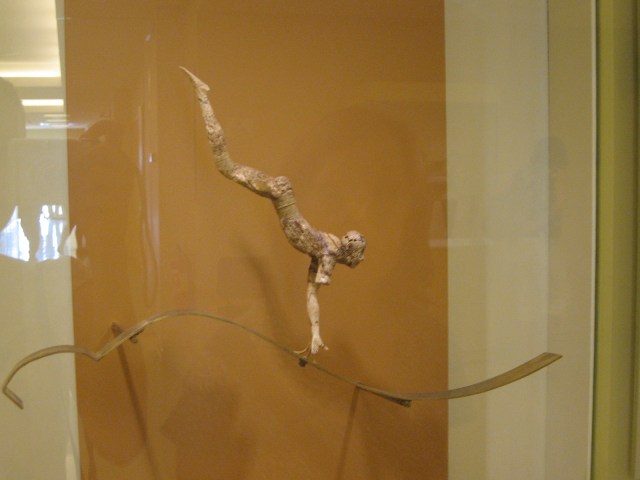
For some reason I can’t explain, I’m obsessed with Minoan history. I find it so fascinating that I wrote one of my qualifying papers on it for my Master’s in Art History. The Minoans, in case you don’t know, were a Bronze Age civilization that rose to power on Crete in the second millenium B.C. They had this practice called bull leaping, in which brave men and women performed acrobatic feats over the back of a live, raging bull. The Minoan works below present striking visual evidence of this practice. I saw them when I went to the Archaeological Museum in Heraklion:

IMG_2463

Bull Leaping Fresco detail, Heraklion Archaeological Museum

IMG_2462

Bull Leaping Fresco, Heraklion Archaeological Museum

IMG_2461

Bull Leaper Statue, Heraklion Archaeological Museum

Bull's Head, Heraklion Archaeological Museum

Bull’s Head, Heraklion Archaeological Museum. The Minoans revered the bull.


I bring this up because I just found these amazing videos in youtube, in which young men and women in Spain do the exact same thing! If there’s any doubt as to whether bull leaping is physically possible, these videos will clear it right up. It’s incredible that this ritual has survived for thousands of years.

The bull leapers don’t always make it over, however. Warning: the video below contains some graphic images. (Specifically, at 4:07)

Listing of High School & College Websites

So, I’ve been doing some marketing research for my upcoming book The Secrets of Top Students – formerly called The Valedictorian’s Guide – and I compiled a list of websites (and some print media) related to high school and college. This list is far from comprehensive, but I thought some people might find it useful. I categorized them as follows:

  1. College / General Education News & Advice
  2. College Admission Advice & Consultants
  3. Websites for Parents of High School/ College Students
  4. SAT Prep
  5. Scholarship/ Financial Aid Websites
  6. College Life Advice
  7. Websites for Online Education and Adults Going Back to School
  8. Miscellaneous
  9. Magazines & Newspapers for Students and Parents

Do you have a favorite education website not mentioned here?  Feel free to leave a reply below.

College / General Education News & Advice

http://www.usatodayeducate.com/staging/ [college advice, news]

http://www.collegeconfidential.com/ [college advice, forums]

http://www.studentadvisor.com/ [college advice, news]

http://www.huffingtonpost.com/news/college-admissions [college advice, news]

http://www.usnews.com/education [advice, rankings]

http://www.campusgrotto.com/ [college news, advice]

http://themash.com/ [advice for Chicago teens]

http://edudemic.com/ [articles about education, learning]

http://www.huffingtonpost.com/education/ [education news]

http://www.uloop.com/ [news and classifies for college students]

http://www.nextgenjournal.com/ [news for college students]

http://www.huffingtonpost.com/college/ [college news]

http://www.washingtonpost.com/blogs/campus-overload [college news]

http://www.ivygateblog.com/ [Ivy League news]

http://www.educationnation.com/ [from NBC News]

http://www.schoolbook.org/ [NYC school news]

http://campusbasement.com/ [college news]

http://learning.blogs.nytimes.com/ [articles for teachers, students]

http://chronicle.com/ [academics discuss education]


College Admission Advice & Consultants
(Note: many of these sites also have blogs on education issues)

http://www.student.com/ [admissions, college advice]

https://bigfuture.collegeboard.org/ [college planning, SAT prep]

http://talk.collegetocareers.com/ [admissions advice, forums]

www.schools.com [admissions advice, news]

http://myfootpath.com/ [advice for admissions, careers]

http://www.collegeview.com/index.jsp [admissions advice]

http://thechoice.blogs.nytimes.com/ [college admissions blog]

http://sbuchris.blogspot.com/ [admissions advice]

http://collegeapps.about.com/ [Allen Grove’s About.com college apps site]

http://blog.admissionpossible.com/ [admissions advice]

http://www.crandleconsulting.com/ [college consulting]

http://cc4therestofus.com/ [admissions counseling website]

http://www.sugarlandsat.com/ [admissions counseling website]

http://www.collegebasics.com/ [admissions advice]

http://www.nextstepu.com/ [admissions advice]

http://www.nhheaf.org/index.asp [admissions advice]

http://www.siaknight.com/ [college coach]

http://kerrigancollegeplanning.com/ [college consultant]

http://www.millereduconsulting.com/ [college consultant]

https://www.collegeadvisorycenter.com/ [college consultants]

http://internationalcollegecounselors.com/ [admissions counseling]

http://www.braintrack.com/ [admissions advice]

http://collegetidbits.com/wordpress/college-planning-blog/ [college planning]

http://usdegreesearch.com/ [school search/ consultants]

http://www.collegemapper.com/ [college consultants]

http://collegediscoveries.com/ [college consultant]

http://admissionado.com/ [college consultants]

http://www.collegeprimers.com/ [college consultants]

http://www.emersonec.com/ [college consultant]

http://www.collegesmartadvising.com/ [college consultant]

http://www.askjohnaboutcollege.com/askjohnaboutcollege/Ask_John_About_College.html [college consultant]

http://collegeconnection.yolasite.com/ [college consultants]

http://greatcollegeadvice.com/ [college consultants]

http://www.lucenteducation.com/ [college consultants]

http://www.collegebound.net/blog/ [college consultants]

http://www.collegiategateway.com/ [college consulting]

http://admissionsadvice.com/ [college consultant]


Websites for Parents of High School/ College Students

http://www.collegeparents.org/ [advice for parents]

https://www.teenlife.com/ [advice for parents of teens]

http://www.smartcollegevisit.com/ [help for visiting colleges]

http://www.yourcollegekid.com/ [advice for parents]

http://www.collegeparentcentral.com/ [advice for parents]

http://collegetipsforparents.org/

http://parentingteens.about.com/ [About.com site for parents of teens]

http://www.universityparent.com/

http://www.pta.org/ [national PTA]


SAT Prep

http://www.directhitseducation.com/ [SAT prep]

http://www.testrocker.com/ [SAT prep]

http://freetestprep.com/default.php [SAT prep]

http://www.scorebusters.com/ [SAT prep]


Scholarship/ Financial Aid Websites

http://www.scholarships360.org/ [scholarship help]

http://cheapscholar.org/ [financial advice for college]

http://how2winscholarships.com/

http://www.collegexpress.com/ [college scholarships and advice]


College Life Advice

http://www.hercampus.com/ [college, life advice for women]

http://www.mymajors.com/ [advice for choosing a major]

http://www.internqueen.com/ [for students in need of internships]

http://universitychic.com/ [advice for college women]

http://blog.campussplash.com/ [advice about colleges, college life]

http://collegelifestyles.org/ [lifestyle tips for college women]

http://talknerdy2me.org/campus-geek [college life blog]

http://www.collegecures.com/ [college life]

http://www.survivingcollege.com/ [college advice]

http://www.campustalkblog.com/ [college, learning advice]

http://www.hackcollege.com/ [college advice]

http://www.honestcollege.com/ [college and tech advice]

http://www.collegesurfing.com/blog/ [college advice]

http://www.universitylanguage.com/ [college advice]


Websites for Online Education and Adults Going Back to School

http://www.onlinedegrees.com/ [advice for online education]

http://www.back2college.com/ [advice for students returning to college]

http://www.backtolearn.com/ [advice for adults going back to school]

http://www.onlinecollege.org/blog/ [advice for online degrees]


Miscellaneous

http://www.usatodayeducate.com/staging/index.php/campus-newspapers-a-comprehensive-resource [a map with links to college newspapers]

http://academictips.org/ [academic advice]

http://community.simplek12.com/scripts/student/home.asp#cat0 [website, blog for teachers]

http://www.the21stcenturyteacher.com/ [site for teachers]

http://www.imfirst.org/ [advice for first generation college students]

http://highschoolmediator.com/ [high school ed expert]

http://ericsheninger.com/esheninger?sid=28 [education admin/ expert]

https://getschooled.com/ [site for high school students]

http://www.edtrust.org/ [advocacy for education]

http://www.edutopia.org/blogs [advice for educators]

http://www.verizonwireless.com/wcms/consumer/products/education-bundle.html [education tools and apps]


Magazines & Newspapers for Students and Parents

Girl’s Life [magazine for teen girls, http://www.girlslife.com/%5D

Justine [magazine for teen girls, http://www.justinemagazine.com/%5D

Seventeen Magazine

Working Mother Magazine [http://www.workingmother.com/]

Your Teen Magazine [http://yourteenmag.com/]

Education Update [NYC newspaper and website, www.EducationUpdate.com]

Manhattan Family [Newspaper and website, mostly for parents of younger kids but some stuff relating to teens, www.NYParenting.com]


Give your child the gift of great grades.  Order a copy of The Secrets of Top Students today!

Re: The Imaginary Teacher Shortage

There was an interesting opinion piece in The Wall Street Journal  today: “The Imaginary Teacher Shortage” by Jay Greene. Both Obama and Romney think we need more teachers, but as Greene notes:

For decades we have tried to boost academic outcomes by hiring more teachers, and we have essentially nothing to show for it. In 1970, public schools employed 2.06 million teachers, or one for every 22.3 students, according to the U.S. Department of Education’s Digest of Education Statistics. In 2012, we have 3.27 million teachers, one for every 15.2 students. Yet math and reading scores for 17-year-olds have remained virtually unchanged since 1970, according to the U.S. Department of Education’s National Assessment of Educational Progress.

That study Greene refers to can be found here. Interestingly, while scores for high school students haven’t changed, scores for nine- and thirteen-year-olds have improved. It’s also worth noting that the pupil to teacher ratio depends on what kind of school we’re talking about. According to the National Center for Education Statistics, “the public school pupil/teacher ratio was 15.4 in 2009. By comparison, the pupil/teacher ratio for private schools was estimated at 12.5 in 2009. The average class size in 2007–08 was 20.0 pupils for public elementary schools and 23.4 pupils for public secondary schools.”

While I agree that hiring more teachers isn’t necessarily the solution to our education problem, I disagree with Greene’s proposed alternative: using more technology in classrooms to allow for “more individualized instruction with many fewer teachers.” I don’t think that letting young students sit for hours in front of a computer screen, with teachers serving merely as “tutors, problem-solvers, and behavior managers,” is the answer. What do you think?


Want to improve your grades?   Order your copy of The Secrets of Top Students today!

Education News: Recommended Articles

From college rankings to kids sticking themselves with IVs to study longer, here are some education stories you might enjoy:

NPR story about How Children Succeed: Grit, Curiosity and the Hidden Power of Character, by Paul Tough. I love his name, by the way – very appropriate. This book sounds great and it speaks to all the things I’ve been saying recently. Academic achievement (and achievement in life) depends on hard work and perseverance, not talent and luck.

The College Rankings Racket, by Joe Nocera. Are college rankings really a racket? I think that’s going a little too far. Mr. Nocera’s article links to U.S. News‘s description of how they rank schools, and it sounds pretty legit to me. Sure, some kids place too much pressure on themselves to go to certain schools, but that doesn’t mean the rankings are pointless. What do you think?

Chinese students use IV amino acids to study for high-stakes tests, by Valerie Strauss. Apparently some high school students in China receive IV drips of amino acids so they can better prepare for the high-stakes college entrance exams. I feel sorry for these kids.

7 Questions to Ask Yourself When Choosing a Major. This is a great article for all you college students out there. The last question may be the most important: Is this what I want or what someone else wants?


Give yourself the gift of great grades.  Order your copy of The Secrets of Top Students today!
Will We Be Publishing Books Written in Digital English Someday? (Guest Post)

I’m excited to introduce my first guest blogger, Alexa Russell.  In this post, Alexa writes about nothing less than the future of the English language.  While we need to recognize the importance of Internet English, we should be wary of relying on it too much.  What’s your take on the issue?  Should we embrace the patois of the digital age, or fight to keep ‘proper’ English alive?  Should digital English become part of what you actually learn in English programs?  Without further ado, here’s Alexa.

The digital migration brings millions of new users to the Internet daily, with even more returning day after day to their favorite informational resource. Not only do these individuals access countless stores of knowledge held on websites and databases, they also contribute to the Internet by publishing in the form of Twitter and Facebook updates and blog posts. Many of these publication forms champion cursory writing, and in response many Internet users have found ways to express themselves through acronyms or shortened words.

This has spurred a huge debate about the current state of the English language. On the one hand, many believe that the rules of grammar serve as the best way to express yourself and be taken seriously. Others, however, believe that these rules hinder actual communication and force people to follow archaic rules that are inefficient for the digital age. The point of using abbreviations or removing vowels from words, after all, is to communicate more quickly.

A January 2012 feature article published by Wired Magazine illustrates why we should embrace this digital form of English. As the headline announces, “Its Tyme to Let Luce” with the rules of casual conversation. “English spelling is a terrible mess anyway,” writes Anne Trubek, “full of arbitrary contrivances and exceptions that outnumber rules. Why receipt but deceit? Water but daughter?”

Efforts to stem the digital corruption of English only get in the way, Trubek argues. Autocorrect software, which attempts to make sense out of misspelled words, both purposefully and not, often further complicates intended meanings by correcting to the wrong word.

Even colleges and universities, the bastions of proper English and, are beginning to embrace digital applications. A January 2012 piece published in the New York Times reports the attempts of Duke English professor Cathy Davidson to do away with the traditional term paper in favor of consistent posting to a class blog.

Although she finds that this outlet supports writers that rely on creativity in their prose, many feel that the rigid rules of proper grammar need to be respected, especially by college students. “Writing term papers is a dying art, but those who do write them have a dramatic leg up in terms of critical thinking, argumentation and the sort of expression required not only in college, but in the job market,” said Douglas Reeves, founder of the Leadership and Learning Center and a columnist for the American School Board Journal.

The youngest among us have incorporated digital forms of English so completely into our usage that it often finds its way into oral conversation. The Baltimore Sun published a May 2012 piece on different acronyms and abbreviations that parents should know in order to communicate with their children. Many of the more popular ones, like “YOLO” and “OOMF” are relatively new but are already being used by millions.

What the digital migration has allowed people to do is construct their own rules of conversation, apart from those held sacred by the old school of grammar. There’s no doubt that people will continue using these forms of speech, and postmodern writers have long been published advocates of English deconstruction. With the ease of publishing today, digital English will continue to take hold. However, those who don’t publish works that adhere to at least some standard rules of writing, may find that their audience dwindles when they can’t understand what they’re reading.


Give yourself the gift of great grades.  Order your copy of The Secrets of Top Students today!