What kind of education would you have received if you had lived in a different time? Interesting to think about.

Source: BestDegreePrograms.org
Give your child the gift of great grades. Order a copy of The Secrets of Top Students today!
What kind of education would you have received if you had lived in a different time? Interesting to think about.
Source: BestDegreePrograms.org
Give your child the gift of great grades. Order a copy of The Secrets of Top Students today!
By Selena Jones
So, you’ve graduated. Congratulations! You’re quite possibly in your twenties – now what? You may already be noticing some changes. While half your friends are still getting drunk every night, you’re wondering if you can even hack one night of birthday drinks and cursing those hangovers. Midweek cocktails are firmly out of the question for you! Or perhaps your friends are having babies and the appropriate response is no longer to panic and ask “what on earth are you going to do?!” – they’re actually happy about it, and you are, too.

Your twenties are a definitive decade.
Your twenties are arguably a definitive decade. You’re still young enough to experiment, make mistakes, and yet you are starting to get some real responsibilities, too. Now, nobody’s saying you have to settle down, make compromises, whatever. But you’re learning that sometimes you have the choice to, and that’s okay. It’s an exciting time, one where you have the world at your feet, your career is dawning and you’re most likely mixing with a different set of people, perhaps in a new place. Suddenly, getting a house, starting a family and all of these ‘grown up’ things don’t seem so ‘forever never’ – they’re suddenly potentially your daily reality. Of course some things will be hard to adjust to, others will be easier. Everyone is different, but that’s part of living.
So, what do these different stages in your life actually mean? I’ve touched on families – you’re possibly thinking about starting your own. With today’s mounting debts and rising costs pricing a lot of people out of any huge milestones, it’s often advisable for a lot of people in this situation to put their career first. But you’re also probably learning that sometimes, things just happen the way they happen, and that’s fine as well.
What about travel? So many Americans don’t even own a passport, and yet there are literally hundreds of countries out there, waiting to be explored. Travel no longer has to mean road tripping down to Miami for WOOHOO Spring Break, because sadly, not many of us in a 9-5 are afforded that privilege anymore! But there are plenty of other options, from taking time out to commit to backpack, or learning a new language or culture by actually working abroad. The lucky few, perhaps those already settled in a two income household, may even consider investing in a holiday home on a Spanish island somewhere, like in Tenerife, which is cheaper than you’d think, or perhaps a luxury property in Dubai! The world is your oyster.
Of course, money doesn’t totally make the world go round. There are loads of things you’ll likely change in your twenties – some people calm down more, while others decide to throw caution into the wind! No matter who you are, what you’re doing or how old – or young – you feel, different areas alter in your mind over the years. So, even though you’re a grown up, you never have to stop chasing your dreams – you just have to adapt them!
To land your dream job, you’ve got to have a strong GPA. Order your copy of The Secrets of Top Students today!
By K.C. Dermody
For most college students, going off to school brings the first real sense of independence and freedom. You’ll experience an abundance of unfamiliarity as you’re exposed to a new learning environment and living arrangements filled with different types of people. With this new environment and people comes a host of germs and viruses that can easily be passed around, potentially keeping you from your studies and threatening to impact your grades. In fact, 68 percent of college students stated that they missed class due to illness, according to a survey conducted on behalf of global hygiene company SCA.
You’ll probably make every effort to look your best by taking frequent showers and wearing the latest fashions, but there are many aspects of hygiene that college students commonly overlook. Ensure you’re taking the proper steps for good health this semester with these four tips:
Mom probably reminded you every single day to wash your hands, but now that you’re out on your own, it’s easy to forget. Good hand hygiene habits are crucial for preventing the spread of cold and flu viruses. The Center for Disease Control and Prevention offers these startling facts about hand washing:
Germs are commonly passed along when shaking someone’s hand, touching a stair railing or door knob, and handling money among many other common activities. Protect yourself by washing your hands with warm water and soap for at least 20 to 30 seconds.

If you wear contact lenses, you should know that they carry a risk of eye infection, particularly if good hygiene practices aren’t followed. Be sure to carefully follow the lens care guidelines your optician or ophthalmologist prescribed, and replace contact lenses frequently in order to reduce the risk of infection. Save money by ordering them online from a company like VisionDirect.
Taking good care of your mouth and teeth helps to ensure that you have a healthy, attractive smile in addition to eliminating bacteria that can cause bad breath, cavities, and gum disease. Brush at least twice a day, and replace your toothbrush every three to four months. If you notice the bristles becoming frayed, it’s time to get a new one. Proper daily flossing is also a must. Floss one tooth at a time by sliding the floss in the space between your tooth and gum, gently rubbing the side of the tooth in and up and down motion.
Laundry may be inconvenient with your new packed schedule and your living accommodations, but make every effort to wash your pillow cases, comforters and sheets in hot water and detergent at least once a week. Dust mites are drawn to the dark, moist environment of a mattress, and mite infestations are known to cause allergies and rashes as well as exacerbating asthma, according to the Asthma and Allergy Foundation of America.
About the author: K.C. Dermody is a freelance writer who has published work on numerous sites and in printed publications, including Yahoo Travel, Sports & News, RunLiveLearn and The Sherpa Report.
Going to college? Give yourself the gift of good grades with The Secrets of Top Students!
By Monica Wells of http://www.bizdb.co.uk/
Competency-based Education (CBE) is the talk of the town in the American education sector – CBE programs are increasingly popular and academic institutions respond to this growing need for affordable and skill-oriented education by creating online programs and courses that follow the pragmatic approach to learning fostered by CBE.
Before deciding whether you’d like to try this relatively novel learning methodology, you should know what CBE actually is, how it differs from traditional high school or college learning programs, and what are its main advantages in the learning process. Here are some essential things everyone interested in their education should know about CBE.
Is CBE right for you?
What do you think about the Common Core?

Source: BestMastersinEducation.com
Give your child the gift of great grades. Order a copy of The Secrets of Top Students today!
By Samantha Levine.
It’s no laughing matter how dependent our society is on the use of technology and the Internet. The great thing about it is that we are exposed to so much information, but this can also be very overwhelming. As we learn to read from screen to screen (laptop, cell phone, tablet), we have readjusted the way we receive information, which is causing our attention span to be much shorter.
When skimming through an article, you may not realize how much information you can actually miss. A great tip to increase retention is to read the headlines of a topic and ask questions about what you think it will be about. While reading, see if you are able to answer your own questions, and then make note of it. This helps you to read quickly, efficiently, and effectively.

Can you read on this tiny little screen?
I’ve noticed that the faster I receive information from the web, the faster I move on to read something else; and more often than not, I’m distracted by an ad to the right and left of the story I’m reading. However, thanks to my very awesome grade school teachers who taught me to love reading, I learned a few tips that can keep you on track:
By Selena Jones.
Here in America, we can be somewhat guilty of ignoring the world around us. It’s true – up to 70% of Americans don’t actually own a passport, and it’s somewhat shocking. In other parts of the world, ‘Gap Years’ are common – they’re basically months taken outside of study to go abroad. There are a few options, and many young people go before they even start college or university. Others go after they graduate. The experiences will differ widely, but their purpose remains the same. The individual will come home more independent, more cultured and potentially they will even pick up skills that will be valuable in any workplace.
By Chris Gates.
Total student loan debt in the United States was $1.2 trillion last May, before the 2013-14 school year even began, according to the Consumer Financial Protection Bureau. The Institute for College Access and Success reports that the class of 2012 carried an average debt load of $29,400, nearly $3,000 more than the class of 2011.
Congress attempted to throw current college students a lifeline this past summer, passing the Bipartisan Student Loan Certainty Act of 2013. The bill, signed into law by President Obama on Aug. 9, lowers interest rates on nearly all new student loans taken out after July 1, 2013. Some in Congress believe more needs to be done—for example, Sen. Elizabeth Warren, D-Mass., wants students to get the same 0.75 percent rate on loans that the Federal Reserve gives to big banks. While Congress tries to figure out a solution, borrowers need to address their individual situations. A few ideas to get you started:
Today is your last chance to get The Secrets of Top Students ebook for only $2.99!
This book includes tips and techniques that every student should know. For example:

The Secrets of Top Students: Special Sale!
Here’s what people have been saying about the book:
Praise for The Secrets of Top Students
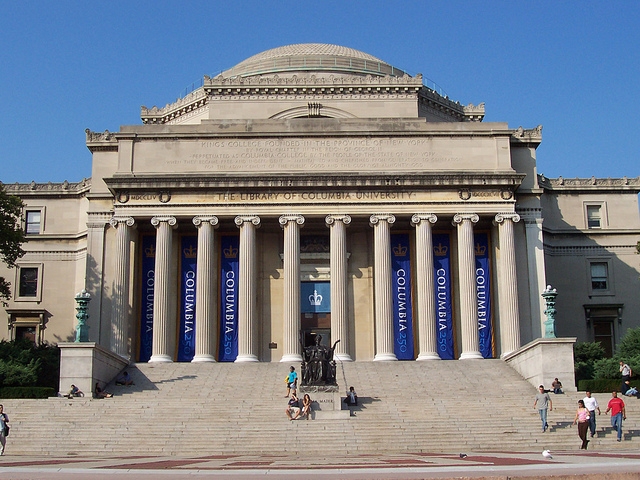
“An insightful guide for high achievers—and those aspiring to such status—from an authoritative source, Stefanie Weisman, a Columbia University graduate and former valedictorian of Stuyvesant High School, two of the best schools in America. Stefanie Weisman’s book about the secrets of academic success is all the more amazing, given the learning disabilities that she overcame to become the ultimate academic overachiever. As a graduate of Stuyvesant High School myself, as well as a Phi Beta Kappa graduate of Brown University, I believe students can find happiness and achieve great things at any number of schools, and Stefanie Weisman offers hard-fought wisdom about how to get there.”
—Alec Klein, Northwestern University professor, bestselling author and award-winning journalist“Although the target audience is high school and college students, the book is a must-read for students in middle school and up, teachers, parents, and guidance counselors as 21st-century students learn to excel in the new educational landscape in which they find themselves.”
—Tammy Turner, Centennial High School, Frisco, TX; School Library Journal, July 2013 issue“We wish we had Stefanie Weisman’s new book . . . when we were in school, but our loss is your child’s gain as this book goes beyond advising how to test better; it’s loaded with strategies on how to get the most out of school in a healthy, well-rounded way that will continue to serve your scholar well throughout their life.”
—Lisa J. Curtis, Brooklyn Family Magazine, August 2013 issue“A student who followed even half of the suggestions in this book could come away from college with both a greater understanding of the material and a significantly higher G.P.A.”
—Dr. Mindy Marks, Associate Professor of Economics at Washington University, St. Louis, and Co-Author of “Leisure College, USA: The Decline in Student Study Time”“This is perhaps the best and most pragmatic guide to academic success I have read that is relevant to today’s students. One thing that sets this book apart is that it provides special information for students interested in science, technology, engineering and mathematics, aka STEM subjects.”
—Stuart Nachbar, President of Educated Quest, www.EducatedQuest.com“Undergraduates who want to excel in college will find a helpful resource in this book.”
—Joseph Adegboyega-Edun, Counselor/College Adviser, Walter Johnson High School, Bethesda (MD)
By Kelly Smith. Kelly works at CourseFinder.com.au, an Australian online courses resource. She also provides career advice for students and job seekers and works as a freelance writer.
The benefits of online education are immense – there’s been a lot of talk lately about the next wave of online training that will completely revolutionize the education sector. Zachary Karabell of The Atlantic pointed out the huge future benefits of this radical change: “The costs of obtaining needed credentials will plummet, and the ability to create more tailored, vocational programs aligned with the skills employers need will increase exponentially.”
It goes without saying that there are several things traditional schooling institutions might learn from their online counterparts even today. Read on to see some of the most valuable aspects of online learning that should be adopted by stationary colleges.
 Stefanie Weisman